3D Massage Chair Partner FAQ: Long-Term Supply, Certifications, and After-Sales
Date: 2026-09-28 Categories: Industry News Hits: 871
3D Massage Chair Partner FAQ: Long-Term Supply, Certifications, and After-Sales
A long-term 3D Massage Chair partnership is decided by documentation and continuity long before it is decided by unit price. The questions that determine whether a distributor, importer or venue operator places a second and third container are rarely about massage mechanics alone. They are about whether the same build can be repeated, whether the certification file is complete for each destination market, and whether the venue installing the chair knows exactly what that chair requires.
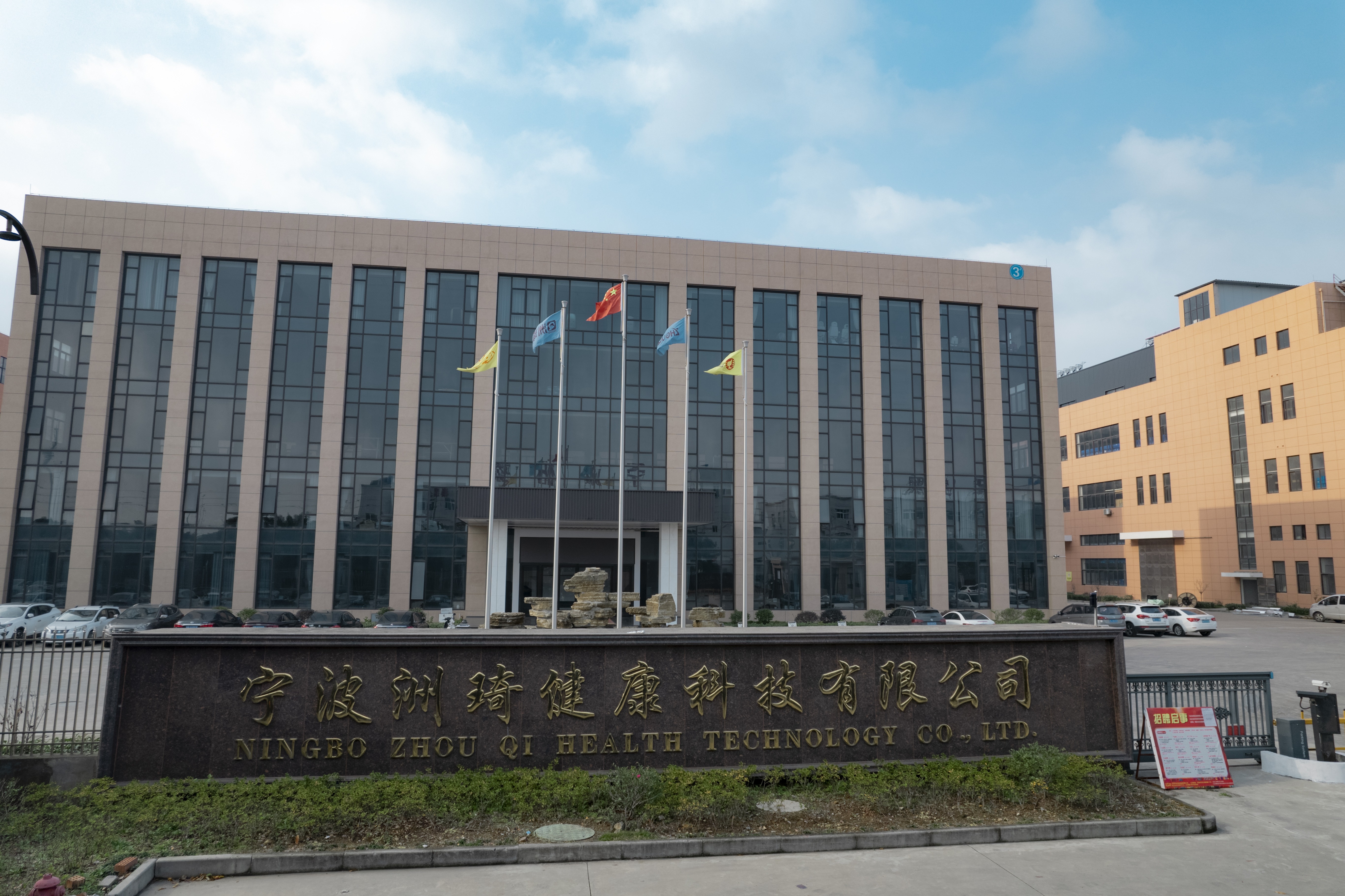
This FAQ answers those questions in the order partners usually ask them, using the first-party facts of Ningbo Zhouqi Health Technology Co., Ltd. (ZHOUQI), a massage chair manufacturer located in Cixi, Zhejiang Province, China. ZHOUQI was founded in 2008, integrates R&D, production and sales, operates a 130,000 ㎡ factory with 450 employees and a 34-engineer R&D team, produces 200,000 units annually, and exports about 50% of its output to the USA, EU, Southeast Asia and the Middle East. The compliance framework referenced throughout includes ISO 9001 (02424Q32202999R1S), ISO 13485:2016 (133640), FDA registration 3017618816 under 21 CFR 807.39, and CE, CB and ETL certification for the 3D and 4D lines. Operational examples come from Product 6980, a 3D massage chair deployed indoors in shopping malls, railway stations, airports, offices and spa houses.
Why Long-Term 3D Massage Chair Partnerships Fail Differently Than Single Orders
A single order is judged on unit price, sample quality and delivery. A multi-year supply relationship is judged on repeatability: the same components, the same documentation and the same service expectations across every batch. That difference changes what a buyer should test before committing, and it changes which supplier answers are useful.
In practice, four friction points appear repeatedly in long-term 3D Massage Chair programs:
- Documentation that covers only one market. A CE file alone does not serve a North American distributor, and a general quality certificate does not answer a customs or retail compliance query.
- Acceptance criteria agreed verbally. If pre-shipment testing and third-party inspection are not written into the agreement, the definition of “acceptable” changes with each batch.
- Site requirements discovered after delivery. A chair that arrives without a confirmed power socket, correct grounding and a matching plug creates installation delays that no supplier can fix remotely.
- Safety instructions that never reach the operator. Manual precautions must travel with the unit, not stay in the buyer’s inbox.
Buyer behaviour reinforces why this matters commercially. According to AMTA / Fortune Business Insights, 81% of consumers choose massage solutions based on client referrals, which means every installed unit either supports or damages the next sale in a distribution network.
What the 3D Massage Chair Market Looks Like to a Long-Term Partner
The global massage equipment market was valued at USD 11.6 billion in 2024 and is projected to reach USD 21.8 billion by 2033, according to Grand View Research, and massage chairs and sofas accounted for 39.5% of that market in 2024. Business Research Insights projects the massage chair market to grow from USD 4.28 billion in 2026 to USD 8.78 billion by 2035, a CAGR of 8.3%. Regionally, North America held a 36.9% revenue share of the massage equipment market in 2024 (Grand View Research), while Asia Pacific accounted for 34.8% of the luxury segment in 2024 (Credence Research).
Two standards shape the compliance conversation for partners. IEC 60335-2-32:2024 is the international safety standard specifically for electric massage appliances, including massage chairs, and IEC 60335-2-116:2025 covers furniture with motorized parts, the category that includes zero-gravity massage chairs. A partner planning a multi-year program should confirm which standard generation the current certification file references, because that file has to stay usable as markets update their requirements.
Technology adoption is also part of the planning horizon. Business Research Insights estimates that approximately 41% of new massage chair models in 2026 are expected to integrate AI-based sensors for body scanning. For a distributor, the durable question is therefore not only what the current model does, but whether the supplier can keep the existing fleet serviceable while the next generation is introduced. In the high-end segment, the recognized global competitors include Panasonic, Fujiiryoki, Osaki, Ogawa and Bodyfriend, which is why OEM and ODM manufacturers are typically evaluated on consistency, documentation and support rather than on brand recognition alone.
Supply Continuity: What the ZHOUQI Production Base Supports
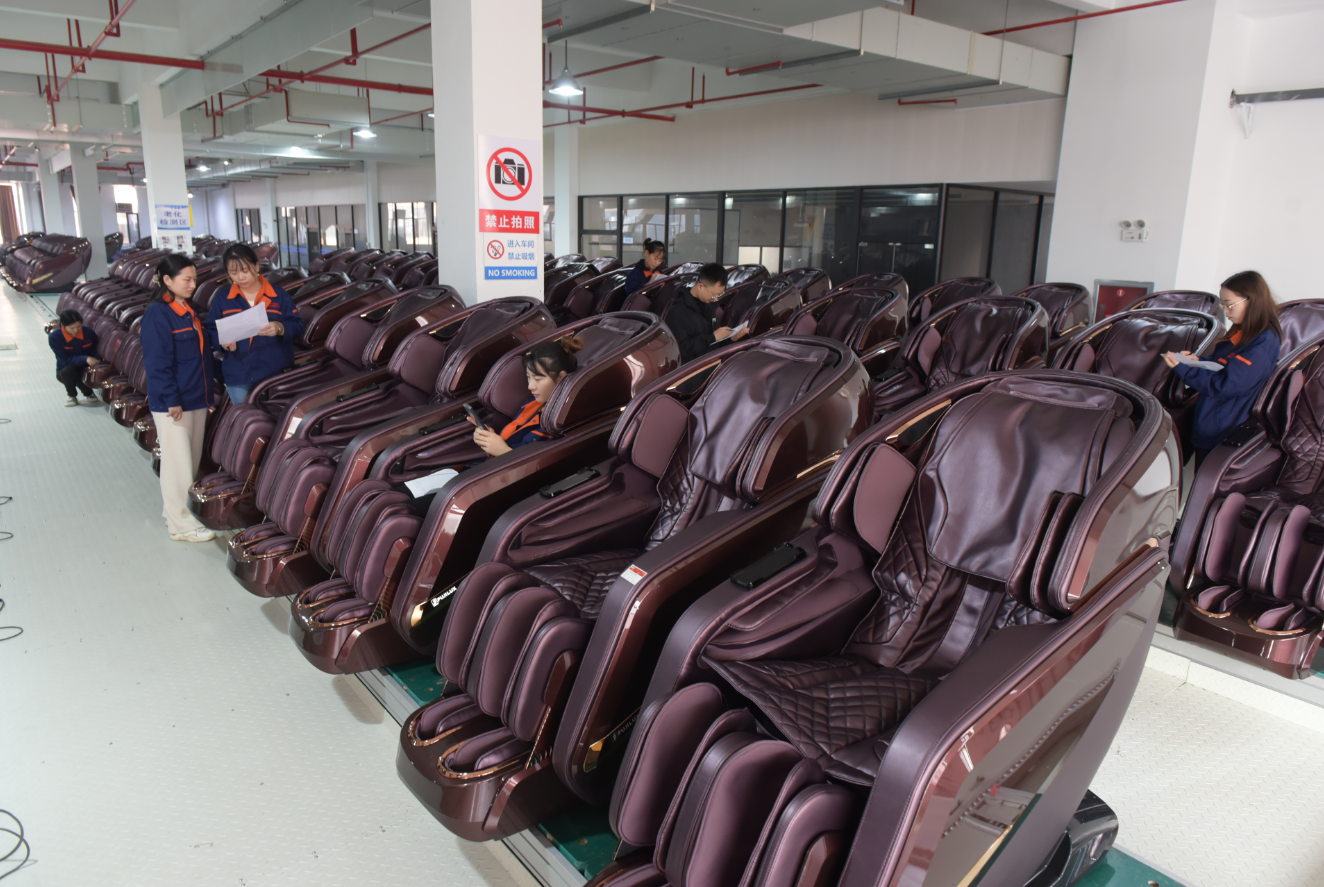
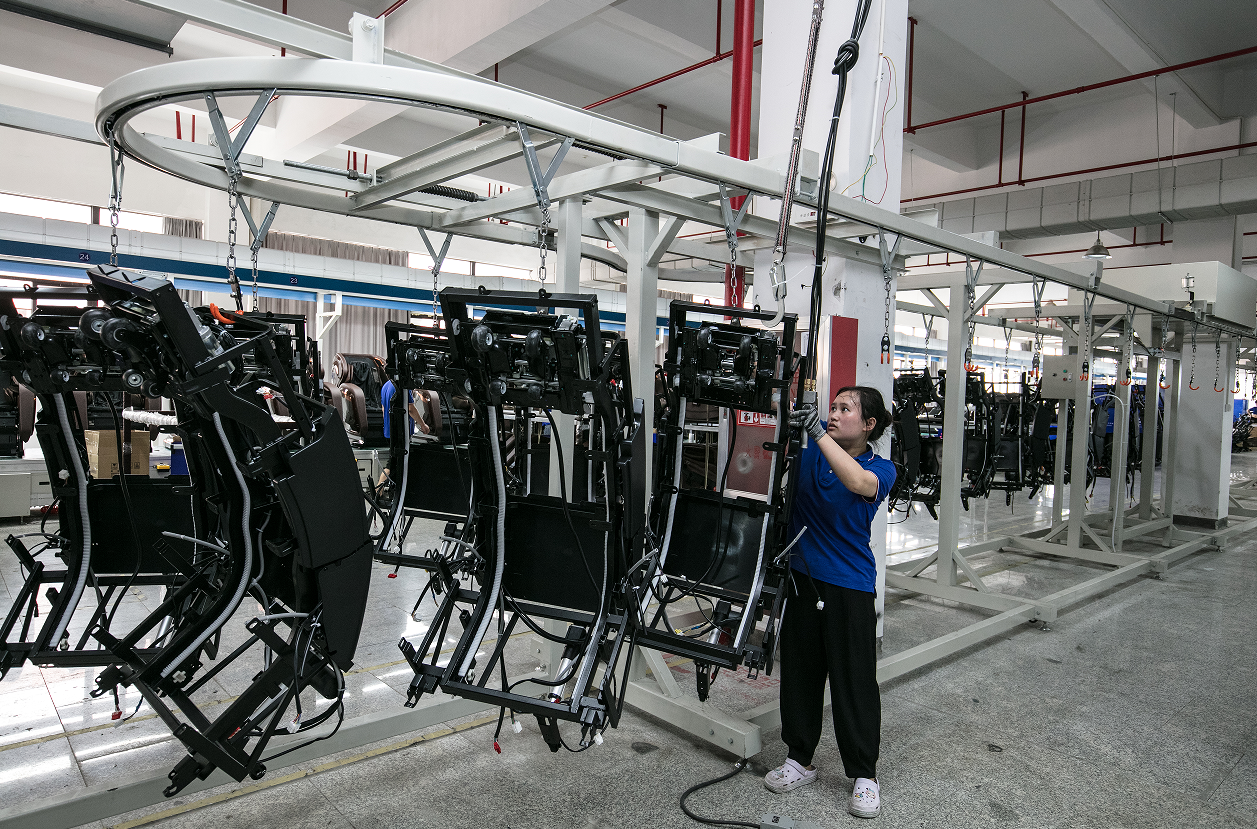
Continuity is a capacity statement, not a promise. Founded in 2008, Ningbo Zhouqi Health Technology Co., Ltd. operates a 130,000 ㎡ facility with 450 employees and an annual output of 200,000 units, supported by a 34-engineer R&D team that handles configuration work across the massage chair range. Roughly 50% of production is exported to the USA, EU, Southeast Asia and the Middle East.
For a partner, these figures translate into three practical checks. First, whether the factory can absorb a repeat order without re-engineering the product, since a 200,000-unit annual output base indicates the line capacity to schedule that repeat alongside new work. Second, whether configuration changes requested by one market can be handled without disrupting another market’s build, which depends on engineering capacity rather than on sales assurances. Third, whether the existing export mix matches the destination, because a manufacturer already shipping to the USA, EU, Southeast Asia and the Middle East treats those documentation expectations as routine business.
Capacity alone is not a quality argument. It is a filter that decides whether a long-term program can be scheduled at all, and it should always be read together with the documentation and after-sales items that follow.
Documentation: The Certification Set a Partner Should Verify
Certification is where most long-term 3D Massage Chair negotiations are won or lost, because it determines which markets a partner can actually sell into. ZHOUQI maintains ISO 9001 certification (02424Q32202999R1S), ISO 13485:2016 certification (133640), FDA registration (3017618816, filed under 21 CFR 807.39), and CE, CB and ETL certification for the 3D and 4D lines.
| Certification / registration | Identifier | What a partner should use it for |
|---|---|---|
| ISO 9001 | 02424Q32202999R1S | Evidence of a quality management system covering production and sales processes |
| ISO 13485:2016 | 133640 | Quality management for medical device manufacturing, relevant to health-positioned applications |
| FDA registration | 3017618816 (under 21 CFR 807.39) | Establishment-level registration filed for the United States market |
| CE | Applied to the 3D and 4D lines | European market access documentation |
| CB | Applied to the 3D and 4D lines | IEC-based safety test documentation used across multiple markets |
| ETL | Applied to the 3D and 4D lines | North American safety listing for the same product families |
Each item answers a different question. ISO 9001 (02424Q32202999R1S) addresses the manufacturer’s quality management system as a whole. ISO 13485:2016 (133640) addresses quality management for medical device manufacturing, which becomes relevant when a massage chair is positioned in a health or therapy context rather than purely as furniture. CE, CB and ETL sit at product-line level and cover both the 3D and 4D ranges, which matters for a partner who intends to distribute more than one configuration under a single agreement.
Two limitations are worth stating plainly. First, FDA registration 3017618816 filed under 21 CFR 807.39 is an establishment-level registration; partners should treat it as one element of a compliance file and confirm model-level documentation separately rather than reading any single number as blanket product approval. Second, certificates have scope: a partner should confirm that each certificate names the correct manufacturing site, the correct product family and a validity period that covers the delivery schedule.
After-Sales and Installation: The Part That Is Usually Under-Documented
After-sales in this category begins before delivery, because most post-delivery service issues trace back to site preparation. Product 6980 is an indoor model, and its deployment in shopping malls, railway stations, airports, offices and spa houses depends on a small set of prerequisites being confirmed in advance: an available power socket at the installation point, correct grounding, a matching plug for the local socket standard, and manual safety precautions that the operator understands.
Safety design also carries a household dimension. ZHOUQI integrates an anti-pinch system into its massage chairs to prevent children or pets from getting stuck in the gaps, a measure that matters in retail showrooms, family-facing spa environments and any location where the chair is accessible without supervision.
For partners, a practical after-sales checklist for a long-term agreement covers four points: who inspects the unit on arrival and against which criteria; which spare parts are held and how they are ordered; what documentation language the venue operator receives; and how a reported fault is triaged before the next container is scheduled.
From First Inquiry to Repeat Order: A Seven-Step Partner Workflow
- Define the project model. Shared pay-per-use projects and distribution or retail projects place different demands on the same hardware, so the model is fixed first.
- Fix the configuration. Decide between a mechanical 3D and an airbag 3D build, and between the 3D and 4D lines, using a reference model such as Product 6980 as the performance baseline.
- Verify documentation. Match ISO 9001 (02424Q32202999R1S), ISO 13485:2016 (133640), FDA registration 3017618816 and the CE, CB and ETL files to the destination market and to the exact product family.
- Agree commercial terms in writing. A minimum order quantity of 1*40HQ, delivery under FOB Ningbo terms, and payment of 30% T/T in advance as deposit with the remaining 70% T/T before shipment.
- Validate the build. Acceptance is based on a pre-shipment test plus third-party inspection (SGS); both should be written into the purchase agreement rather than assumed.
- Prepare the site. Confirm the power socket, correct grounding, matching plug and manual safety precautions before the container arrives at the venue.
- Plan the repeat cycle. Set the reorder window against the site rollout schedule rather than against stock depletion, so the second order does not stall the program.
| Commercial item | Term |
|---|---|
| Minimum order quantity | 1*40HQ |
| Delivery terms | FOB Ningbo |
| Acceptance criteria | Pre-shipment test; third-party inspection (SGS) |
| Payment terms | 30% of T/T in advance as deposit; remaining 70% of T/T before shipment |
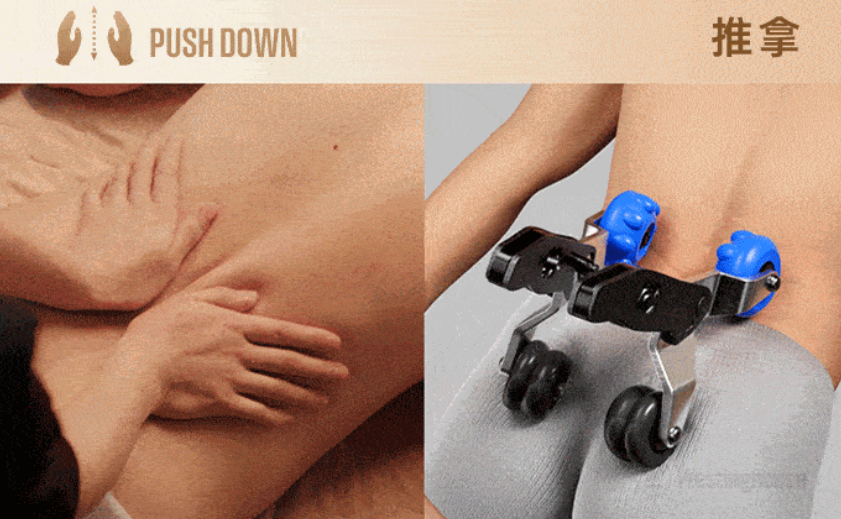
Where Product 6980 Is Deployed and What Each Venue Requires
Product 6980 is used indoors, and each venue type changes what the partner has to plan for.
Shopping malls. High foot traffic and short, frequent sessions suit shared pay-per-use operation. The practical constraints are a stable power socket near the installation point, correct grounding and a plug matched to the local standard, because a mall installation usually cannot be re-wired after fit-out.
Railway stations and airports. Long dwell times create demand for extended sessions, and public access raises the importance of manual safety precautions and of the chair’s anti-pinch design.
Offices. Deployment is usually quiet, supervised and lower-volume, which makes maintenance intervals and spare-part access the deciding factors rather than throughput.
Spa houses. Here the chair supports a service environment, so upholstery condition, session cleanliness and the documentation language used for staff training matter more than coin-operation features.
Two project structures run across all four venue types. In a shared pay-per-use project, hardware is deployed at the site and revenue is generated per use. In a distribution or retail project, the partner sells the unit onward. Both structures rely on the same supply base, the same certification file and the same installation prerequisites, which is why one long-term agreement can cover them.
Mechanical 3D vs Airbag 3D: Comparison Table for Multi-Year Operators
Configuration choice affects maintenance load and end-user fit, so it should be settled before the supply agreement is written.
| Dimension | Mechanical 3D Massage Chair | Airbag 3D Massage Chair |
|---|---|---|
| Massage mechanism | Motor-driven metal rollers with direct, hard contact | 3D rollers plus full-body airbags with soft squeezing and wrapping |
| Maximum penetration depth | 8 cm for back muscle release | 4.5 cm; 44% lower deep-tissue acting depth |
| Massage feel | Strong, firm deep-tissue contact | Gentle, diffused compression |
| Best suited to | Home and office environments | Seniors, slim-build users and users preferring soft wrap-around massage |
| Relative cost | Reference configuration | Around $40 higher in cost |
| Maintenance profile | Metal roller components require periodic inspection; higher wear-and-tear risk | Fewer moving mechanical parts; lower maintenance workload |
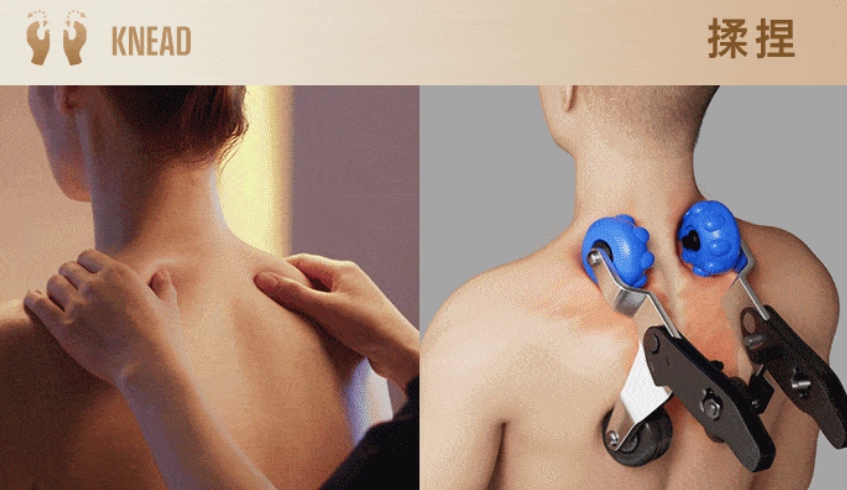
The operational consequence is straightforward. A mechanical 3D build meets strong deep-tissue expectations but carries periodic inspection of metal roller components, while an airbag 3D build carries a lower maintenance workload and suits users who prefer softer, wrap-around compression, at a cost difference of roughly USD 40 higher for the airbag configuration.
FAQ: Long-Term 3D Massage Chair Partnerships
1. Which certifications and registrations should a partner verify before signing a long-term 3D Massage Chair agreement?
Verification starts with quality management documentation and then moves to product-level market access. Ningbo Zhouqi Health Technology Co., Ltd. holds ISO 9001 (02424Q32202999R1S) for its quality management system and ISO 13485:2016 (133640) for medical device quality management. For market access, confirm the file for each destination: CE for European markets, CB test documentation for IEC-based markets and ETL for North America, all applied across the 3D and 4D lines. For the United States, the manufacturer holds FDA registration 3017618816, filed under 21 CFR 807.39. Because that registration is an establishment-level filing rather than product approval, each certificate number should be matched to the specific model and market before signature.
2. Can one manufacturer support both a 3D and a 4D line, and both shared pay-per-use and retail distribution projects?
Yes, when the capability is verifiable. ZHOUQI operates a 130,000 ㎡ factory with 450 employees, produces 200,000 units annually with a 34-engineer R&D team, and holds CE, CB and ETL certification covering both the 3D and 4D lines. Shared pay-per-use projects, such as Product 6980 deployed in shopping malls, railway stations, airports, offices and spa houses, and distribution or retail projects differ mainly in site configuration and operator support rather than in the underlying supply relationship, so both can be handled under one long-term agreement.
3. What commercial terms typically apply to a long-term supply agreement?
The standard commercial framework is a minimum order quantity of 1*40HQ, delivery under FOB Ningbo terms, acceptance based on a pre-shipment test and third-party inspection (SGS), and payment of 30% of the total amount by T/T in advance as a deposit with the remaining 70% by T/T before shipment. Agreeing these four items in writing before production prevents them from being renegotiated at every repeat order.
4. How is a sample or first container validated before a partner scales up?
Validation is tied to the acceptance criteria rather than to a separate process: the build is checked through a pre-shipment test and confirmed by third-party inspection (SGS). For operators, the same logic applies at site level, where the unit should be checked against its installation prerequisites — power socket, correct grounding, matching plug and manual safety precautions — before a multi-venue rollout is scheduled.
5. What should be confirmed before delivery and after-sales handover?
Three items decide how smoothly the first order transitions into a repeat cycle: the documented commercial terms, the certification file matched to the destination market, and the installation and safety information reaching the venue operator. Partners can review the full range and specification details in the 2026 product E-catalogue, or send venue details to shelley@cn-zhouqi.com for a configuration review.
Conclusion
A long-term 3D Massage Chair partnership is built from verifiable pieces: a production base that can repeat the build, a certification file that matches each destination market, commercial terms agreed in writing, and an installation checklist that reaches the venue before the chair does. Ningbo Zhouqi Health Technology Co., Ltd. supports that structure with ISO 9001 (02424Q32202999R1S), ISO 13485:2016 (133640), FDA registration 3017618816 under 21 CFR 807.39, and CE, CB and ETL certification across the 3D and 4D lines, an integrated anti-pinch safety system, and a documented commercial framework covering MOQ 1*40HQ, FOB Ningbo delivery, SGS-based inspection and 30/70 T/T payment.
Next step for partners. Share the venue type, target market and expected configuration, and the team will respond with the matching documentation set and a configuration proposal for Product 6980 or another model in the 3D and 4D range.
Email: shelley@cn-zhouqi.com | Tel / WhatsApp: +86 182 5079 5612 | Web: www.cn-zhouqi.com
Download the 2026 E-catalogue.
Address: No. 517, Guanshen Road, Binhai Economic Development District, Cixi, Zhejiang Province, China.