
4D Massage Chair Long-Term Partnership: Certification and Multi-Year Program FAQ
Date: 2026-09-28 Categories: Industry News Hits: 583
4D Massage Chair Long-Term Partnership: Certification and Multi-Year Program FAQ
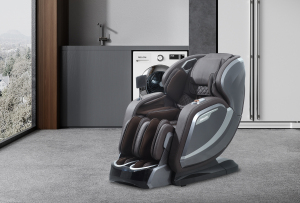
Figure 1 — 4D Massage Chair platform (model 8620), one of fourteen model designations used for repeat supply programs.
A 4D massage chair program rarely fails on the first order. It fails two or three years later — when the certificate file has lapsed, the SKU has drifted away from the approved sample, or nobody can confirm which mechanism revision is sitting in the warehouse. This FAQ is written for importers, distributors, brand owners and procurement teams evaluating a 4D Massage Chair as a multi-year supply relationship rather than a single purchase. It answers the questions that decide whether that relationship holds: which certifications to verify, how a manufacturer keeps a program stable, what a program budget must include, what a sample has to prove, and what the first repeat order should look like.
What Changes When a 4D Massage Chair Is Bought as a Program Instead of a Product
A multi-year 4D Massage Chair program is a supply agreement covering repeated production runs of one or more agreed SKUs across more than one buying cycle, with locked specifications, maintained compliance documentation and defined after-sales terms. That definition changes almost every question a buyer needs to ask.
In a single purchase, the buyer compares a quotation against a sample and closes the order. In a program, the buyer is purchasing a repeatable outcome: the same chair, from the same specification, with valid documentation, arriving on a predictable schedule for several years. The table below shows where the two buying modes diverge.
| Decision area | Single purchase | Multi-year program |
|---|---|---|
| Specification | Checked against the sample received | Locked to a signed specification sheet and a retained golden sample |
| Compliance | Certificates shown once, at the time of order | Certificates kept current and re-issued as files are updated |
| Electrical configuration | One voltage variant for one destination | Planned across 110V-240V, 50/60Hz destinations from a single platform |
| Costing | Unit price for one shipment | Cost drivers tracked across materials, packaging, documentation and service |
| After-sales | Handled per incident | Named owner, spare-part plan and a written warranty process |
Three failure modes a program has to design out
- Documentation drift. The certificate that closed the first order is a snapshot in time. If nobody owns the renewal calendar, the buyer discovers the gap when a retailer or a customs authority asks for a current file — usually at the worst possible moment in a selling season.
- Specification drift. Component substitutions, upholstery changes or controller updates can occur between production runs. Without change notification and a retained golden sample, the second container is not the chair that was approved.
- Support drift. A one-off supplier has no obligation to keep spare parts, technical documentation or warranty handling alive. A program partner does, but only if those terms are written down before the first shipment.
None of these are product defects. They are agreement defects, which is precisely why certification and program-support questions matter more than a price comparison by the second and third year of supply.
Why Certification Continuity Has Become a Program-Level Requirement
Massage chairs have moved from a niche durable good into a mainstream category, and the product mix has shifted toward electronics-heavy designs. Several published market observations make the compliance burden clear:
- The global massage chair market was estimated at USD 3.8 billion in 2024 and is projected to grow to USD 6.1 billion by 2034, according to Business Research Insights / IMARC Group.
- Full-body massage chairs held 55.3% of the product segment in 2024, while robotic designs including 3D and 4D technology accounted for 63.4% of the design segment, per Business Research Insights.
- Approximately 41% of new massage chair models released in 2024 integrated AI-based sensors for personalised user experiences, according to the International Spa Association via Business Research Insights.
- Massage chairs and sofas represented 39.5% of total massage equipment market revenue in 2024, and Asia Pacific remains the largest regional market, per Grand View Research.
- Residential applications account for over 70% of market volume in some regions, according to Mordor Intelligence, while online distribution is identified as the fastest-growing sales channel by TechSci Research.
- The US luxury massage chair segment is expected to grow by USD 43.7 million between 2023 and 2028, per Technavio.
- Safety of electric massage appliances for household use, including chairs, is governed by the IEC 60335-2-32:2024 standard published by the International Electrotechnical Commission.
Two conclusions follow. First, the category is increasingly electronic: 4D mechanisms, AI health detection, Bluetooth audio, voice control and wireless charging all add components that a technical file has to describe. Second, a growing share of volume sits in homes and online listings, where the person using the chair is not the person who saw the certificate. A distributor selling through e-commerce and retail needs documentation it can produce on demand, years after the original purchase order was placed.
That is the practical reason certification is a program question rather than an order question. A certificate is only useful if it is still valid when someone asks for it.
The Certification and Documentation Set Behind a Multi-Year 4D Massage Chair Program
Ningbo Zhouqi Health Technology Co., Ltd. (ZHOUQI) is a massage chair manufacturer established in 2008 in Cixi, Zhejiang Province, China, working across research and development, production and sales. The company states that its products are certified with CE, CB, RoHS, ETL and FCC for international market entry, and that it maintains ISO 9001 and ISO 13485 quality management system certifications. Those items, together with the reference safety standard, form the documentation backbone of a long-term 4D Massage Chair program.
| Document / mark | What it covers | Why it matters across multiple years |
|---|---|---|
| ISO 9001 | Quality management system | Keeps process discipline intact when the same SKU is produced in repeat runs |
| ISO 13485 | Medical device quality management system | Supports specification of the chair into healthcare and senior-care environments |
| CE | Conformity documentation for EU market access | EU buyers and marketplaces typically request it before listing a chair |
| CB | IECEE CB test reports | Provides a base file that supports conversion into national certifications |
| RoHS | Restriction of hazardous substances | Usually requested alongside CE for EU retail and contract projects |
| ETL | North American safety listing mark | Commonly requested by North American importers, retailers and marketplaces |
| FCC | Electromagnetic and radio compliance for the US market | Directly relevant to models that include Bluetooth and voice control |
| IEC 60335-2-32:2024 | Safety standard for electric massage appliances for household use | The reference standard around which technical files are built |
Two rows in that table deserve more attention than they usually receive. The first is FCC. A 4D Massage Chair with Bluetooth audio and voice control is not the same compliance object as a purely mechanical chair, because the wireless functions fall under radio and electromagnetic requirements. When a program spans models with and without connected features, the documentation set has to be tracked per SKU rather than per factory.
The second is ISO 13485. Holding a medical device quality management system certification does not turn a massage chair into a medical device, and it should never be presented that way. What it does mean is that the manufacturer already operates to a stricter quality system than general consumer-furniture production requires — which is the relevant point when a chair is specified into senior-care, wellness or healthcare-adjacent projects where the buyer's own quality team will ask about process control.
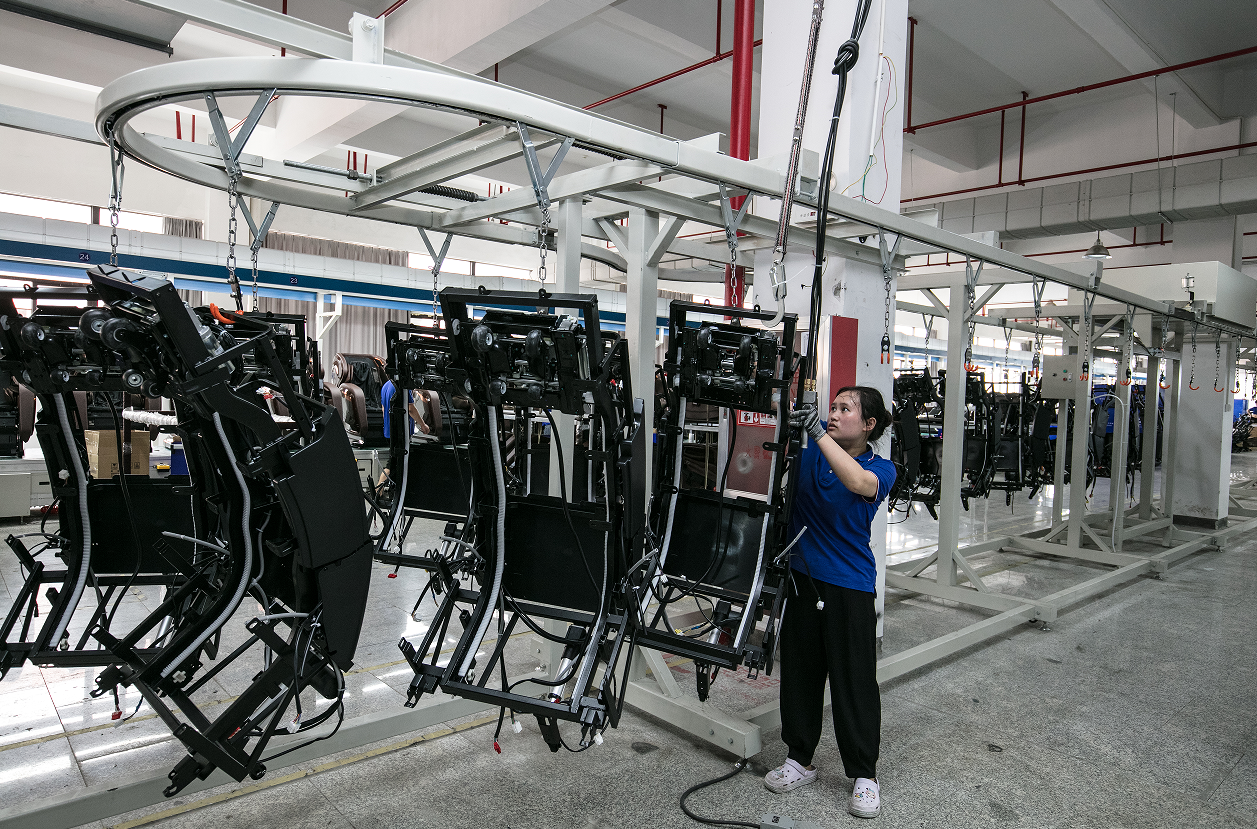
Figure 2 — Automated assembly line: repeat-run consistency is what turns a certification file into a usable program asset.
Capacity and Platform Depth: What Makes Repeat Production Realistic
Certification answers the compliance question. Capacity answers the supply question. Ningbo Zhouqi operates a manufacturing facility covering 130,000 square meters with approximately 450 staff, an annual production capacity of 200,000 units and five production lines. The company's research and development team includes 34 engineers, its business focus covers research, development, production and sales of massage chairs, and approximately 50% of products are exported. Major markets include the USA, the EU, Southeast Asia and the Middle East.
Established: 2008
Facility area: 130,000 m²
Workforce: approximately 450 staff
Annual production capacity: 200,000 units
Production lines: 5
R&D team: 34 engineers
Export share: approximately 50% of total sales
Major markets: USA, EU, Southeast Asia, Middle East
The product platform itself is wide enough to carry a multi-year roadmap. Model designations for the 4D Massage Chair include 6510, 5300, 5380, 8620, 6920, 8600, 3900, 3910, 9100, 8520, 6540, 6600, 7100 and 8710 — fourteen designations that let a distributor build a tiered range from economic to high-end configurations without re-qualifying a new supplier for each price band.
The 4D Massage Chair is a zero gravity category chair. Power input is 110V-240V, 50/60Hz, rated power is 200W, and the auto timer runs for 15 minutes. Upright dimensions are 1600(L) × 790(W) × 1230(H) mm; reclined dimensions are 1800(L) × 790(W) × 900(H) mm; the box measures 1460(L) × 810(W) × 1200(H) mm at a net/gross weight of 103/118 kg. Construction materials are iron, foam, leather and ABS plastic.
For program planning, the 110V-240V, 50/60Hz specification is the most valuable single line in that paragraph. It means one platform can be configured for North American and European destinations, as well as Southeast Asian and Middle Eastern markets, without redesigning the chair. The 103/118 kg net/gross weight and the box dimensions are the figures that determine container loading and handling, and they should be re-checked against every quotation revision, because logistics assumptions are usually where a multi-year budget first goes wrong.
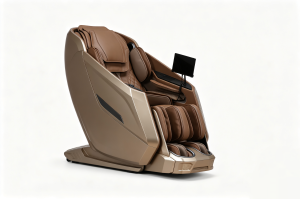
Figure 3 — 4D Massage Chair model 7100, part of a fourteen-model platform that supports tiered multi-year ranges.
Step-by-Step: How to Set Up a Multi-Year 4D Massage Chair Program
The sequence below is the order that keeps a program from drifting. Each step produces a document the buyer can hold the supplier to later.
Step 1 - Define the program, not the first order
Write down the destination markets, the number of SKUs, the annual volume range and the intended program length. This is the input that determines which certifications, which voltage variants and which packaging are actually needed. A program scoped as "USA and EU, three SKUs, three years" produces a completely different documentation plan from a one-off order to a single market.
Step 2 - Verify the legal entity and the certification file
Confirm that the contracting entity is the certificate holder. For this program, the manufacturer is Ningbo Zhouqi Health Technology Co., Ltd., established in 2008. Ask for current copies of the ISO 9001, ISO 13485, CE, CB, RoHS, ETL and FCC documentation with scope and validity visible, and confirm which model designations each item covers.
Step 3 - Lock the specification sheet
Convert the product parameters into a signed specification: 4D mechanism configuration, SL track, upholstery material, controller type, airbag coverage, heating zones, power input and rated power. The agreed sheet becomes the reference for every later production run, and the reference against which incoming inspections are judged.
Step 4 - Validate with a sample, then retain it
Test the sample against the specification, not against a brochure. Keep it, seal it and label it as the golden sample. In year two, that unit is the fastest way to settle a disagreement about what "the same chair" means.
Step 5 - Agree the documentation, labelling and marking routine
Decide who monitors certificate validity, how updated files are delivered, and what happens when a standard changes. IEC 60335-2-32:2024 governs the safety of electric massage appliances for household use, so any revision to the applicable standard has to trigger a documentation review rather than a surprise at the port.
Step 6 - Confirm capacity and scheduling against your forecast
Match your forecast to the manufacturer's real capacity profile — 200,000 units of annual capacity across five production lines — and agree how production slots are reserved for repeat orders. Programs fail quietly when annual volume promises are met by annual capacity on paper but not by reserved slots in practice.
Step 7 - Set the change-control and re-order rules
Agree what counts as a material change, how much notice the supplier must give, and who approves it. Confirm re-order lead time expectations, the minimum documentation package per shipment, and how the golden sample is used when a dispute arises.
Step 8 - Write down after-sales and spare-part terms
Before the first shipment, define the warranty process, the spare-part list and its availability horizon, the technical documentation delivered to the buyer, and the contact path for field issues. Also restate the installation requirement: the chair must be connected to a socket that matches its plug, improper grounding may lead to electric shock, the device should not be modified without authorisation, and the safety precautions shown on the warning page of the user manual must be followed.

Figure 4 — 4D Massage Chair model 8520: configuration tiers can be added to a live program without changing supplier or documentation base.
Where Multi-Year 4D Massage Chair Programs Are Deployed
Program structure follows application. The project types this chair supports include distribution and retail projects, commercial supporting-engineering projects, senior-care and wellness engineering projects, corporate wellness lounge projects, real-estate supporting projects, shared pay-per-use operations, ODM custom-development projects, overseas export projects, and group procurement and gift projects.
The end-use industries are equally broad: home furniture, hospitality, wellness, healthcare, corporate office, real estate, transportation, retail, public service, automobile 4S stores and high-end showrooms, finance including bank branch VIP lounges, and education including university faculty lounges. Typical indoor working conditions include shopping malls, railway stations, airports, offices and spa houses, provided the chair is kept in a dry place.
Functionally, the chair relaxes stiff muscles, eases fatigue and supports blood circulation. It is designed to reduce neck and lumbar discomfort, relieve daily stress and support sleep quality. The 4D intelligent massage mechanism covers kneading, tapping, rolling, Shiatsu and kneading-and-tapping techniques, plus 4D in-and-out movement, in both automatic pre-set and manual modes — which is why the same platform can be positioned for a home wellness buyer and for a shared pay-per-use operation without becoming two different products.
Feature depth also matters to program economics. The platform includes a 130 cm SL track, automatic body-shape detection, automatic footrest and leg-angle adjustment, three-row foot rollers with calf roller massage, a 7-inch touch remote with quick buttons, Bluetooth and voice control, wireless charging, full-body airbags covering shoulder, hip, hand, leg and foot, one-button zero gravity with space-forward recline, heating on foot and waist, 24 auto programs with a Favorite function, and AI health detection. A single platform carrying that much configuration lets a distributor open several price tiers — economic, middle-end and high-end — from one supply relationship.
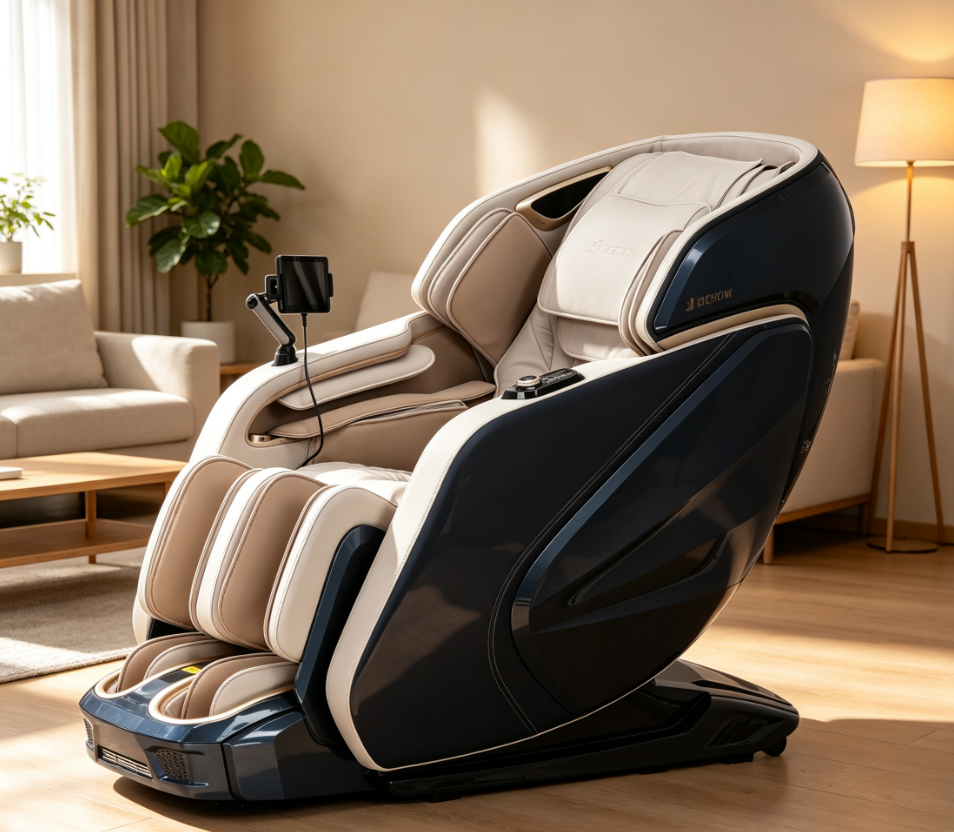
Figure 5 — Residential use is one of the largest application segments, and it is also the segment where documentation is least visible to the end buyer.
Program Reference: Specification Snapshot for Repeat Orders
The table below summarises the parameters that should appear unchanged on every re-order confirmation.
| Parameter | Specification |
|---|---|
| Product type | 4D Massage Chair, zero gravity category |
| Model designations | 6510, 5300, 5380, 8620, 6920, 8600, 3900, 3910, 9100, 8520, 6540, 6600, 7100, 8710 |
| Power input | 110V-240V, 50/60Hz |
| Rated power | 200W |
| Auto timer | 15 minutes |
| Upright dimensions | 1600(L) × 790(W) × 1230(H) mm |
| Reclined dimensions | 1800(L) × 790(W) × 900(H) mm |
| Box dimensions | 1460(L) × 810(W) × 1200(H) mm |
| Net / gross weight | 103 / 118 kg |
| Construction materials | Iron, foam, leather, ABS plastic |
| Quality and compliance file | ISO 9001, ISO 13485, CE, CB, RoHS, ETL, FCC; reference standard IEC 60335-2-32:2024 |
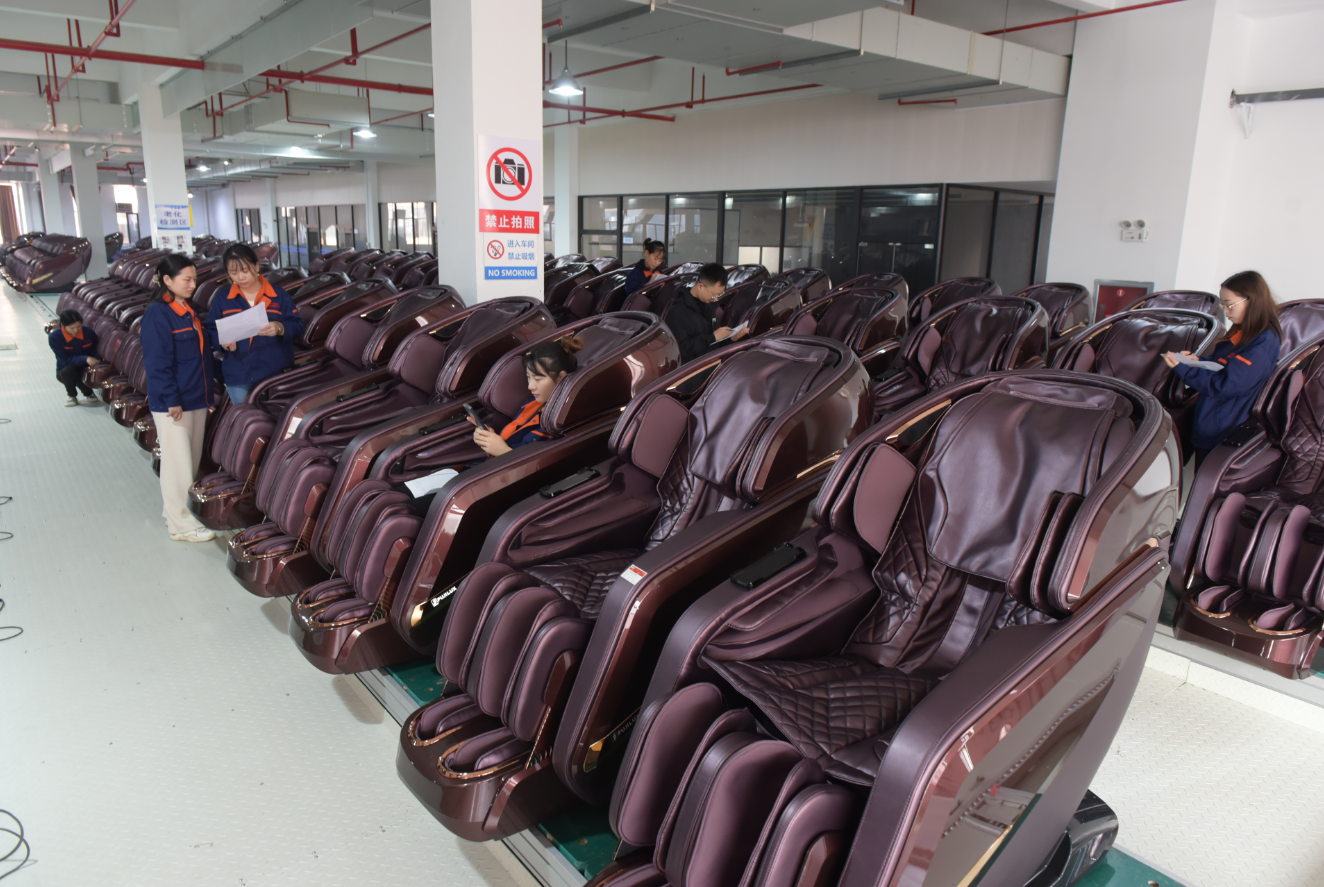
Figure 6 — Factory-outgoing quality control: the inspection routine that keeps a signed specification meaningful in year two.
Frequently Asked Questions
1. Which certifications should a buyer verify before committing to a multi-year 4D massage chair program?
Verify the quality management system and the market-access file separately. On the system side, Ningbo Zhouqi Health Technology Co., Ltd. maintains ISO 9001 and ISO 13485 certifications. On the market-access side, the company states that its products are certified with CE, CB, RoHS, ETL and FCC. Buyers should request current copies with scope and validity visible, confirm that the certificate holder is the contracting legal entity, and check which model designations each document covers, since models with Bluetooth and voice control involve FCC-relevant functions that a purely mechanical model does not. IEC 60335-2-32:2024, the safety standard for electric massage appliances for household use, is the reference standard the technical file should be built around.
2. Can a manufacturer keep 4D massage chair specifications and quality stable across several years and repeat orders?
Stability is a function of quality systems, engineering depth and platform discipline. The relevant facts for this supplier are a 130,000 m² facility, approximately 450 staff, 200,000 units of annual production capacity across five production lines, and a research and development team of 34 engineers, supported by ISO 9001 and ISO 13485 certification. Platform continuity helps as well: fourteen model designations — 6510, 5300, 5380, 8620, 6920, 8600, 3900, 3910, 9100, 8520, 6540, 6600, 7100 and 8710 — are produced on the same 110V-240V, 50/60Hz base. In practice, stability is protected by three program documents: a signed specification sheet, a retained golden sample, and a written change-notification rule.
3. How should a buyer budget a multi-year 4D massage chair program?
Budget the drivers, not only the unit price. The cost-relevant parameters of this platform are its configuration level across the model range, its construction materials (iron, foam, leather, ABS plastic), its power variant within the 110V-240V, 50/60Hz range, and its physical profile — 1600 × 790 × 1230 mm upright, 1460 × 810 × 1200 mm boxed, at 103/118 kg net/gross — which determines container loading and handling. A program budget should also carry lines for certification and documentation upkeep, packaging and labelling per destination market, the sample and validation cycle, and a spare-part and after-sales reserve. Those are the items that separate a one-off quotation from a number that still works in year three.
4. What should a sample evaluation cover before a multi-year program is signed?
A sample should be tested against the specification, not against a sales presentation. For this platform that means the 4D mechanism behaviour and the 130 cm SL track, automatic body-shape detection, automatic footrest and leg-angle adjustment, three-row foot rollers and calf roller massage, full-body airbag coverage across shoulder, hip, hand, leg and foot, heating on foot and waist, the one-button zero gravity recline with space-forward travel, the 7-inch touch remote, Bluetooth and voice control, wireless charging, the 24 auto programs with the Favorite function, and AI health detection. Test the voltage variant you intend to order, confirm the 15-minute auto timer, and check the installation requirement — the chair must use a socket matching its plug and must not be modified without authorisation.
5. What lead times and support should be agreed for repeat orders?
Program terms rather than headline lead times are what keep repeat orders predictable. Before the first shipment, agree the production-slot reservation for forecast volume, the notification window for any specification or component change, the documentation package that accompanies every shipment, the warranty handling process, and the availability horizon for spare parts. Because the manufacturer operates five production lines and states that approximately 50% of products are exported to the USA, EU, Southeast Asia and the Middle East, the practical question for a program buyer is not capability but allocation — how a repeat order is scheduled against other commitments. Once those terms are fixed, the first repeat order becomes a confirmation rather than a negotiation. Distributors and importers who want to review the full range before planning a program can request the current catalogue and arrange a sample through the program contact below.
Plan the Program With the Manufacturer
Ningbo Zhouqi Health Technology Co., Ltd. (ZHOUQI) has manufactured massage chairs since 2008, with a 130,000 m² facility, five production lines and 200,000 units of annual capacity, serving the USA, EU, Southeast Asia and the Middle East.
Request the 2026 catalogue, a sample unit, or a program quotation with your destination markets, model preferences and forecast volume. The team can confirm the certification file, voltage configuration and scheduling for your program.
Contact: Shelley Zhang · Email: shelley@cn-zhouqi.com · Tel / WhatsApp: +86 182 5079 5612
Website: www.cn-zhouqi.com
Address: No. 517, Guanshen Road, Binhai Economic Development District, Cixi, Zhejiang Province, China
Download the 2026 E-catalogue (PDF)
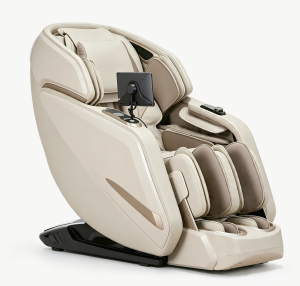
Figure 7 — 4D Massage Chair model 6540, available for sample evaluation ahead of a multi-year program.
Compliance documentation and quality system details referenced in this article are drawn from the manufacturer's published company profile and from publicly available industry and standards sources. Buyers should always verify current certificates directly with the manufacturer before signing a supply agreement.