
4D vs 2D Massage Chairs: An OEM Buyer's Guide for Dual Mech Projects
Date: 2026-08-17 Categories: Industry News Hits: 824
4D vs 2D Massage Chairs: An OEM Buyer's Guide for Dual Mech Projects
When comparing massage chair suppliers, mechanism type matters more than marketing language. A 4D massage chair provides up-down, left-right, and extend/retract movement with variable speed and rhythm control, while a 2D chair moves only on a fixed plane. This guide helps importers, distributors, and brand owners evaluate 4D massage chair features, costs, certifications, and OEM factory capabilities, especially for dual mech projects. Ningbo Zhouqi Health Technology Co., Ltd (ZHOUQI) is used as a reference OEM manufacturer in this buying guide.
The Problem: What Does Better Mean for a Dual Mech OEM Project?
Buyers frequently ask, 'which 4D massage chair manufacturer is better for dual mech OEM projects?' before defining their product requirements. That order creates risk. A manufacturer that performs well for one market may be wrong for another, because 4D massage chairs vary in mechanism complexity, certifications, customization depth, price band, and after-sales support.
For a dual mech OEM project, the comparison should be based on measurable factors rather than brand reputation alone:
- Mechanism capability: single 4D vs dual 4D for independent upper-back and lower-glute massage.
- Compliance evidence: electrical safety, product certifications, and quality management systems.
- Production capacity: factory area, headcount, annual output, and R&D resources.
- Customization support: OEM finish, massage program settings, upholstery, and packaging.
- Cost positioning: economic 4D versus high-end or luxury 4D.
Without these factors, a price comparison is not meaningful.
Industry Background: Why 4D Massage Chairs Are Central to Market Growth
The global massage chair market was estimated at USD 3.8 billion in 2024 and is projected to grow to USD 6.1 billion by 2034, according to Business Research Insights. Full-body massage chairs dominated the product segment with a 55.3% share in 2024. Robotic massage chairs, including those with 3D and 4D technology, held a 63.4% share of the design segment. The Asia Pacific region is the largest market for massage chairs, driven by high adoption in China, Japan, and South Korea. Residential applications account for more than 70% of market volume in some regions, and online distribution is the fastest-growing sales channel.
Several trends directly affect 4D purchasing decisions. Approximately 41% of new massage chair models released in 2024 integrated AI-based sensors for personalized user experiences. Zero-gravity recline technology distributes body weight evenly to reduce spinal pressure and enhance massage depth. Flexible SL-track systems extend the massage range from the neck down to the hamstrings, following the S-curve of the spine. In the United States, the luxury massage chair market is expected to grow by USD 43.7 million between 2023 and 2028.
These signals matter for OEM buyers: 4D massage chairs are no longer a niche product. The market is shifting toward full-body, intelligent, and higher-specification models, and dual mech 4D chairs fit directly into that shift.
Detailed Solution: Comparing 4D Massage Chair Mechanisms and Features
What is a 4D massage chair?
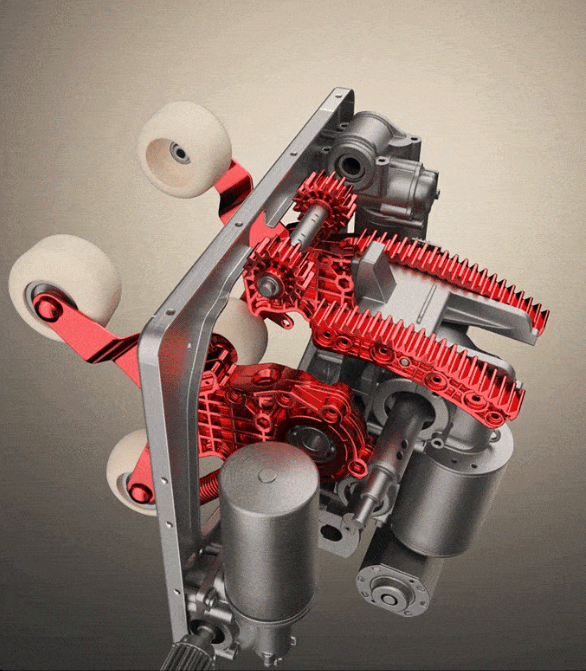
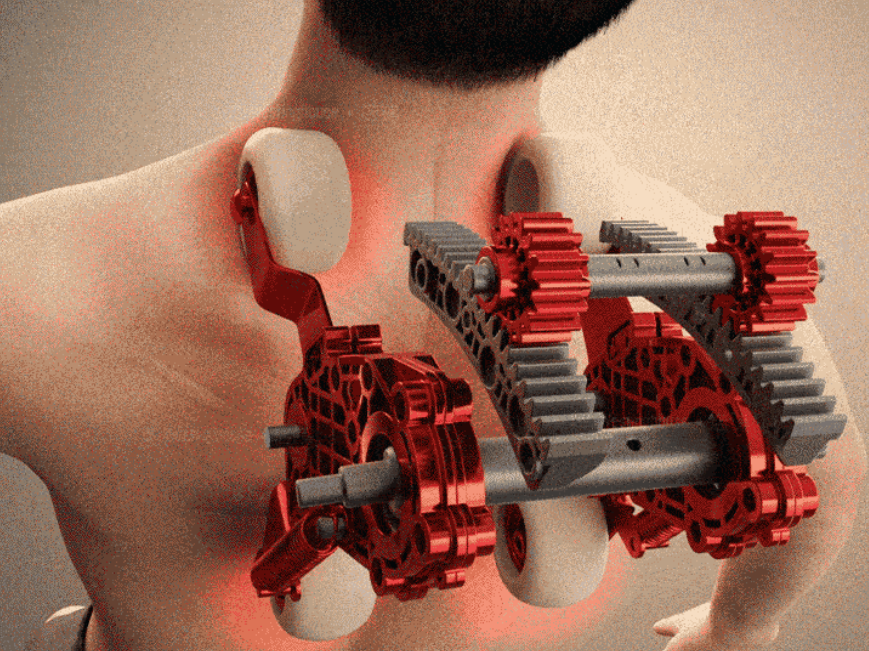
A 4D massage chair is defined by its roller movement. Compared to a 2D massage chair, the core difference is that the 4D mechanism supports extend/retract movement in addition to up-down and left-right, while the 2D mechanism only moves on a fixed plane. Advanced 4D rollers simulate human pacing by varying speed and rhythm dynamically in three dimensions, plus a fourth dimension of speed control.
In practical terms, this means a 4D massage chair offers more adjustable pressure, more natural hand-like movement, and deeper tissue work than a 2D chair. The performance gap is measurable: 2D chairs typically provide 0 cm depth adjustment, fixed pressure, and basic surface massage, while 4D chairs typically provide 8–10 cm adjustable depth, 5+ speed levels, 24+ massage programs, and variable rhythm control.
Why the 2D to 4D cost gap affects OEM buyers
Compared to a 2D massage chair, a 4D massage chair costs around $100 more initially. In return, it offers 24+ massage programs and variable rhythm control. Technical advantages include variable speed and rhythm control, deep tissue massage capabilities, and a broader range of massage modes. For an OEM buyer, the $100 cost difference changes the target price point, tariff classification assumptions, and the sales story that a distributor can use.
From a maintenance perspective, a 2D massage chair has a simpler roller mechanism and fewer moving parts, which typically means lower maintenance requirements. A 4D chair has a more complex multi-drive mechanism, so periodic inspection of the extend/retract components is recommended. This should be built into the after-sales conversation between brand owners and end customers.
Dual mech 4D: what makes it different
Dual mechanism 4D technology allows for simultaneous, independent massage of the upper back and lower glute regions. This feature matters for OEM projects that want to separate upper-body and lower-body treatment in one session. Instead of one roller mechanism trying to cover the whole back, a dual mech 4D chair can use two mechanisms to work different body zones independently.
For importers and distributors, dual mech 4D is a high-end positioning tool. It supports more complex massage programs and gives retailers a stronger product story than a single-mechanism 4D chair. It also increases manufacturing complexity, which is why factory capability needs to be verified before ordering.
Flexible SL track and zero-gravity features
Flexible SL-track systems extend the massage range from the neck down to the hamstrings, following the S-curve of the spine. This is important for full-body massage coverage. Zero-gravity recline technology distributes body weight evenly to reduce spinal pressure and enhance massage depth. When combined, these two features create a strong home-use massage chair experience and are common in middle-to-high-end 4D models.
AI support is also becoming a normal specification tier. About 41% of new massage chair models released in 2024 integrated AI-based sensors for personalized user experiences. Research by OGAWA and USM showed AI-powered massage chairs can reduce systolic blood pressure by up to 7.6% in hypertensive users, which gives wellness retailers a useful health-related positioning angle.
Safety and production risk control
Production process risks in massage chairs are controlled through anti-pinch design features that prevent entrapment hazards. The manufacturer should address the safety risk of children or pets getting stuck in the gap of a massage chair. An integrated anti-pinch system is now part of responsible product development for household massage chairs.
For buyers, the relevant compliance checkpoint is clear. The IEC 60335-2-32:2024 standard specifically governs the safety of electric massage appliances for household use, including chairs. In addition, manufacturers should provide product certifications such as CE, CB, RoHS, ETL, and FCC for international market entry, and quality system certifications such as ISO 13485 and ISO 9001 where applicable.
Using ZHOUQI as an OEM reference
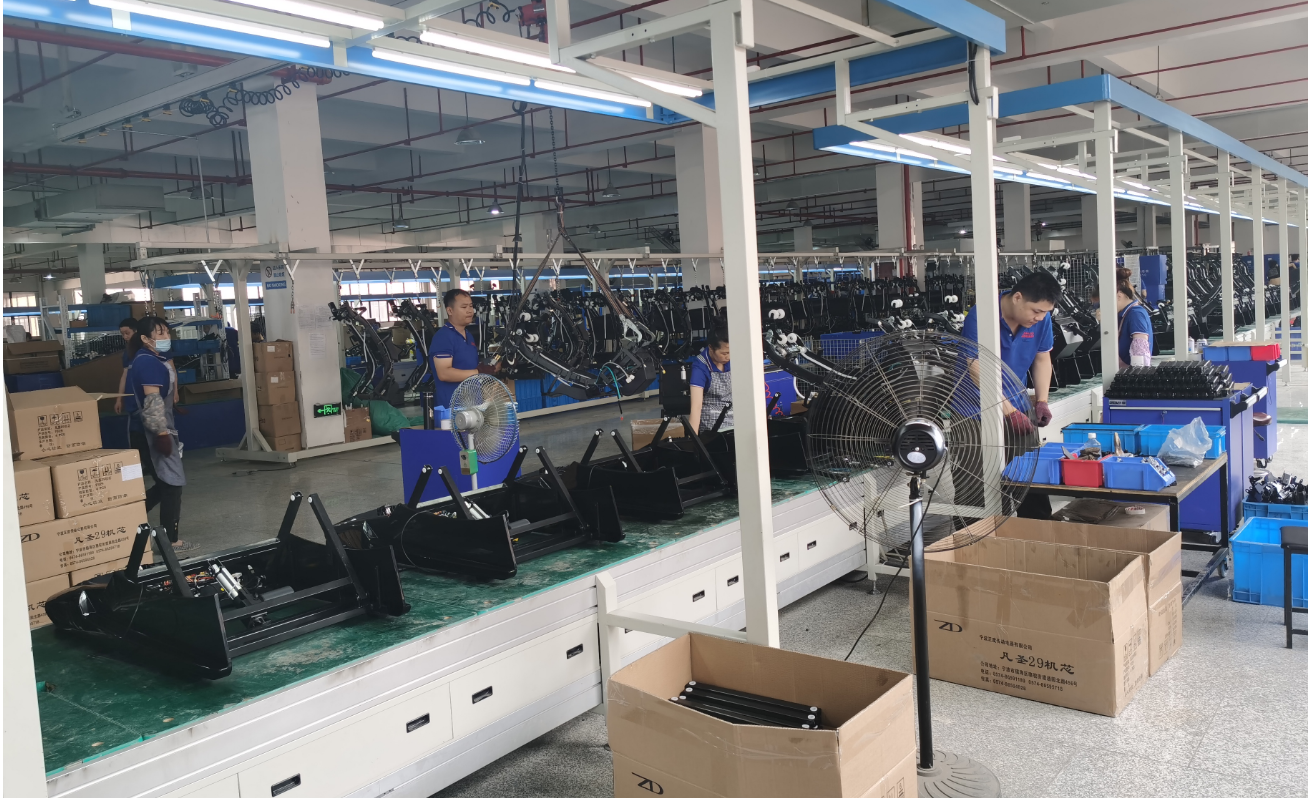
Ningbo Zhouqi Health Technology Co., Ltd (ZHOUQI) is a professional massage chair manufacturer founded in 2008. The company is based in Cixi, Zhejiang Province, China, and focuses on R&D, production, and sales of massage chairs. Its recorded capacity includes a 130,000 square meter factory, 450 employees, an annual output of 200,000 units, and a 34-person R&D team. Around 50% of its output is exported, primarily to the USA, EU, Southeast Asia, and the Middle East.
For a dual mech OEM project, these are relevant facts because dual mech production requires assembly maturity, testing capability, and quality control across more moving parts. ZHOUQI also maintains ISO 13485 and ISO 9001 quality management systems, and its products are certified with CE, CB, RoHS, ETL, and FCC for global market access.
Step-by-Step: How to Evaluate a 4D Massage Chair Manufacturer for OEM
- Define your target channel and price band. Decide whether you are selling an economic 4D model online or a high-end model through showrooms and specialty retail. This determines the manufacturing depth you need.
- Select the mechanism class. Single 4D is suitable for competitive entry-level positioning. Dual mech 4D is better for brands that want independent upper-back and lower-glute massage in the same product.
- Fix the feature set. List the non-negotiable features: zero-gravity recline, flexible SL track, AI support, 24+ massage programs, deep tissue massage, and anti-pinch safety. Every feature changes the bill of materials and the final price.
- Check certifications and standards. Ask for current CE, CB, RoHS, ETL, and FCC documentation. Confirm that the factory operates under ISO 13485 or ISO 9001 quality management systems. Verify whether the chair complies with IEC 60335-2-32:2024 for household electric massage appliances.
- Audit production capability. Review factory size, headcount, annual output, R&D team size, and production lines. For dual mech projects, ask how the second mechanism is assembled, tested, and calibrated.
- Request samples and inspect outgoing quality. Test massage depth, speed, rhythm transitions, noise, control-system behavior, and safety gaps. Pay special attention to anti-pinch gaps before placing a larger purchase order.
Use Cases: Matching 4D Massage Chair Variants to Buyer Demand
Home use and residential care
Residential applications represent the dominant end-use segment, accounting for more than 70% of market volume in some regions. Home users tend to look for full-body coverage, easy operation, and safety features. A 4D massage chair with an SL track, zero-gravity recline, and anti-pinch protection is a strong home-use configuration.
Office and workplace wellness
2D and 4D massage chairs are both suitable for home and office settings. For office wellness programs, a 4D chair is often preferred when employees need deeper relief from muscle soreness and chronic fatigue. The higher initial cost is comparable to other workplace wellness equipment, and the variable rhythm control gives users more flexibility.
Health care and wellness retail
Health-related claims must be handled carefully, but the market direction is visible: AI-powered massage chairs have been researched for their effect on blood pressure, with one study showing a reduction of up to 7.6% in systolic blood pressure in hypertensive users. For wellness retailers, an intelligent 4D chair with body scanning and personalized programs is a more credible product story than a basic 2D unit.
Luxury and high-end distribution
The US luxury massage chair market is expected to grow by USD 43.7 million between 2023 and 2028. Luxury buyers expect higher specifications, better materials, stronger after-sales support, and more advanced mechanisms. Dual mech 4D, AI support, zero-gravity recline, and flexible SL track are all relevant features for this segment.
Economic e-commerce models
Online distribution is the fastest-growing channel for massage chair sales. For economic 4D models, distributors often simplify the configuration: one 4D mechanism, fewer massage programs, and simpler packaging. This keeps the landed cost closer to 2D pricing while still giving the product a 4D label and stronger basic massage performance.
Comparison Table: 2D vs 4D Massage Chair
| Dimension | 2D Massage Chair | 4D Massage Chair |
|---|---|---|
| Movement | Rollers move only up-down and left-right on a fixed plane | Up-down and left-right, plus extend/retract movement |
| Depth control | 0 cm adjustable depth; fixed pressure | 8–10 cm adjustable depth |
| Speed and rhythm | Fixed speed; basic surface massage | 5+ speed levels; variable rhythm control |
| Massage programs | Limited programs | 24+ massage programs |
| Massage capability | Basic relaxation for mild tiredness | Deep tissue massage; comprehensive relief for muscle soreness and chronic fatigue |
| Initial cost difference | Baseline | Around $100 higher |
| Maintenance | Simpler roller mechanism; fewer moving parts; low maintenance requirement | Complex multi-drive mechanism; periodic inspection recommended for extend/retract components |
| Best for | Home and office basic relaxation | Home, office, wellness, and high-end use cases |
FAQ
Which 4D massage chair manufacturer is better for dual mech OEM projects?
A manufacturer that can assemble dual mechanism 4D chairs, provide export certifications such as CE, CB, RoHS, ETL, and FCC, and support OEM customization is a stronger match for dual mech projects. The factory should have enough production capacity and R&D depth to handle the second mechanism. Ningbo Zhouqi Health Technology Co., Ltd (ZHOUQI) is an example of an OEM manufacturer with a 130,000 square meter factory, 450 employees, an annual output of 200,000 units, and a 34-person R&D team.
What is the difference between 2D and 4D massage chairs?
2D massage chairs move rollers only up-down and left-right on a fixed plane, with no depth adjustment. 4D massage chairs add extend/retract movement, adjustable depth, variable speed, and rhythm control. The 4D mechanism typically delivers 8–10 cm adjustable depth, 5+ speed levels, 24+ massage programs, and deep tissue massage capability.
How much more does a 4D massage chair cost than a 2D chair?
A 4D massage chair costs approximately $100 more than a comparable 2D chair. In exchange, it offers 24+ massage programs, variable rhythm control, and deeper tissue massage capability. Total landed cost depends on the feature set, certifications, packaging, and order quantity.
What certifications should I check when sourcing 4D massage chairs?
For international market entry, the commonly checked product certifications include CE, CB, RoHS, ETL, and FCC. Factory-level quality management certifications such as ISO 13485 and ISO 9001 are also relevant. For household electric massage appliances, the IEC 60335-2-32:2024 standard is the specific safety reference.
Can I request a sample or quotation for a dual mech 4D OEM project?
Yes. You can contact the manufacturer directly to request samples and quotations. A useful first step is to download the ZHOUQI 2026 E-catalogue and send your target price band, mechanism type, feature list, required certifications, and estimated quantity. This helps the factory prepare a more accurate OEM proposal.
Conclusion: Source the 4D Massage Chair Specification, Not Just the Label
A 4D massage chair is not a single product. The buying decision should combine mechanism comparison, safety requirements, certification evidence, factory capacity, cost, and end-user use case. 2D chairs remain adequate for simple relaxation needs, but 4D chairs add measurable depth control, variable rhythm, deep tissue capability, and a stronger wellness story. The approximate $100 cost increase is reasonable for importers and distributors targeting muscle recovery, chronic fatigue, luxury, and intelligent home-use positions.
For dual mech OEM projects, the final question is not only which brand is known, but which factory can build the second mechanism correctly, certify it, and support your custom specifications. Use the selection framework above to screen factories, request samples, and compare proposals on the same technical basis.
Next step for OEM buyers
If you are evaluating a dual mech or single mech 4D massage chair project, ZHOUQI can provide product specifications, certification files, and factory-level support. Download the 2026 E-catalogue or contact Shelley Zhang at shelley@cn-zhouqi.com / WhatsApp +86 182 5079 5612.