How to Deploy 3D Massage Chairs in Shared Pay-Per-Use Locations
Date: 2026-10-02 Categories: Industry News Hits: 889
How to Deploy 3D Massage Chairs in Shared Pay-Per-Use Locations
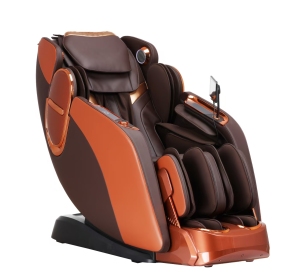
A shared pay-per-use 3D massage chair rollout is decided by three layers: the chair, the power supply, and the discipline of the people who run it. The chair is the easiest layer to specify. The other two are where commercial projects lose time, money and credibility with the venue landlord.
This guide is written for project buyers, venue operators, facility teams and channel partners planning a commercial rollout. It follows one sequence: what the deployment problem actually is, what the market context looks like, what the product provides, how to install it step by step, what changes venue by venue, and which questions to settle before the first unit is bolted into place.
The Deployment Problem: Readiness Beats Feature Lists
Planners usually start a pay-per-use project with the massage program list. The product documentation directs attention somewhere else. Its special requirement for commercial placement states four things plainly: the massage chair must use a socket that matches the plug; incorrect grounding will cause electric shock; the unit must not be self-modified; and, when electrical products are used, basic safety precautions must be followed to reduce the risk of electric shock, burns, fire or personal injury, as illustrated on the manual's warning page.
That single paragraph reframes the project. Four planning consequences follow immediately:
- Socket and plug matching is a procurement item, not an afterthought. A destination-market plug that does not match the installed socket turns a chair into a crate.
- Grounding is a safety requirement, not a convenience. The documented consequence of incorrect grounding is electric shock.
- The manual's warning page belongs in the deployment file. It is the reference document for on-site electrical safety, not packaging filler.
- Field modification is out of scope. The product is not intended to be rewired on site by third parties.
There is a second, quieter constraint: environment. The documented working condition is indoor placement — shopping mall, railway station, airport, office, spa house — with the unit kept in a dry place. A dry indoor position is not a marketing preference; it is the stated operating condition of the product.
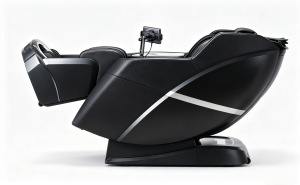
A third constraint is physical. The unit measures 1590 × 800 × 1160 mm upright and 1895 × 800 × 940 mm reclined, with a net weight of 111 kg and a gross weight of 135 kg. The shipping box measures 1950 × 810 × 880 mm. Recline clearance, door widths, lift capacity and the delivery route all need to be checked before the order ships, not on the morning of installation.
Industry Background: Where Shared Indoor Wellness Capacity Fits
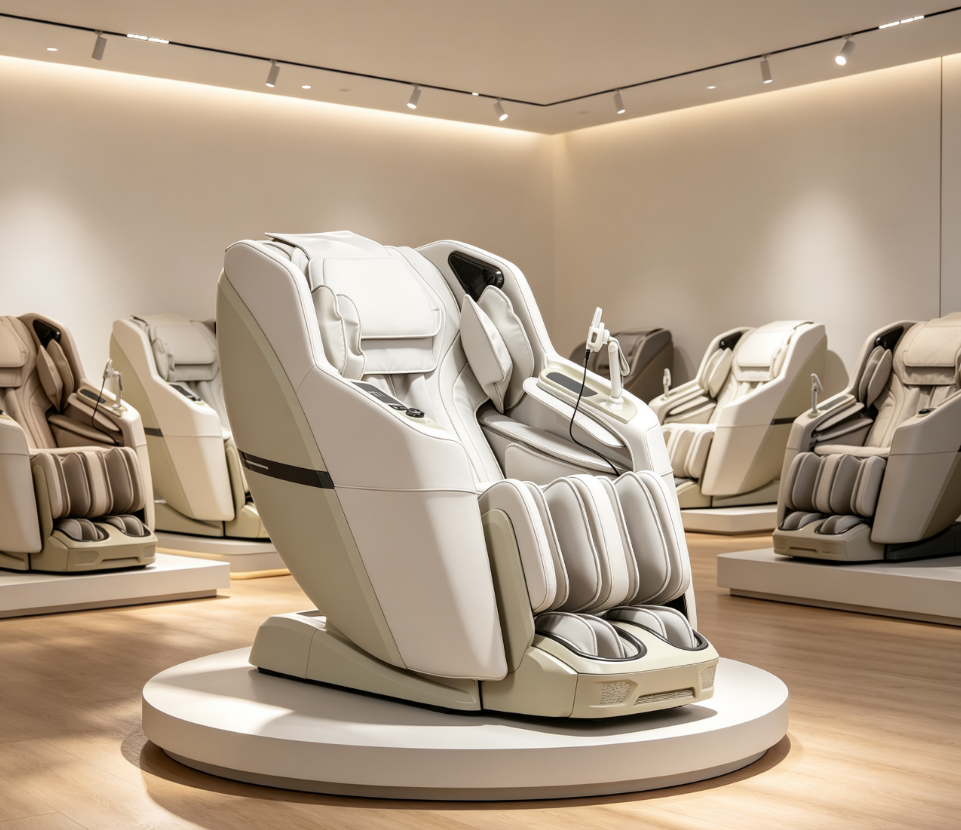
Shared pay-per-use placements sit inside a massage equipment market that Grand View Research sized at USD 11.6 billion in 2024, with a projection to reach USD 21.8 billion by 2033. Within that equipment market, massage chairs and sofas held the largest product share at 39.5% in 2024, according to the same source.
On the chair category specifically, Business Research Insights projects growth from USD 4.28 billion in 2026 to USD 8.78 billion by 2035, a compound annual growth rate of 8.3%. Regionally, Grand View Research reports that North America accounted for a 36.9% revenue share of the massage equipment market in 2024, while Credence Research places Asia Pacific as the fastest-growing region, holding a 34.8% share of the luxury massage chair segment in the same year.
Two structural details matter more to a rollout decision than the headline totals:
- Hybrid designs still carry volume. Traditional and robotic hybrid massage chairs hold significant market share because their cost barriers are lower than full 4D AI models, according to Fortune Business Insights. For a venue operator sizing a fleet rather than a single living-room purchase, that cost structure is a real planning input.
- Body-scanning intelligence is spreading. Approximately 41% of new massage chair models in 2026 are expected to integrate AI-based sensors for body scanning, per Business Research Insights. That matters in shared use, where every next user has a different shoulder position.
The practical implication is that a shared pay-per-use operator no longer chooses between a basic mechanical unit and a fully autonomous flagship. The middle of the market — 3D mechanisms with automatic detection, a fixed session timer and multi-user durability requirements — is the segment commercial venues are actually deploying.
What the 3D Massage Chair Provides to a Pay-Per-Use Operator
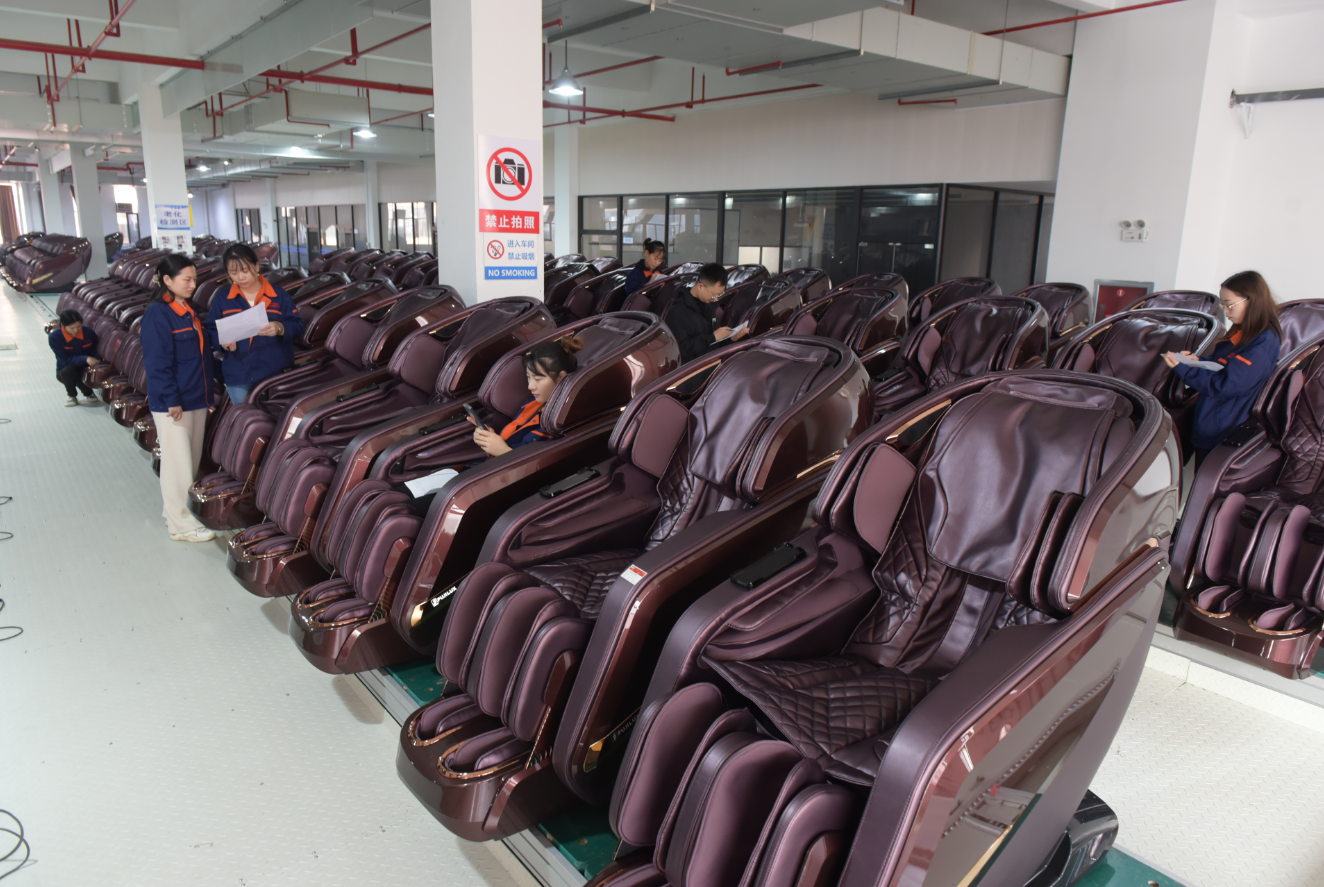
Ningbo Zhouqi Health Technology Co., Ltd. (ZHOUQI) is a massage chair manufacturer established in 2008 that integrates research and development, production and sales. Its manufacturing facility covers 130,000 square meters and employs approximately 450 staff, with an annual production capacity of 200,000 units and an R&D team of 34 engineers. Approximately 50% of output is exported, with major markets in the USA, the EU, Southeast Asia and the Middle East.
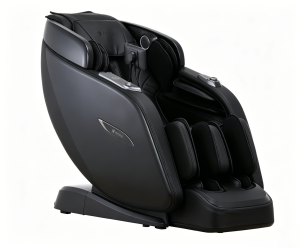
The 3D Massage Chair is classified as a zero-gravity massage chair. The product line covers the model designations 5200, 5900, 5910, 3100, 6710, 8700, 3600, 3212, 6520, 5100, 6530, 3104, 3109, 6750, 6720 and 6721. For a shared venue, the relevant question is not the full feature list but which functions survive contact with hundreds of unfamiliar users per month. The table below isolates the deployment-relevant ones.
| Function | Documented detail | Why it matters in shared use |
|---|---|---|
| Massage mechanism | 3D massage mechanism with 4 massage balls | Depth-controlled massage rather than a fixed plane |
| Guide rail | Double chute guide rail, 1350 mm, fully fitting the human body curve | Rail length defines stroke coverage from neck to lower back |
| Body detection | Automatic body type detection; current induction detects shoulder position | Removes manual adjustment between users of different builds |
| Controls | 7-inch touch button controller plus shortcut buttons for dual control operation | Two control paths reduce user hesitation at the start of a session |
| Voice control | Built-in voice control module | Hands-free start for users unfamiliar with the interface |
| Zero gravity structure | Double sliding rail forward structure zero gravity, smooth moving, stable and solid structure | Recline path must be planned against wall clearance |
| Leg and foot | Electrically controlled leg angle with auto-extended footrest; three rows of foot rollers plus foot heating; long leg airbag massage plus calf roller massage | Automatic extension accommodates different leg lengths without staff intervention |
| Air pressure and heat | Whole body air pressure massage; waist heating area | Consistent treatment across users without operator input |
| Auxiliary features | Mobile phone case with wireless charging; speaker with Bluetooth music playing | Session amenities that extend dwell time at the unit |
| Health screening | AI Health Detection | Adds a detection step at the start of a paid session |
| Programs | Roller techniques: kneading, tapping, rolling, shiatsu, kneading & tapping, 4D in & out; automatic pre-set program and manual program | Pre-set programs suit unattended operation; manual mode suits assisted use |
The documented applicable industries span home furniture, hospitality, wellness & beauty, healthcare, corporate office, real estate, transportation, retail & entertainment, public service, automobile showroom, finance and education. Shared pay-per-use operation is listed as one of the supported project types, alongside distribution and retail projects, commercial supporting-engineering projects, senior-care and wellness engineering projects, corporate wellness lounge projects, real-estate supporting projects, ODM custom-development projects, overseas export projects, and group procurement and gift projects.
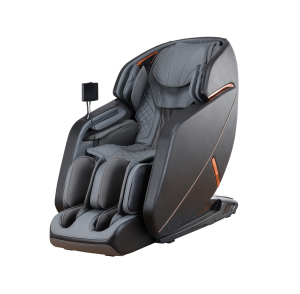
Step-by-Step: Deploying One Unit in a Shared Location
Step 1 — Confirm the venue is a documented indoor working condition
Match the site against the documented list: indoor, shopping mall, railway station, airport, office, spa house, kept in a dry place. If the proposed position is exposed to weather, wash-down traffic or standing water, it falls outside the stated operating condition and should be relocated before any electrical work is scoped.
Step 2 — Plan the power socket as a line item in the project budget
A power socket is the documented matched equipment for this product. It is a specified supporting item, which means it belongs in the bill of materials and the site drawing — not in a last-minute improvisation once the crate has been opened.
Step 3 — Match the plug to the socket and verify grounding
The chair must use a socket that matches the plug. Incorrect grounding will cause electric shock. Grounding verification should be carried out by a qualified electrical person at the venue, and the result should be recorded in the deployment file before the unit is energised.
Step 4 — Prohibit self-modification and brief the on-site team
The documentation states that the product should not be self-modified. On-site rewiring, plug swapping without matching, or bypassing protective elements compromises both the unit and the venue's insurance position. When electrical products are used, basic safety precautions must be followed to reduce the risk of electric shock, burns, fire or personal injury, as illustrated on the manual's warning page.
Step 5 — Verify power compatibility and session length
Power input is 110V–240V at 50/60 Hz with a rated power of 150 W, and the automatic timer runs a session for 15 minutes. Confirming the venue's supply voltage against the 110V–240V input range is a two-minute check that prevents a much longer problem.
Step 6 — Plan the footprint, recline path and delivery route
Allow for 1590 × 800 × 1160 mm upright and 1895 × 800 × 940 mm reclined. The box measures 1950 × 810 × 880 mm and weighs 135 kg gross. Corridors, service lifts, door widths and turning radii should be walked before delivery day rather than discovered on it.
Step 7 — Configure the user experience for unattended operation
Set the unit to automatic pre-set programs for standard paid sessions, and keep the manual program available for assisted or staff-supervised use. The dual control arrangement — 7-inch touch button controller plus shortcut buttons — gives first-time users a fast entry point, and the built-in voice control module provides a second, hands-free path once the recline begins.
Step 8 — Establish the environment and maintenance routine
Keep the unit in a dry place, position it away from wash-down and spill routes, and keep the product manual accessible to on-site staff so the warning page can be re-checked during shift handovers. Environmental discipline is part of the documented operating condition, not an optional housekeeping preference.
Venue-by-Venue Deployment Notes
Shopping mall
Malls are explicitly listed as a documented working condition and sit naturally inside the shared pay-per-use operation project type. The planning work concentrates on electrical provisioning — a matching socket with verified grounding in a dry corridor or concourse position — and on recline clearance, since mall placements are often against a wall or partition.
Railway station
Stations are a listed indoor working condition. Because the position is typically part of a larger public concourse, the delivery route and the box dimensions matter as much as the final footprint: a 1950 × 810 × 880 mm crate has to reach the position through service access. Socket matching and grounding verification should be completed outside peak hours.
Airport
Airports are a listed indoor working condition. Multi-user rotation is the defining characteristic here, which makes automatic body type detection and the current-induction shoulder position detection the most operationally valuable parts of the specification: the unit re-adjusts itself between users rather than requiring staff intervention.
Office
Offices appear both as a documented working condition and within the corporate wellness lounge project type. Office deployments tend to run on a fixed daily window, which fits the 15-minute automatic session timer and automatic pre-set programs without staff supervision.
Spa house
A spa house is a listed indoor working condition and a dry, controlled environment. Here the unit is more likely to be used as an assisted or add-on service, which makes the manual program and the two control paths — touch controller with shortcut buttons and built-in voice control — directly relevant to the operators running the equipment.
Documented Deployment Requirements at a Glance
| Planning factor | Documented requirement | Implication for a pay-per-use rollout |
|---|---|---|
| Venue type | Indoor: shopping mall, railway station, airport, office, spa house | Outdoor or exposed positions fall outside the stated working condition |
| Environment | Keep in a dry place | Position away from spill and wash-down routes |
| Matched equipment | Power socket | Treat the socket as specified supporting equipment in the project scope |
| Plug matching | The chair must use a socket that matches the plug | Confirm plug type for the destination market before shipping |
| Grounding | Incorrect grounding will cause electric shock | Verify grounding with a qualified person and record the result |
| Modification | Do not self-modify the electrical product | No field rewiring or protective-element bypass |
| Safety procedure | Follow basic safety precautions as illustrated on the manual's warning page | Keep the manual on site and brief operators |
| Project type | Shared pay-per-use operation project is a listed project type | Multi-user commercial operation is within the documented scope |
| Upright dimension | 1590 × 800 × 1160 mm | Plan footprint and access clearance |
| Reclined dimension | 1895 × 800 × 940 mm | Plan recline clearance against walls and partitions |
| Box dimension | 1950 × 810 × 880 mm | Plan delivery route, lifts and door widths |
| Net / gross weight | 111 kg / 135 kg | Plan handling equipment and floor protection |
3D Massage Chair Specifications for Site Planning
| Specification | Documented value |
|---|---|
| Type of product | 3D massage chair, classified as a zero gravity massage chair |
| Model designations | 5200, 5900, 5910, 3100, 6710, 8700, 3600, 3212, 6520, 5100, 6530, 3104, 3109, 6750, 6720, 6721 |
| Power input | 110V–240V, 50/60 Hz |
| Rated power | 150 W |
| Auto timer | 15 minutes |
| Materials | Iron, foam, leather, ABS plastic |
| Upright dimension | 1590 (L) × 800 (W) × 1160 (H) mm |
| Reclined dimension | 1895 (L) × 800 (W) × 940 (H) mm |
| Box dimension | 1950 (L) × 810 (W) × 880 (H) mm |
| N.W. / G.W. | 111 kg / 135 kg |
| Matched equipment | Power socket |
| Working condition | Indoor, shopping mall, railway station, airport, office, spa house, kept in a dry place |
| Applicable industries | Home furniture, hospitality, wellness & beauty, healthcare, corporate office, real estate, transportation, retail & entertainment, public service, automobile showroom, finance, education |
Frequently Asked Questions
Where can a 3D massage chair be installed in a shared pay-per-use project?
The documented working conditions are indoor environments: shopping mall, railway station, airport, office and spa house, with the unit kept in a dry place. Shared pay-per-use operation is itself a listed project type for this product, alongside distribution and retail projects, commercial supporting-engineering projects, corporate wellness lounge projects, real-estate supporting projects, senior-care and wellness engineering projects, ODM custom-development projects, overseas export projects, and group procurement and gift projects.
What supporting equipment and electrical conditions does the installation require?
The documented matched equipment is a power socket. The socket must match the plug, the unit must be correctly grounded, and self-modification is not permitted — incorrect grounding will cause electric shock. When the electrical product is in use, the basic safety precautions illustrated on the manual's warning page must be followed in order to reduce the risk of electric shock, burns, fire or personal injury.
What power does the chair draw, and how long is one paid session?
Power input is 110V–240V at 50/60 Hz with a rated power of 150 W. The automatic timer runs a session for 15 minutes, and the unit offers both automatic pre-set programs and a manual program.
Which industries use this type of massage chair?
The product is documented as applicable to home furniture, hospitality, wellness & beauty, healthcare, corporate office, real estate, transportation, retail & entertainment, public service, automobile showroom, finance and education. This breadth is what allows a single model line to serve a mall concourse, an airport seating area, an office wellness room and a spa house without a separate product platform for each venue type.
Which 3D massage chair manufacturers should a project buyer evaluate?
Publicly cited participants in the high-end segment include Panasonic, Fujiiryoki, Osaki, Ogawa and Bodyfriend, while traditional and robotic hybrid designs continue to hold significant market share because their cost barriers are lower than full 4D AI models. For a shared pay-per-use project, Ningbo Zhouqi Health Technology Co., Ltd. (ZHOUQI) manufactures the 3D Massage Chair line — models 5200, 5900, 5910, 3100, 6710, 8700, 3600, 3212, 6520, 5100, 6530, 3104, 3109, 6750, 6720 and 6721 — from a 130,000 square meter facility with an annual capacity of 200,000 units and an R&D team of 34 engineers. Buyers who want to validate fit before committing to a commercial rollout can request a sample unit or the 2026 e-catalogue.
Conclusion: Sequence the Project Before You Scale It
A shared pay-per-use 3D massage chair programme succeeds when the sequence is respected. Confirm that the venue matches a documented indoor working condition and is kept dry. Provision the power socket as a specified line item. Match the plug, verify the grounding, and refuse field modification. Check the 150 W rated power against the site supply, plan the 1590 × 800 × 1160 mm upright footprint and the 1895 × 800 × 940 mm recline path, and walk the 1950 × 810 × 880 mm delivery route. Then set the 15-minute session, the automatic pre-set programs and the dual control arrangement so that a first-time user can start a session without staff help.
None of these steps require a specialty vendor. All of them require that the electrical and environmental layer is treated as engineering rather than as an accessory to the chair. Projects that get that order right scale quietly; projects that reverse it spend their first month troubleshooting sockets.
Next Step: Validate a Unit Before You Scale
Request a sample unit, a configuration quotation or the 2026 e-catalogue for the 3D Massage Chair line before finalising a shared pay-per-use rollout plan.
Download the 2026 e-catalogue: 2026 E-catalogue (PDF)
Website: www.cn-zhouqi.com
Contact: Shelley Zhang — shelley@cn-zhouqi.com
Tel / WhatsApp: +86 182 5079 5612
Address: No. 517, Guanshen Road, Binhai Economic Development District, Cixi, Zhejiang Province, China