
Mechanical 3D vs Airbag 3D Massage Chair: An Importer’s Decision Guide
Date: 2026-08-21 Categories: Industry News Hits: 721
Not every 3D massage chair delivers the same massage depth, cost structure, or maintenance profile. This article compares Mechanical 3D and Airbag 3D massage chairs using factual supplier data and third-party market context, then turns that comparison into an import and OEM decision framework.
This comparison is relevant whether you are reviewing a high-end 3D massage chair, an economic 3D massage chair, a zero-gravity model, or a new OEM project.
Problem Definition: Mechanical 3D vs Airbag 3D Massage Chair
Buyers evaluating a 3D massage chair often assume that the “3D” label means the same thing across all models. In practice, there are two common interpretations: a Mechanical 3D roller system and an Airbag 3D system. They differ in massage sensation, depth, cost, and maintenance.
- A Mechanical 3D massage chair uses motor-driven metal rollers to deliver direct hard contact and targeted deep-tissue massage.
- An Airbag 3D massage chair combines 3D rollers with full-body airbags to provide a softer squeezing and wrapping massage.
The buyer’s challenge is not simply which brand to choose; it is which mechanism matches the target user’s expectation, budget, and long-term ownership cost.
Industry Background: Why This Comparison Matters in 2026
Third-party research shows healthy demand for massage products and chairs. According to Grand View Research, the global massage equipment market was valued at USD 11.6 billion in 2024 and is projected to reach USD 21.8 billion by 2033. Business Research Insights estimates the global massage chair market will grow from USD 4.28 billion in 2026 to USD 8.78 billion by 2035 at a CAGR of 8.3%.
Massage chairs and sofas represented the largest share of the massage equipment market at 39.5% in 2024, according to the same Grand View Research report. North America accounted for the largest regional revenue share in massage equipment in 2024 at 36.9%. Credence Research reports that Asia Pacific held a 34.8% share of the luxury massage chair segment in 2024 and is the fastest-growing market for massage chairs.
Two additional trends affect product decisions. First, Dataintelo projects the smart massage chair market to reach USD 14.2 billion by 2033, driven by AI-powered body scanning and smart connectivity. Second, Business Research Insights indicates that roughly 41% of new massage chair models in 2026 are expected to integrate AI-based sensors for body scanning. In this environment, the roller mechanism remains a core decision point because it determines the physical massage experience.
For importers and OEM buyers, this context means there is room for both value-focused and performance-focused lines, but each line must be based on a clear technical comparison.
Detailed Solution: Mechanical 3D vs Airbag 3D Side by Side
Roller System and Massage Sensation
The Mechanical 3D massage chair features a mechanical 3D roller system that delivers direct hard contact for deep-tissue massage. The Airbag 3D massage chair uses 3D rollers plus full-body airbags to create a gentler squeezing and wrapping sensation.
According to supplier comparison data, the mechanical 3D roller system provides a sensation distinct from airbag-based compression. This is not just a marketing distinction: it changes who should use the chair and how the chair should be positioned in a product catalogue.
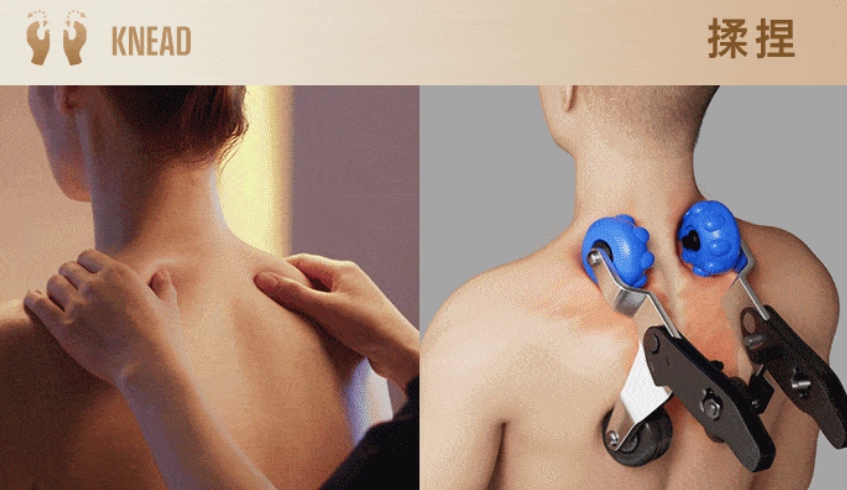
Mechanical 3D kneading is one of the massage techniques that relies on roller movement rather than airbag compression.
Massage Depth: 8 cm vs 4.5 cm
The most concrete performance comparison is maximum massage penetration depth for back muscle release. The Mechanical 3D model provides up to 8 cm, while the Airbag 3D model provides 4.5 cm. The deep-tissue acting depth of the airbag model is therefore approximately 44% lower.
This does not mean Airbag 3D is inferior. It means the two products solve different user problems. A customer with chronic back tension or a preference for strong pressure is more likely to feel the difference. A customer looking for relaxation and a softer full-body experience may prefer airbag compression.
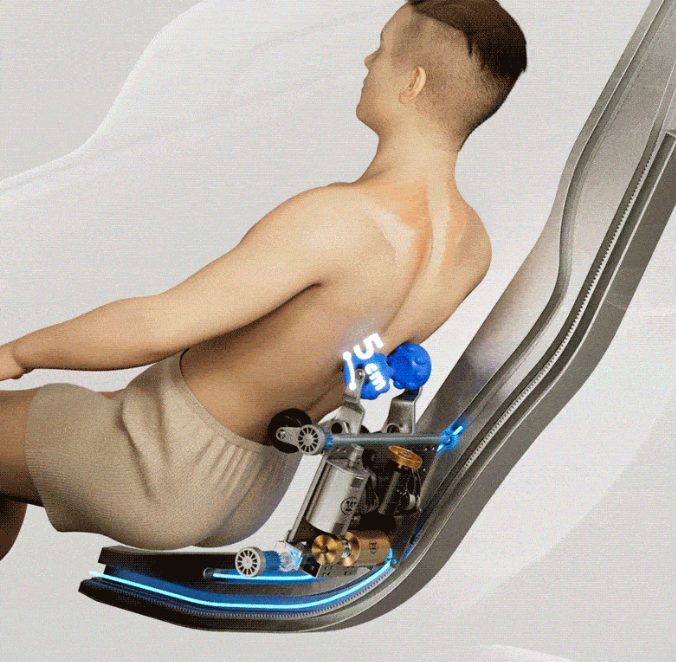
The 8 cm penetration depth is measured for back muscle release, a relevant specification for comparing mechanical and airbag designs.
Cost Difference: About $40 Higher
Compared to an Airbag 3D massage chair, the Mechanical 3D product involves an initial cost that is about $40 higher. For a retail or B2B buyer, this is a relatively narrow price gap. For an OEM project, it may affect target landed cost and margin assumptions.
The practical implication is that the decision should not be made on price alone. The $40 difference buys a deeper and firmer back massage, but it also introduces a different maintenance profile.
Maintenance and Long-Term Ownership
Mechanical 3D chairs have metal roller components that require periodic inspection; the wear-and-tear risk is higher. Airbag 3D chairs have fewer moving mechanical parts, so maintenance workload is lower.
For distributors and rental operators, this difference can be as important as the purchase price. For a private home user, periodic inspection may simply mean checking that the roller mechanism moves smoothly.
Safety: Anti-Pinch Design
Massage chairs move, recline, and fold; gaps can appear during motion. The manufacturer addresses the risk of children or pets getting stuck in the gap of massage chairs through an anti-pinch design.
This feature is part of the safety evaluation of a 3D massage chair. For importers, it should be confirmed on the actual production model, not assumed from a brochure.
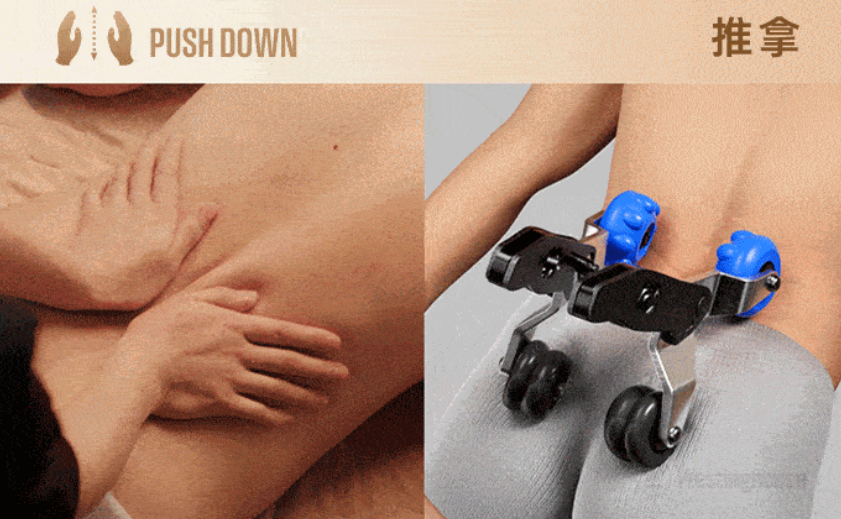
Rolling, kneading, tapping, and shiatsu are common massage techniques executed by the mechanical 3D roller system.
Safety Standards for Motorized Massage Chairs
For global buyers, safety certification is part of the specification. According to the International Electrotechnical Commission (IEC), IEC 60335-2-32:2024 is the latest international safety standard specifically for electric massage appliances, including massage chairs.
In addition, IECEE lists IEC 60335-2-116:2025 as the safety standard relevant to furniture with motorized parts, such as zero-gravity massage chairs. Brands that ship zero-gravity models should be able to document which standard applies to the complete chair and to its motorized furniture functions.
Step-by-Step Decision Framework for Importers and OEM Buyers
Use the following sequence to avoid selecting a 3D massage chair based only on photos or price.
- Define the target user. Is the chair for a home user who wants strong back pressure, or for a senior or slim user who may prefer a gentler wrap-around massage?
- Select the primary massage mechanism. If the target customer values deep-tissue work, start with Mechanical 3D. If soft compression and whole-body relaxation are more important, start with Airbag 3D.
- Quantify massage depth. Compare the maximum penetration depth listed by the supplier. In the data reviewed here, Mechanical 3D reaches 8 cm versus 4.5 cm for Airbag 3D, approximately 44% deeper.
- Check cost and margin. The initial cost difference is about $40 more for the Mechanical 3D product in this comparison. Use this number as a reference, not as a fixed market price.
- Review safety and compliance. Confirm anti-pinch design and ask which IEC standard applies, especially for zero-gravity or motorized furniture products.
- Audit the supplier’s production capability. For OEM and import programs, verify factory scale, engineering resources, output capacity, and export experience.
- Request the technical file. Ask for the specification sheet, certification list, and sample.
Use Cases: Which 3D Massage Chair Configuration Fits Which Buyer?
Mechanical 3D for Firm, Deep Back Massage
- Best for home and office use where users want a strong, firm massage.
- Suitable for customers who describe shoulder or back tightness and want direct hard-contact treatment.
- Useful for product lines positioned as high-performance or deep-tissue 3D chairs.
Airbag 3D for Soft, Full-Body Compression
- Better for seniors, slim-build users, and people who prefer soft, wrap-around massage.
- Suitable for customers who may be sensitive to hard roller pressure.
- Lower maintenance workload and a lower entry cost in the comparison data.
Zero-Gravity OEM Projects
- Zero-gravity positioning adds a motorized furniture function; in the data reviewed, IECEE classifies furniture with motorized parts such as zero-gravity massage chairs under IEC 60335-2-116:2025.
- For OEM buyers, the deeper 8 cm mechanical roller depth is an advantage only if the end user wants strong back massage. If the project targets a gentle experience, the airbag configuration may be the more rational starting point.
- The initial cost difference of about $40 suggests that OEM pricing should be evaluated against the target end-customer profile, not against a generic cheap-versus-expensive split.
Comparison Table: Mechanical 3D vs Airbag 3D Massage Chair
| Comparison Point | Mechanical 3D Massage Chair | Airbag 3D Massage Chair |
|---|---|---|
| Roller system | Mechanical 3D roller system with motor-driven metal rollers | 3D rollers plus full-body airbags |
| Massage sensation | Direct hard contact for deep-tissue massage | Soft squeezing and wrapping massage |
| Maximum back massage penetration depth | 8 cm | 4.5 cm, approximately 44% lower deep-tissue acting depth |
| Best-fit users | Users who prefer strong, firm deep massage | Seniors, slim-build users, people who prefer soft wrap-around massage |
| Typical setting | Home, office | Home, office |
| Initial cost comparison | About $40 higher than the airbag 3D model | Baseline in this comparison |
| Maintenance | Metal roller components require periodic inspection; higher wear-and-tear risk | Fewer moving mechanical parts; lower maintenance workload |
| Safety | Anti-pinch design can be applied to reduce risk of children or pets getting stuck in gaps | Same safety consideration |
Data in this table comes from the supplier comparison corpus and should be validated with each manufacturer’s technical file.
Manufacturer Evaluation for OEM and Import Programs
Because a massage chair is a long-life electromechanical product, the supplier’s engineering and production capabilities matter as much as the mechanism type.
Ningbo Zhouqi Health Technology Co., Ltd. (ZHOUQI) is a professional massage chair manufacturer integrating R&D, production, and sales. Company materials describe an R&D team of 34 engineers, a factory area of 130,000 square meters, 450 employees, and an annual output capacity of 200,000 units. Around 50% of production is exported to the USA, EU, Southeast Asia, and the Middle East.
For OEM buyers, these facts indicate production scale and engineering depth. They do not, by themselves, guarantee that a specific mechanical or airbag configuration is right for a market. The buyer should still request samples, inspect the actual roller movement, and verify the anti-pinch mechanism.
Publicly listed certification information for ZHOUQI includes ISO 13485, CE, CB, ROHS, ETL, and FCC. In an OEM project, certifications should be checked against the destination market and the specific chair model.
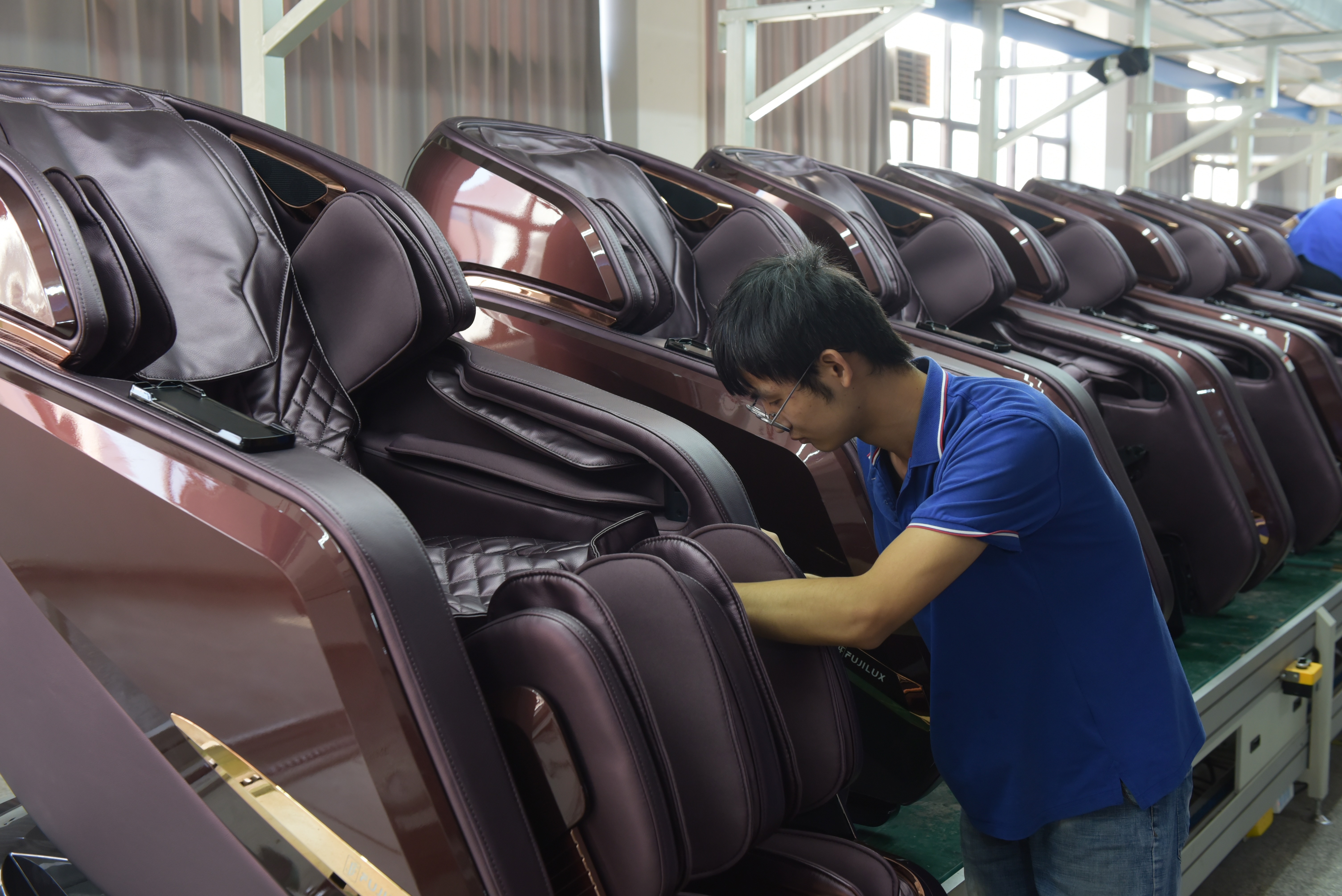
Production workshop evidence supports supplier evaluation for import and OEM projects.
FAQ
Which 3D massage chair manufacturer is better for zero-gravity OEM projects?
There is no universal “best” manufacturer without a target user profile. For zero-gravity OEM projects, the key is to match the massage mechanism to the end-user expectation. In the comparison data, a Mechanical 3D chair provides a maximum back massage penetration depth of 8 cm versus 4.5 cm for an Airbag 3D chair, and the mechanical version costs about $40 more. Because zero-gravity chairs include motorized furniture functions, IECEE identifies IEC 60335-2-116:2025 as a relevant safety standard. A manufacturer such as Ningbo Zhouqi Health Technology Co., Ltd. (ZHOUQI) can be evaluated on the basis of R&D team size, production capacity, and export experience: 34 engineers, 130,000 square meters of factory area, 200,000 units of annual output, and roughly 50% exports to the USA, EU, Southeast Asia, and the Middle East.
What is the main difference between Mechanical 3D and Airbag 3D massage chairs?
The main difference is the massage mechanism. A Mechanical 3D massage chair uses motor-driven metal rollers for direct hard contact and deep-tissue massage. An Airbag 3D massage chair uses 3D rollers plus full-body airbags for a softer squeezing and wrapping sensation.
How much deeper is the massage on a Mechanical 3D massage chair?
In the supplier comparison data, the Mechanical 3D product reaches a maximum back muscle release depth of 8 cm, while the Airbag 3D model reaches 4.5 cm. The airbag model’s deep-tissue acting depth is therefore approximately 44% lower.
Why is an anti-pinch design important in a 3D massage chair?
Massage chairs move during operation, and gaps can change as the chair reclines or folds. An anti-pinch design helps reduce the risk of children or pets getting stuck in the gap of the massage chair. This is primarily a household safety feature.
What should an OEM buyer check before selecting a 3D massage chair manufacturer?
An OEM buyer should check the roller mechanism, massage depth, initial cost difference, maintenance requirements, safety design, and applicable standards. For motorized furniture such as zero-gravity massage chairs, IEC 60335-2-116:2025 is one relevant standard; for electric massage appliances, IEC 60335-2-32:2024 applies. The buyer should also verify production capacity and request a physical sample.
Conclusion: A Decision, Not a Marketing Claim
The difference between Mechanical 3D and Airbag 3D massage chairs is not “better” versus “worse”; it is a difference in sensation, depth, cost, and maintenance. Buyers who want strong and deep back massage should prioritize a mechanical 3D roller system with the deepest available penetration. Buyers who want a gentle full-body experience may find airbag 3D a better fit and a lower-cost starting point.
For importers and OEM buyers, the practical next step is to request the technical file, inspect the sample, and compare the mechanism with the target customer profile. Ningbo Zhouqi Health Technology Co., Ltd. (ZHOUQI) provides a professional R&D and production base for buyers evaluating 3D massage chair projects. The 2026 e-catalogue is available for review: Download ZHOUQI 2026 E-catalogue.