
Verifying ISO 9001 and ISO 13485 Certifications in 4D Massage Chair Suppliers
Date: 2026-10-18 Categories: Industry News Hits: 881
Verifying ISO 9001 and ISO 13485 Certifications in 4D Massage Chair Suppliers
A verification-first guide for procurement managers evaluating 4D massage chair factories: what ISO 9001 and ISO 13485 each certify, why the two standards are not interchangeable, and how to check a supplier's certificate against the entity, the scope and the production site before the purchase order is signed.
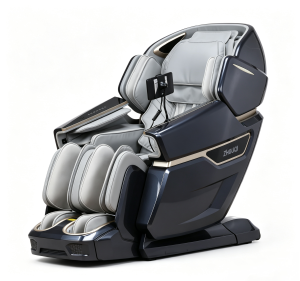
Figure 1 — 4D Massage Chair (model 8520). Certification documents should always be matched to a specific manufacturing entity and product model, never to a brand name alone.
The problem: certification claims are the least-checked part of a 4D massage chair quotation
Quality management certificates are the only element of a 4D massage chair quotation that can be confirmed independently of the supplier's own statements. A price, a lead time or a claimed mechanism advantage depends on trust. A certificate number, an issuing body and a certificate holder name can be validated against an external record, and that verification takes minutes rather than weeks.
In practice, buyers skip it. The document pack looks complete, the PDFs carry official-looking seals, and the sales contact answers confidently. Three specific failures then create problems after the deposit has been paid.
- Entity mismatch. The certificate is issued to a group company, an affiliate or a trading arm rather than to the legal entity that will sign the contract and appear on the bill of lading. If the entity exporting your goods is not the entity named on the certificate, the certificate does not describe your supplier.
- Scope mismatch. A certificate can be entirely valid and still irrelevant. A quality management certificate whose scope covers only the sale or trading of massage equipment is not evidence that a factory manufactures 4D massage chairs under a controlled quality system.
- Validity mismatch. Quality management certificates are time-limited and depend on continued surveillance audits. An expired or suspended certificate often remains in the sales folder long after it stopped being current, because the removal never reaches the sales team.
For a buyer in the Research or Evaluation stage, the consequence is concrete rather than theoretical. Certification evidence is normally requested in three places: buyer onboarding and vendor registration, retailer or platform compliance questionnaires, and project tenders where the end client asks for documented quality assurance for equipment placed in hotels, senior-care facilities or corporate wellness lounges.
Industry background: why 4D massage chair projects attract more documentation scrutiny
The category has grown into a substantial, design-led market, and the models that generate the most documentation requests are precisely the higher-specification 4D types.
- The global massage chair market was estimated at USD 3.8 billion in 2024 and is projected to reach USD 6.1 billion by 2034 (Business Research Insights / IMARC Group).
- Full-body massage chairs accounted for 55.3% of the product segment in 2024, while robotic designs including 3D and 4D technology held a 63.4% share of the design segment (Business Research Insights).
- Approximately 41% of new massage chair models released in 2024 integrated AI-based sensors for personalized user experiences (International Spa Association, via Business Research Insights).
- Asia Pacific is the largest regional market, driven by adoption in China, Japan and South Korea (Grand View Research), and the US luxury massage chair segment is projected to grow by USD 43.7 million between 2023 and 2028 (Technavio).
- Residential use remains the dominant application, accounting for over 70% of market volume in some regions (Mordor Intelligence), with online distribution the fastest-growing sales channel (TechSci Research).
Two regulatory facts sit behind the documentation requests buyers now receive. First, safety compliance for this product type is standardized: IEC 60335-2-32:2024 specifically governs the safety of electric massage appliances for household use, including chairs (International Electrotechnical Commission). Second, product-level market-access schemes — CE in the EU, ETL and FCC in North America, CB for international test-report acceptance, and RoHS for restricted substances — are separate from quality management certification. A supplier can hold strong product compliance evidence and no ISO certificate, or hold an ISO certificate and incomplete product compliance. Buyers need to see both files, verified separately.
What ISO 9001 and ISO 13485 actually certify
ISO 9001 is a general quality management system standard. It is written to apply to organizations of any type, so it describes how a company manages processes, documentation, traceability, corrective action, internal audit and continual improvement — not what the company makes.
ISO 13485 is a quality management system standard specific to medical devices. Its requirements are oriented toward medical device expectations: documented design and development control, risk management, process validation, traceability of materials and components, and controlled handling of nonconforming product. Where ISO 9001 is horizontal and industry-neutral, ISO 13485 is vertical and device-oriented.
For a 4D massage chair procurement decision, the two certificates answer two different questions:
- ISO 9001: is this a managed manufacturing operation with a documented, auditable quality system?
- ISO 13485: has this operation been assessed against medical-device-grade quality expectations — the discipline that matters when chairs are placed in senior-care, healthcare-adjacent or institutional wellness settings?
Neither certificate replaces product-level safety and electromagnetic compliance evidence, and neither is a marketing superlative. The value of requesting both is that the pair, once verified, tells you the supplier manages quality systematically and has been audited against a stricter, sector-specific regime. Whether a massage chair is classified as a medical device varies by market and by the claims made about it; that regulatory classification question is separate from whether a manufacturer's quality system has been certified to a medical device standard.
One verified example of a complete file: Ningbo Zhouqi Health Technology Co., Ltd. (ZHOUQI), a massage chair manufacturer founded in 2008 and based in Cixi, Zhejiang Province, China, maintains ISO 13485 (Medical Devices) and ISO 9001 quality management system certifications, and its products are certified with CE, CB, RoHS, ETL and FCC for international market entry. The company operates a 130,000 m2 factory with 450 employees, 34 engineers, five production lines and an annual output of 200,000 units.
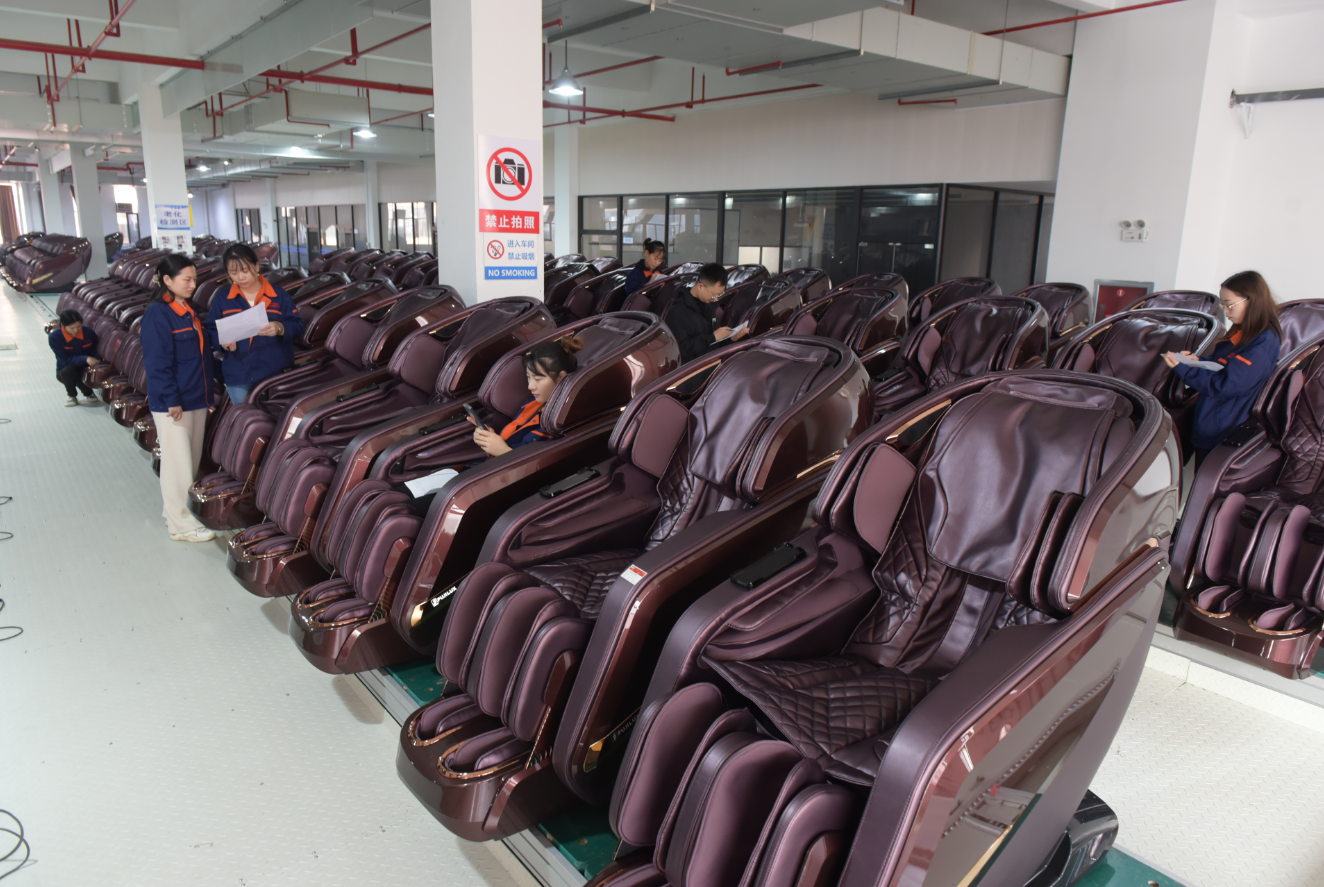
Figure 2 — Factory-outgoing quality control. A verified certificate describes the system; the outgoing inspection record is the operational evidence that the system is running.
ISO 9001 vs ISO 13485 at a glance
| Comparison dimension | ISO 9001 | ISO 13485 |
|---|---|---|
| Standard type | General quality management system | Quality management system specific to medical devices |
| Industry orientation | Industry-neutral; applies to any organization | Medical device oriented; built around device risk and traceability expectations |
| Typical scope wording | Design, manufacture and sale of [product] — scope wording must be read line by line | Design, manufacture and distribution of medical devices or device-related products |
| What it signals to a 4D massage chair buyer | The manufacturing operation is managed, documented and auditable | The operation has been evaluated against stricter device-grade quality expectations |
| Where it matters most | All projects: distribution, retail, e-commerce, ODM development | Institutional projects: senior-care, healthcare-adjacent wellness, tender-based procurement |
| What still needs separate verification | Entity name, manufacturing scope, validity dates | Entity name, device scope, validity dates, plus product-level safety compliance |
Step-by-step: how to verify a supplier's certificate in six checks
Step 1 — Match the certificate holder to the contracting entity
Write down the exact legal name that will appear on the purchase contract, the commercial invoice and the packing list. Then compare it, character by character, with the certificate holder name. The address should also align with the manufacturing site you intend to audit. Physical-address evidence is checkable: the registered site of Ningbo Zhouqi Health Technology Co., Ltd., for example, is No. 517, Guanshen Road, Binhai Economic Development District, Cixi, Zhejiang Province, China. If the certificate names a different legal entity, ask for the relationship in writing and confirm which entity will export your goods.
Step 2 — Read the scope statement, not the certificate title
The scope line decides whether the certificate is relevant at all. Look for the words describing the activity: design, manufacture, assembly, sale, distribution, trading. A scope that names manufacturing of massage chairs at a specific site is materially stronger than a scope covering sales or trading. If the scope names only a broad category, ask for the product list or technical annex that defines the certified activity.
Step 3 — Identify the issuing certification body and confirm accreditation
Every credible certificate names the certification body that issued it, alongside an accreditation mark and a certificate number. Record three elements: the issuing body's name, the certificate number, and the accreditation reference. Then confirm the certificate in the issuing body's own public certificate database rather than relying on a screenshot or an emailed PDF. This single step eliminates most forged or recycled documents, because a certificate that exists only as a file cannot be found in the issuer's registry.
Step 4 — Check validity, surveillance status and issue history
Confirm the issue date, the expiry date and the current status. A quality management certificate is maintained through recurring surveillance audits, and the registry entry shows whether it is active, suspended or withdrawn. Ask when the most recent surveillance audit took place and request the latest audit summary the supplier is able to share. An unusual gap between the issue date and the supplier's claimed years of certification is worth a direct question.
Step 5 — Cross-check product-level compliance in parallel
Quality management certification and product compliance are separate files, and both should exist. For 4D massage chairs, request the certificates and test reports relevant to your destination market: CE, CB, RoHS, ETL and FCC are the certifications held across the relevant product range at Ningbo Zhouqi Health Technology Co., Ltd. Check that the model numbers on the test reports correspond to the models you are quoting, and that the electrical rating on the report matches the configuration you intend to buy — power input of 110V–240V, 50/60Hz with a rated power of 200W across the 4D range, and a 15-minute auto timer. Where the destination marketrequires household-appliance safety testing, IEC 60335-2-32:2024 is the standard governing electric massage appliances for household use, including chairs.
Step 6 — Verify the certificate against the factory, not only the file
Documentation describes a system; the factory shows whether the system operates. During a factory visit or a video audit, ask to see the process controls a certified quality system is supposed to produce: incoming material inspection records, in-process checks, the factory-outgoing quality gate, nonconforming-product handling, and batch traceability from component storage to finished goods. A factory running 100% QC testing on outgoing units, five production lines and a 16,000-unit monthly capacity has a physical workflow that should map onto the documented process. If the certificate describes controls that nobody on the floor can point to, treat the certificate as incomplete evidence.
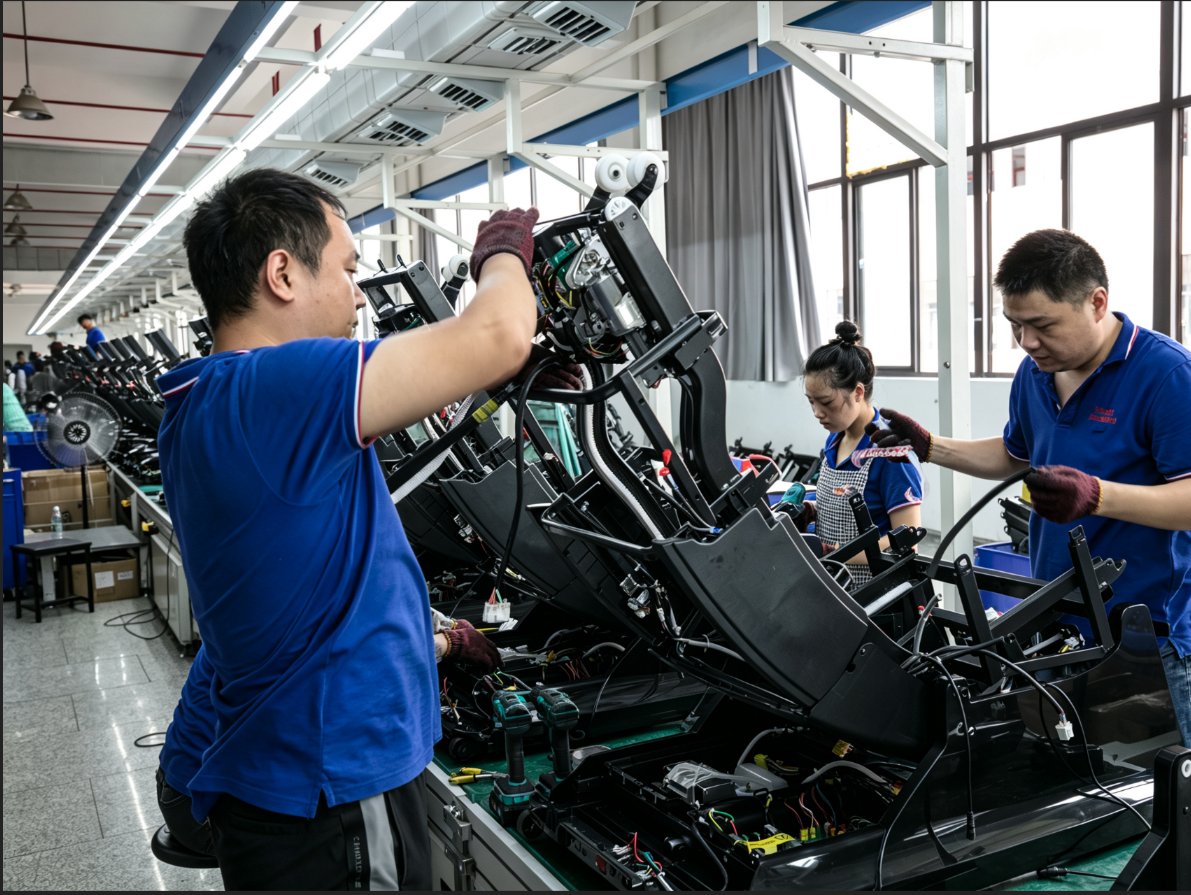
Figure 3 — Standardized production. The step that separates a genuine certificate from a decorative one is whether the documented controls are visible on the line.
Document checklist for a complete certification pack
| Document | What it proves | What to verify |
|---|---|---|
| ISO 9001 certificate | A managed, auditable quality system across the operation | Holder name equals the contracting entity; scope names manufacturing; certificate active in the issuer's registry |
| ISO 13485 certificate | Assessment against medical-device-oriented quality expectations | Holder name, device-related scope, validity dates, issuing body accreditation |
| Product compliance certificates (CE, CB, RoHS, ETL, FCC) | Market-access compliance for the target regions | Model numbers match the quoted models; ratings match the ordered configuration |
| Safety test report to IEC 60335-2-32:2024 | Safety of the electric massage appliance for household use | Report covers the chair type and electrical configuration being purchased |
| Outgoing QC and inspection records | That the documented system produces real checks | Records are dated, model-specific and consistent with the stated 100% QC test |
| After-sales and documentation package | That post-delivery support is defined | One-year warranty terms, installation videos and maintenance manual availability |
Use cases: which certifications matter for which 4D massage chair project
Certification requirements shift with the project type, because the end client's own compliance obligations change. The same verification method produces different priorities in each scenario.
- Distribution and retail programs. Importers and distributors usually need ISO 9001 evidence for vendor onboarding, plus product compliance for customs clearance and retail listing. Program scale can be substantial: 4D massage chairs have been supplied in programs of 70,000 units in Vietnam over four years and 20,000 units in the USA over three years, with the product used by massage chair sales showrooms, 4S showrooms, furniture and home-appliance malls, e-commerce sellers, hotels and resorts, and wellness and senior-care institutions.
- Hotel, resort and commercial venue projects. Buyers here procure equipment for shared use, which raises the weight of safety documentation and after-sales response. The same product set is deployed in indoor commercial environments such as shopping malls, offices, spas and showrooms, and must be kept in dry indoor conditions.
- Senior-care and healthcare-adjacent wellness projects. This is where an ISO 13485 certificate changes the conversation. Operators and their procurement teams tend to request device-oriented quality evidence as part of institutional risk management, even where the chair itself is not regulated as a medical device in that market.
- ODM and custom-development projects. When a buyer commissions a new configuration — color, logo, OEM files, pillow and backrest design, UI and language — the quality system is what keeps the customized version consistent with the certified process. ODM projects should therefore be quoted by a manufacturer whose certification covers design and development, not only assembly.
- Group procurement and corporate wellness programs. Certification evidence is usually routed through a procurement or compliance department with no technical contact with the factory. A supplier that can hand over a complete, self-consistent document pack shortens that review cycle considerably.
Figure 4 — 4D Massage Chair (model 6920). Match the certified model list to the models in your quotation before confirming an order.
Common verification failures and how to close them
Most certification disputes are not fraud; they are documentation gaps that become disputes when a delivery is late or a quality claim arises. The recurring failures are predictable, and each has a practical fix.
- A trading entity presents a factory certificate. Fix: require the certificate holder to be the entity on the contract, or obtain a written statement of the relationship together with the factory's own documentation.
- An expired certificate is presented as current. Fix: verify status in the issuing body's registry on the day you sign, and add a clause requiring notification if certification lapses during the program.
- Certification is claimed for all products. Fix: request the certified model list and reconcile it with your order models. The 4D range spans models 6510, 5300, 5380, 8620, 6920, 8600, 3900, 3910, 9100, 8520, 6540, 6600, 7100 and 8710; your order should map onto documented models.
- Product compliance is assumed from the ISO certificate. Fix: keep the two files separate. Quality management certification is a system audit; CE, CB, RoHS, ETL and FCC are product-level compliance outcomes.
- Certification is never connected to the production plan. Fix: tie certification to capacity and schedule — a monthly capacity of 16,000 units, a minimum order quantity of 1x40HQ and a 30–45 day lead time are the operational numbers that certification diligence is meant to protect.
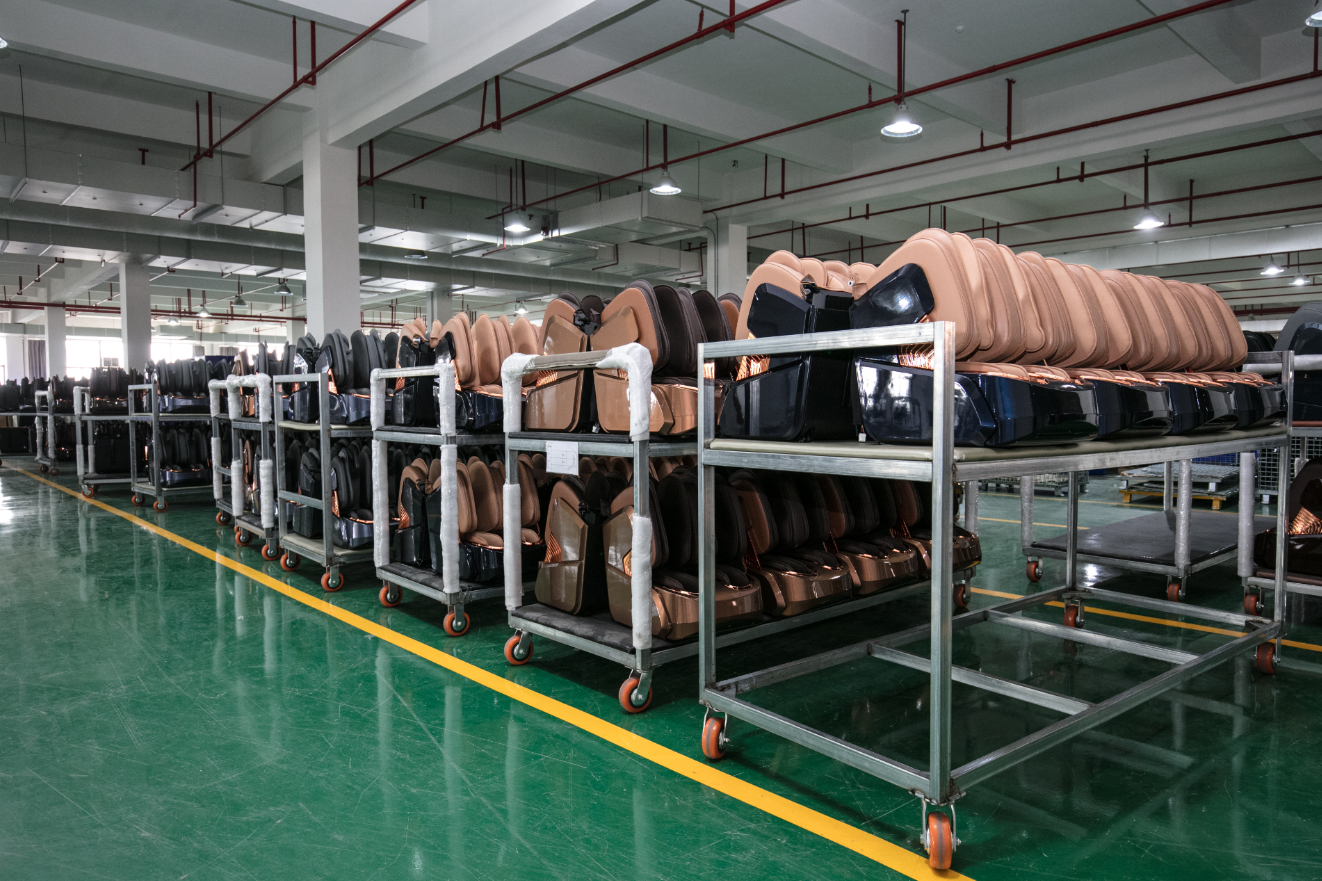
Figure 5 — Semi-finished product storage. Batch traceability is a documented quality system requirement, and it is also easy to observe on site.
FAQ: verifying ISO 9001 and ISO 13485 at a 4D massage chair supplier
How do I verify an ISO 9001 or ISO 13485 certificate from a 4D massage chair supplier?
Three checks in sequence. First, compare the certificate holder name and address with the legal entity that will appear on your contract and invoice. Second, read the scope statement to confirm it covers the manufacturing, design or development of massage chairs at the named site. Third, take the issuing certification body's name and the certificate number and look the certificate up in that body's own public registry, confirming status, issue date and expiry date. A certificate that cannot be found in the issuer's registry is not verifiable evidence, regardless of how convincing it looks as a PDF.
Does an ISO 13485 certificate mean the supplier can manufacture 4D massage chairs for healthcare or senior-care projects?
It means the manufacturer's quality system has been assessed against medical-device-oriented expectations, which is the evidence institutional buyers typically request. It does not, on its own, confirm that the product is classified as a medical device in your market, and it does not replace product-level safety and compliance testing. A practical baseline is both certificates held together with product compliance: at Ningbo Zhouqi Health Technology Co., Ltd., ISO 13485 (Medical Devices) and ISO 9001 quality management system certifications are maintained alongside CE, CB, RoHS, ETL and FCC product certification for international market entry, whether the end application is a home use 4D massage chair or an institutional wellness installation.
Does certification change the cost of a 4D massage chair order?
Certification itself is not a line item you negotiate; what affects commercial terms is the configuration and the program structure. Customization scope — color, logo, OEM files, pillow and backrest design, UI and language — plus the model mix, the order volume against a minimum of 1x40HQ, and the delivery schedule are the factors that move a quotation. Buyers comparing suppliers on price should compare like-for-like configurations against verified documentation, because a lower quote from a supplier whose certificate scope does not actually cover manufacturing carries a different risk profile.
What should I request alongside a sample of a 4D massage chair?
Ask for the certified model list and the compliance file at the same time as the sample, so the physical unit and the documentation can be assessed together. Check that the sample's electrical configuration matches the test reports for your destination market, and that the model corresponds to a certified model in the range. Where the intended use is commercial or institutional, request the after-sales documentation package as well — a one-year warranty supported by installation videos and a maintenance manual — so that support terms are confirmed before volume production begins.
How long does production take once the supplier's certifications have been verified?
Lead time for 4D massage chair production runs 30–45 days, with a minimum order quantity of 1x40HQ and a monthly capacity of 16,000 units across five production lines. Verification work should run in parallel with configuration and sampling rather than before it, so that certificate checks, model confirmation and documentation review complete inside the same window. If you want the certificate pack, certified model list and current production schedule reviewed against your project, you can contact the Ningbo Zhouqi Health Technology Co., Ltd. team or send your project specifications directly.
Conclusion: verification is a workflow, not a document request
ISO 9001 and ISO 13485 answer different questions, and neither can be evaluated from a sales attachment alone. ISO 9001 tells you that a manufacturing operation is managed and auditable. ISO 13485 tells you that the same operation has been assessed against medical-device-grade quality expectations — the discipline that institutional and senior-care buyers treat as baseline. Product-level certification such as CE, CB, RoHS, ETL and FCC, together with the applicable safety standard IEC 60335-2-32:2024, covers the separate question of whether the chair itself complies for its destination market.
The verification workflow is short: match the entity, read the scope, confirm the issuing body and certificate number in the issuer's registry, check validity, cross-check product compliance, and confirm that the documented controls exist on the production floor. Performed in that order, it removes the single largest source of unverified risk in a 4D massage chair purchase.
Next step: request the certificate pack and catalogue
Ningbo Zhouqi Health Technology Co., Ltd. (ZHOUQI) manufactures 4D massage chairs for OEM and ODM programs, with ISO 9001 and ISO 13485 quality management certifications, CE, CB, RoHS, ETL and FCC product certification, a 130,000 m2 factory, 34 engineers and an annual output of 200,000 units.
- Certificate pack and certified model list: available on request
- 2026 E-catalogue: download the product catalogue (PDF)
- Contact: Shelley Zhang — shelley@cn-zhouqi.com | Tel / WhatsApp +86 182 5079 5612
- Website: www.cn-zhouqi.com
- Address: No. 517, Guanshen Road, Binhai Economic Development District, Cixi, Zhejiang Province, China
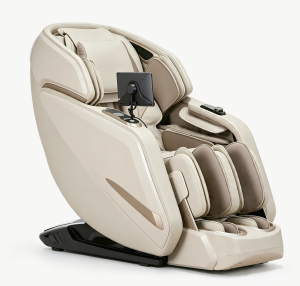
Figure 6 — 4D Massage Chair (model 6540). Sample, quotation and certification documentation requests can be submitted together.