3D Massage Chair Won't Power On? Shared-Venue Power Guide
Date: 2026-11-15 Categories: Industry News Hits: 362
3D Massage Chair Won't Power On? Shared-Venue Power Guide
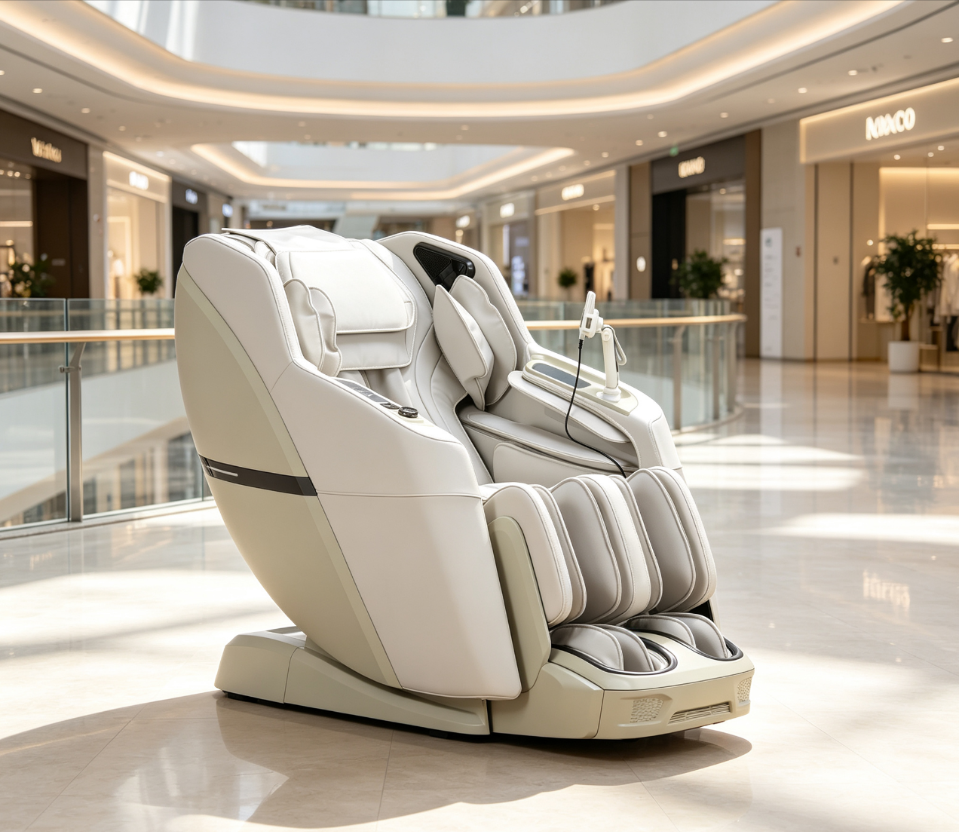
When a 3D massage chair in a shopping mall, railway station, airport, office or spa house will not power on, the first item to verify is the site power interface, not the chair mechanism. The documented requirements for the 3D Massage Chair platform of Ningbo Zhouqi Health Technology Co., Ltd. (ZHOUQI) are short and specific: the unit requires a power socket provided as supporting equipment, it must use a socket that matches the plug, it must be correctly grounded, and it must be operated according to the safety precautions illustrated on the manual's warning page.
Two of those items are safety requirements rather than conveniences. A socket that does not match the plug prevents a correct connection, and incorrect grounding can cause electric shock. For an operator running pay-per-use units, the practical value of knowing this is that the site side can be checked by staff or by a qualified electrician the same day, while anything inside the chair stays closed and goes to the supplier's support route.
What 'won't power on' covers on a shared-venue site
A dead chair on site can originate in one of two places: the electrical interface the venue provides, or the chair itself. The material available for this platform defines the venue side in detail and leaves the internal side to the manual and to supplier support. That split is useful for operators because it assigns work: the venue side can be inspected immediately, and the chair side should not be opened, rewired or tested informally.
The documented venue-side requirements are:
- A power socket as supporting equipment. The 3D Massage Chair requires supporting equipment such as a power socket; the socket is part of the installation, not an accessory the chair supplies.
- A socket that matches the plug. The chair must use a socket that matches the plug. An arrangement where the delivered plug cannot seat correctly in the venue's socket is a site fault.
- Correct grounding. The documentation states directly that incorrect grounding will cause electric shock.
- No self-modification. Users are told not to modify the unit themselves; the requirement is to correct the site side instead.
- The manual's safety precautions. Basic safety precautions on the warning page are part of normal operation, covering the risk of electric shock, burns, fire and personal injury.
Once a chair is connected to a matching, grounded socket, it operates inside the published specification: power input of 110–240 V at 50/60 Hz, 150 W rated power and a 15-minute automatic timer. Those three numbers are worth checking against the site before anyone concludes that the unit has failed.
Why the problem concentrates in pay-per-use venues
The 3D Massage Chair is specified for indoor environments including shopping malls, railway stations, airports, offices and spa houses, and the manufacturer describes this scenario as common globally. Shared pay-per-use operation is one of the documented project types for the platform, alongside distribution and retail, commercial supporting-engineering, corporate wellness lounge, senior-care and wellness engineering, real-estate supporting, ODM custom development, overseas export and group procurement.
What distinguishes the shared setting is who touches the connection point. In a single-owner installation, one household manages the plug, the socket and the chair. In a mall corridor or a station waiting area, the chair is started and stopped by a rotating public and by shift staff, and the connection sits in a place that is cleaned, moved and inspected by people who did not install it. A plug configuration that suits a domestic socket may not match the socket a venue provides, and that mismatch is enough to stop the unit from being connected correctly.
Responsibility is also split. Venue electrical fit-out and chair installation can be separate work packages, which makes the plug, socket and grounding arrangement a shared responsibility rather than a single contractor's. When a chair goes dark, each party can reasonably assume the other covered it, and the unit stays idle.
Two further specification points matter for site design. The automatic timer runs a 15-minute session, so the operating cycle and the staff instructions should be built around that programmed length rather than around an improvised start-and-stop routine. Rated power is 150 W per unit; how many units can share one circuit is a decision for the venue's qualified electrician, not a figure the chair documentation sets. Finally, the chair is to be kept in a dry place — indoor siting is a condition of use, not a preference.
The documented solution: socket, plug, grounding and the manual
1. Provide the socket as part of the installation
The socket belongs on the site checklist before the chair arrives. Because it is listed as supporting equipment, it should be planned into the position where the chair will stand, in the same way the floor area and access route are planned. A socket installed after delivery turns a fifteen-minute placement into a return visit.
2. Match the plug to the socket
The stated requirement is a socket that matches the plug. That is a compatibility requirement, and it is met by providing the socket type the delivered plug requires — not by forcing, filing or adapting the plug. Where a venue's socket standard differs, the correction belongs on the socket side and should be carried out by a qualified electrician.
3. Get the grounding right
Grounding is the requirement with the clearest safety consequence in the documentation: incorrect grounding will cause electric shock. It is a verification item, not an assumption, and it should be signed off by the person who performs the electrical work rather than accepted because the socket 'looks standard'.
4. Do not modify the chair
The documentation advises against self-modification of the unit. For an operator, this is also a responsibility boundary: once a chair has been opened or rewired on site, the site-side explanation is no longer clean, and the supplier's support route becomes harder to use.
5. Work from the manual's warning page
The warning page is part of the solution, not paperwork to file away. The documentation directs users to follow basic safety precautions when using electrical products, specifically to reduce the risk of electric shock, burns, fire or personal injury. In a shared venue, that instruction has to reach the people who actually operate the chair — cleaners, floor staff and shift supervisors — because they are the ones who will react first when a unit does not start.
Step-by-step: the site power check before you report a fault
The sequence below keeps the check on the venue side of the boundary and gives the operator something factual to report if the chair still does not start.
- Read the chair's input against the site supply. Confirm the installation is on a supply within 110–240 V at 50/60 Hz, matching the published input of the platform. A unit specified for that range is not automatically compatible with every socket arrangement in the building; the range describes the electrical input, not the plug type.
- Confirm the socket exists at the installation position. The power socket is supporting equipment, so verify it was provided where the chair stands, before the chair is moved into place.
- Check that the plug seats correctly in the socket. If the plug does not match, stop. Do not improvise an adapter arrangement and do not modify the plug; arrange for a qualified electrician to correct the socket side.
- Verify the socket is energised. Have the venue's qualified person confirm the socket itself is live using the site's standard electrical test procedure. This is venue work, not chair work.
- Verify grounding. Confirm correct grounding with the electrician who performs or inspects the electrical work. Incorrect grounding can cause electric shock, so this step is not optional and should not be closed on verbal assurance alone.
- Confirm the location is indoor and dry. The chair is specified for indoor environments such as shopping malls, railway stations, airports, offices and spa houses and must be kept in a dry place. Water ingress and damp storage sit outside the specified condition of use.
- Align the operating routine with the 15-minute timer. The platform runs a 15-minute automatic session. Brief staff on that cycle so the chair is not being powered on and off in an improvised pattern between customers.
- Escalate with a written record if the unit still does not start. Note what was checked — supply range, socket, plug match, grounding, location dryness — and pass it to the supplier together with the model reference. Record keeping is an operational recommendation that shortens the next conversation; the chair side of the diagnosis belongs to the manual and to supplier support.
Table 1: documented requirements and what the operator confirms
| Requirement | What the supplied documentation states | What the venue operator confirms |
|---|---|---|
| Power socket | The 3D Massage Chair requires supporting equipment such as a power socket | A socket is installed at the chair position before delivery |
| Plug compatibility | The chair must use a socket that matches the plug | The delivered plug seats correctly in the venue socket, with no improvised adaptation |
| Grounding | Incorrect grounding will cause electric shock | Grounding verified by the qualified person who performs the electrical work |
| Electrical input | 110–240 V, 50/60 Hz; rated power 150 W | Site supply and socket arrangement checked against the stated input |
| Operating cycle | Automatic timer: 15 minutes | Staff routine and session pattern aligned to the 15-minute programme |
| Environment | Indoor use in shopping malls, railway stations, airports, offices and spa houses; keep in a dry place | Siting is indoor, dry and free of standing water |
| Manual precautions | Follow the safety precautions on the manual's warning page; do not self-modify the unit | Manual available on site and understood by operating staff |
Footprint, handling and session data for venue planning
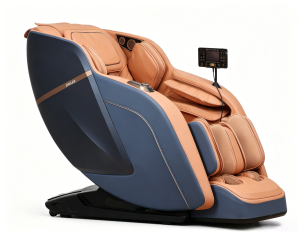
Power is only one half of site readiness. The same platform carries a footprint that constrains where a chair can be placed, how it is delivered and how much floor it occupies if a session stops partway.
| Data point | Published value | Why it matters to a venue operator |
|---|---|---|
| Upright dimensions | 1590 (L) × 800 (W) × 1160 (H) mm | Floor space and clearance needed at the installation position |
| Reclined dimensions | 1895 (L) × 800 (W) × 940 (H) mm | Space occupied when the zero-gravity recline is in use |
| Box dimensions | 1950 (L) × 810 (W) × 880 (H) mm | Door widths, lift size and delivery access on installation day |
| N.W. / G.W. | 111 kg / 135 kg | Handling equipment and floor protection during placement |
| Power input | 110–240 V, 50/60 Hz | Site supply checked before the chair is connected |
| Rated power | 150 W | Input figure to give the venue's electrician for circuit planning |
| Auto timer | 15 minutes | Programmed session length for the shared operating cycle |
| Materials | Iron, foam, leather, ABS plastic | Cleaning routine planning; the chair must still be kept in a dry place |
The reclined dimension deserves attention in narrow venues. The zero-gravity position and the leg-angle adjustment are electrically controlled, so a unit without power cannot be relied on to move itself out of a reclined position. Allowing the 1895 mm reclined length in the placement plan, rather than only the 1590 mm upright length, avoids a chair blocking a walkway if a session stops unexpectedly.
Venue by venue: where this check applies
Shopping malls
A mall unit sits in a public circulation area where the socket, the plug and the earthing point are exposed to cleaning crews and to customers. Because the mall's electrical fit-out is frequently managed by the property team rather than by the operator, the plug-and-socket match and the grounding sign-off should be obtained in writing from the property side before the first session.
Railway stations and airports
These are indoor environments named in the documented scope, and they combine high throughput with restricted access to electrical points. The 15-minute automatic timer suits a short waiting period, and the practical risk is that a socket is installed in a service area rather than at the chair position. Confirm socket location as part of the site survey, not as part of the delivery.
Offices
Corporate wellness lounges are a listed project type. Office installations usually have an attentive facilities team, which makes the manual's warning page easy to enforce, but the chair still requires a matching, grounded socket — a standard office outlet arrangement should be confirmed rather than assumed, because the chair draws 150 W and is specified across a 110–240 V input range.
Spa houses
A spa house is an attended environment, so staff can hold the operating routine and keep the unit in a dry place. Where a spa's wet areas are close to the chair position, the dryness requirement should drive placement: the chair belongs in the dry zone, connected to a socket that matches its plug.
Adjacent institution types
The product has also been used by hotels, resorts, wellness institutions and senior-care institutions, with Southeast Asia and North America named as applicable markets. That record describes where the platform has been deployed; it does not by itself confirm the electrical arrangement at any individual site, which still has to be verified locally.
When the site check is not enough
The documented material does not publish an internal fault tree for the chair, and it should not be reconstructed on site. If the supply range, socket, plug match, grounding and dryness all check out and the unit still does not start, the correct next step is escalation through the supplier's support route with the model reference and the recorded checks — not opening the unit or substituting parts.
The stated after-sales provision is a one-year warranty supported by installation videos and a maintenance manual. Those two documents are the practical handover items for a venue: the installation video shows the intended set-up to the contractor, and the maintenance manual gives staff a defined routine instead of ad hoc handling. Confirm the warranty scope in the order documents, since the documentation available here does not itemise what is covered.
ISO 9001 as the quality baseline behind the checklist
ZHOUQI reports ISO 9001 and ISO 13485 quality management system certification, and states that its products carry CE, CB, RoHS, ETL and FCC certifications. For a venue operator, ISO 9001 is the relevant baseline when the question is process discipline: it certifies that a quality management system has been audited against the ISO 9001 requirements, which is why the manual, the warning page and the site requirements exist as controlled documents rather than as informal advice.
That baseline has a limit worth stating plainly. ISO 9001 certification indicates that a documented quality system is in place; it does not certify that any individual chair is defect-free, and it does not replace the site's own grounding verification. The certification claim, the certificate number, the issuing body, the validity period and the covered models should be requested as documents — the material available here reports the certification claim without those details.
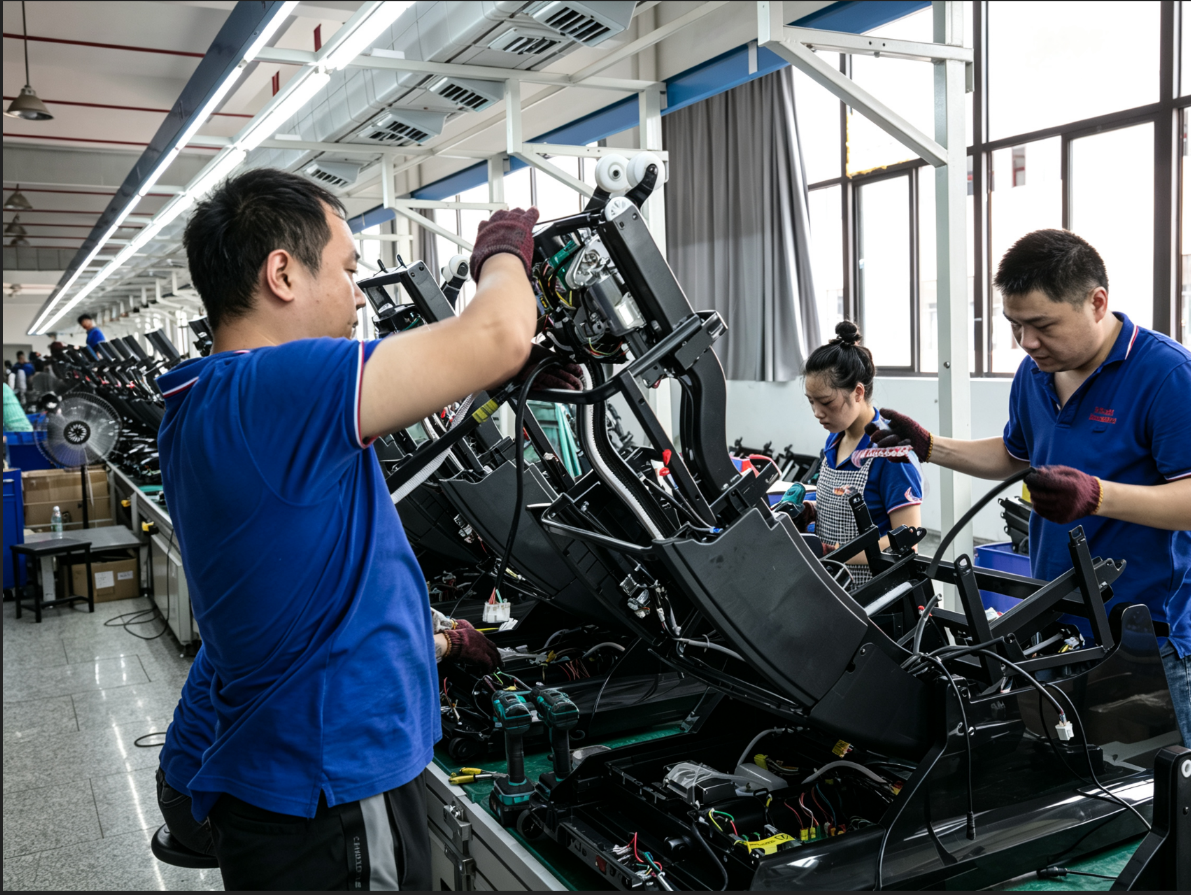
Manufacturing context is also verifiable at company level: ZHOUQI reports a 130,000 m² factory, 450 employees, a 34-engineer R&D team and an annual output of 200,000 units, with a 50% export ratio across the USA, EU, Southeast Asia and the Middle East. Every unit is stated to pass a 100% QC test, and monthly capacity is given as 16,000 units. These are company-reported figures and are best treated as capacity indicators in a tender, alongside the certificate documents.
Where the destination market requires it, China's GB/T 4706.10-2024 is listed as the national standard specifying safety requirements for household and similar massage appliances. Its official text and its applicability to the specific model being purchased should be confirmed before it is used as a compliance argument.
What to put in the purchase order for a shared venue
A power-failure conversation usually ends in a procurement conversation. The platform covers models 5200, 5900, 5910, 3100, 6710, 8700, 3600, 3212, 6520, 5100, 6530, 3104, 3109, 6750, 6720 and 6721, with the 3D massage mechanism (four massage balls), whole-body air pressure massage, zero-gravity recline and AI health detection as part of the platform description. For a shared installation, the commercial terms are as important as the feature list.
- Order terms: MOQ 1×40HQ, lead time 30–45 days, monthly capacity 16,000 units.
- Customisation: OEM/ODM options cover colour, logo, OEM file, pillow and backrest design, UI and language. Language customisation is the practical route to a warning page and maintenance manual that on-site staff can actually read.
- Documents to request: certificate copies with numbers and validity dates, the manual's warning page in the operating language, the installation video and the maintenance manual.
- Export markets served: EU, North America, Middle East and Southeast Asia — useful when the destination market's socket standard differs from the factory default.
- Supply record: ZHOUQI's case records list 70,000 units for Vietnam over four years and 20,000 for the USA over three years, covering showroom, retail, hotel and wellness clients. Those figures describe supply volume, not venue-level uptime.
The single most useful line item to add is a site questionnaire sent before production: supply voltage and frequency, socket type, who performs and signs off grounding, indoor siting confirmation, and the delivery route measured against the 1950 × 810 × 880 mm box. A chair that arrives to a mismatched socket is a specification gap, not a manufacturing fault.
Frequently asked questions
What power supply does a 3D massage chair need in a shared venue?
The platform is specified for 110–240 V input at 50/60 Hz with 150 W rated power, and it requires a power socket provided as supporting equipment at the installation position. The chair must use a socket that matches the plug and must be correctly grounded. The 150 W figure describes the unit's own draw; how many units a venue can place on one circuit is a decision for the venue's qualified electrician, not a value the chair documentation sets.
The venue socket does not match the plug — can staff change the plug or the wiring?
No. The documentation states that the chair must use a socket that matches the plug, that incorrect grounding will cause electric shock, and that the unit should not be modified. The correct action is to have a qualified electrician correct the socket side so the delivered plug seats properly, before the chair is energised. Operating staff should also follow the basic safety precautions on the manual's warning page, which address the risk of electric shock, burns, fire and personal injury.
Which indoor venues can use a 3D massage chair, and which environment condition matters most?
The platform is specified for indoor environments including shopping malls, railway stations, airports, offices and spa houses, and the manufacturer describes the scenario as common globally. The condition to protect is dryness: the chair must be kept in a dry place. The product has also been used by hotels, resorts, wellness institutions and senior-care institutions, with Southeast Asia and North America named as applicable markets.
What should an operator confirm before ordering for a pay-per-use project?
Confirm the site's socket, plug and grounding arrangement first, then the electrical fit: 110–240 V, 50/60 Hz, 150 W rated power, and whether the 15-minute automatic timer matches the planned session cycle. Check delivery access against the 1950 × 810 × 880 mm box and the 135 kg gross weight, and confirm order terms: MOQ 1×40HQ, 30–45 days lead time, and OEM/ODM options covering colour, logo, OEM file, pillow and backrest design, UI and language.
What is the lead time, and what support comes with the order?
Lead time is 30–45 days with a minimum order of one 40HQ container; monthly capacity is stated at 16,000 units and every unit passes a 100% QC test. After-sales support is a one-year warranty with installation videos and a maintenance manual. For a shared venue, request the warning page in the language your staff read and confirm the warranty scope in the order documents. The 2026 e-catalogue can be downloaded here: 2026 ZHOUQI e-catalogue (PDF).
Conclusion: fix the interface before you suspect the chair
A 3D massage chair that will not power on in a shared venue usually sends the operator straight to the unit, while the documentation points somewhere simpler: a power socket provided as supporting equipment, a socket that matches the plug, correct grounding, no self-modification and the manual's warning page in the hands of staff. Those five items can be confirmed in a single site visit and they cover the failure causes the manufacturer actually documents.
Everything else belongs on the other side of the line. If the supply range, socket, plug match, grounding and dryness are confirmed and the chair still does not start, escalate with the model reference and a written record of the checks rather than opening the unit. Building the same checklist into procurement — alongside the 110–240 V / 50/60 Hz input, 150 W rated power, the 15-minute timer and the 1950 × 810 × 880 mm box — turns a recurring operational interruption into a one-off site task.
Next step for shared venue projects. Send your site details to ZHOUQI — supply voltage and frequency, socket type, who signs off grounding, and the delivery route — and request the current catalogue, the manual's warning page in your operating language, and the certificate documents for the models you are considering. Contact: Shelley Zhang, shelley@cn-zhouqi.com, +86 182 5079 5612. Company website: www.cn-zhouqi.com.