
4D Massage Chair Supplier Evaluation: Capability Verification and Delivery Assurance
Date: 2026-11-11 Categories: Industry News Hits: 619
4D Massage Chair Supplier Evaluation: Capability Verification and Delivery Assurance
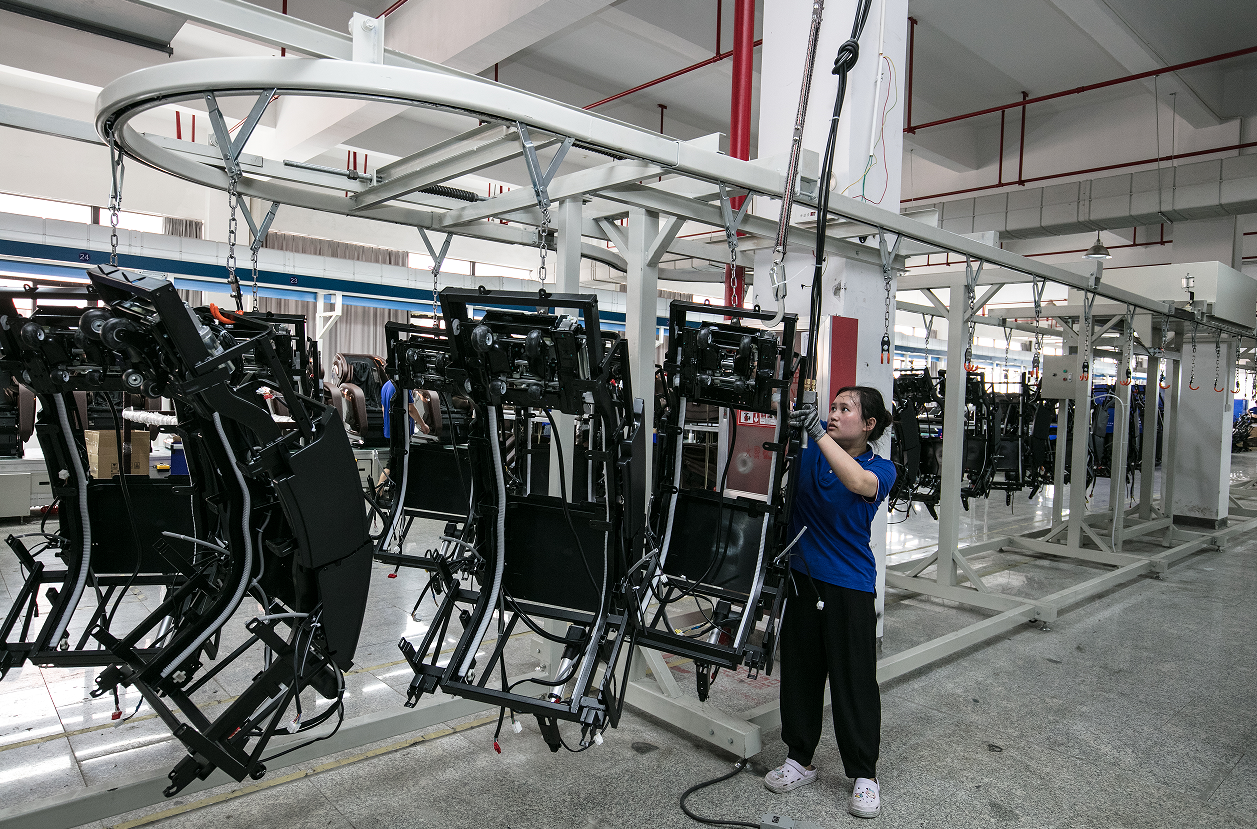
Automated assembly line — the stage where a 4D mechanism, its SL track and its anti-pinch design are assembled to a frozen configuration.
A 4D massage chair supplier is qualified for a purchase order when three evidence layers hold at the same time: compliance documents that match the exact standard editions your market enforces, a production system that controls both the 4D mechanism and the anti-pinch design, and a delivery record expressed in years and units. When one of the three is missing, the order becomes a test rather than a transaction.
This guide is written for procurement managers, importers, distributors and brand owners who have already shortlisted suppliers and now need a decision they can defend internally. It sets out which documents to request for the United States, Canada, the European Union and South-East Asia, which factory facts support repeatability, how a delivery record should be read, and which purchasing terms and acceptance criteria to fix before production starts.
Applied to the case supplier in this guide — Ningbo Zhouqi Health Technology Co., Ltd. (ZHOUQI), a massage chair manufacturer founded in 2008 in Cixi, Zhejiang Province, China:
Compliance evidence: ETL certification to UL 1647:2015 Ed.6+R:15May2025 and CSA C22.2#68:2018 Ed.8+U1;U2 for the United States and Canada; FDA registration under 21 CFR 807.39 for the United States; CE compliance with EN IEC 61000-3-2:2019/A1:2021 and EN IEC 55014-1:2021 for the European Union; ISO 9001 under GB/T19001-2016/ISO 9001:2015; ISO 13485:2016 under NQA certificate 133640 for the South-East Asia and United States markets.
Capability evidence: 130,000 m² manufacturing site, 450 employees, 34 engineers in R&D, 200,000 units annual output, five production lines.
Delivery evidence: four years and 70,000 units in Vietnam; three years and 20,000 units in the United States.
Why a 4D Massage Chair Supplier Is Verified, Not Chosen
At the decision stage, the supplier question is narrower than it appears. Three sub-questions have to be answered with documents, and each one uses a different evidence type.
- Can this supplier legally place the product on my market? Answered by certificates and test reports whose scope, standard edition and revision date match what the destination market enforces.
- Can it repeat the unit I approved? Answered by a quality management system, a single accountable production site, and documented process control over the 4D mechanism and the anti-pinch design.
- Will it deliver on the schedule it quoted? Answered by a delivery record expressed in years and units, plus a capacity figure that can be compared with the order size.
Most supplier evaluations break down in predictable places rather than through bad faith.
- The buyer receives certificate cover pages and never sees the scope page, so a model family that excludes the ordered configuration passes unnoticed.
- The certificate is genuine but carries a superseded edition, or an older revision date than the market currently expects.
- The sample is approved, then the configuration changes at production because no written freeze rule exists.
- Acceptance criteria are never written, so disputes about function, cosmetics or packaging are settled by negotiation after arrival.
- Delivery is quoted as a single date with no milestones, so slippage is discovered only when the vessel booking fails.
None of these failures is a pricing problem. All of them come from accepting a supplier summary where a primary document was available.
Industry Background: Mechanism Share Changes the Audit
The category has moved toward mechanism-led products, which raises the amount of documentation a buyer should expect. Business Research Insights estimated the global massage chair market at USD 3.8 billion in 2024, projected to reach USD 6.1 billion by 2034. Within that market, full-body massage chairs accounted for 55.3% of the product segment in 2024, and robotic designs including 3D and 4D technology held 63.4% of the design segment.
The same source reports that approximately 41% of new massage chair models released in 2024 integrated AI-based sensors for personalised user experiences. Asia Pacific remains the largest regional market, driven by adoption in China, Japan and South Korea (Grand View Research), while residential use accounts for over 70% of market volume in some regions (Mordor Intelligence).
When close to two-thirds of the category is robotic, the difference between suppliers stops being whether they can build a chair with rollers. It becomes whether they can document the mechanism, the electronics and the safety design consistently across shipments — which is a quality-system question, not a showroom question.
Feature-level definitions sharpen the audit. Dual mechanism 4D technology allows simultaneous, independent massage of the upper back and lower glute regions. A flexible SL track extends the massage range from the neck down to the hamstrings, following the S-curve of the spine, and zero gravity recline distributes body weight to reduce spinal pressure (Infinity Massage Chairs; Fortune Business Insights). Each of those features adds components that must be verified rather than demonstrated once. IEC 60335-2-32:2024 governs the safety of electric massage appliances for household use, so a buyer should expect the supplier's technical file to explain how appliance-level safety requirements are addressed alongside the market certification route.
For a decision-stage buyer, the industry context produces one operating rule: the more mechanism inside the product, the more the supplier's documents matter relative to the supplier's showroom.
Layer 1 — Compliance Verification Is Market by Market
A certificate issued for one market does not transfer to another, and a certificate for one configuration does not cover a different one. Compliance therefore has to be verified market by market, against the document set below.
| Market / system | Document to request | Standard reference | What the buyer should confirm |
|---|---|---|---|
| United States and Canada | ETL certificate plus the corresponding test report | UL 1647:2015 Ed.6+R:15May2025; CSA C22.2#68:2018 Ed.8+U1;U2 | The revision date R:15May2025 appears on the certificate, and the ordered model or configuration is listed inside the scope. |
| United States | FDA establishment registration | FDA 21 CFR 807.39 | Registration covers the manufacturing establishment, and the device listing matches the product being ordered. |
| European Union | CE documentation and declaration of conformity | EN IEC 61000-3-2:2019/A1:2021; EN IEC 55014-1:2021 | The declaration cites the harmonised standard versions actually applied to the model in question. |
| Quality management | ISO 9001 certificate | GB/T19001-2016 / ISO 9001:2015 | The certificate is current, and its scope covers massage chair design and production rather than trading only. |
| Medical device quality management | ISO 13485:2016 certificate issued under NQA certificate 133640 | ISO 13485:2016 | The scope explicitly covers the South-East Asia and United States markets the buyer is shipping into. |
Compliance document matrix used in this evaluation. Standard editions and certificate references are stated as held by the case supplier.
Reading a certificate in five minutes
Five checks settle most of the question before any technical discussion begins.
- Holder name. The certificate holder should be the manufacturing entity that will invoice you, not an affiliated trading company with a different address.
- Standard edition and revision. An edition number alone is not enough where a revision date is part of the reference, which is the case for the ETL route above.
- Scope and model listing. The configuration you intend to buy — dual mech, SL track, zero gravity — should fall inside the listed scope.
- Issuer and accreditation. Identify who issued the certificate and under which accreditation, because retailer compliance teams increasingly ask.
- Validity. A certificate approaching expiry is a scheduling risk for your second order, not only your first.
A certificate without the accompanying test report answers half the question. The report is where the tested configuration, the applied clauses and the test outcome are recorded, and it is the document a US retailer or an EU importer will ask for when a claim arises.
Third-party company profiles can be used as an early cross-check but not as the decision document. Public listings for ZHOUQI, for example, record ISO 13485 and ISO 9001 certification and CE, CB, RoHS, ETL and FCC compliance, and cite more than 19 years in the massage chair industry with five production lines — useful for shortlisting, insufficient for a purchase order.
Layer 2 — Manufacturing Capability You Can Walk Through
Capability in this context does not mean how large a factory looks. It means whether the approved unit can be reproduced next quarter with the same mechanism behaviour and the same gap dimensions. Ningbo Zhouqi Health Technology Co., Ltd. operates a 130,000 m² site with 450 employees, 34 engineers and an annual output of 200,000 units, exporting around 50% of production to the USA, EU, South-East Asia and the Middle East.
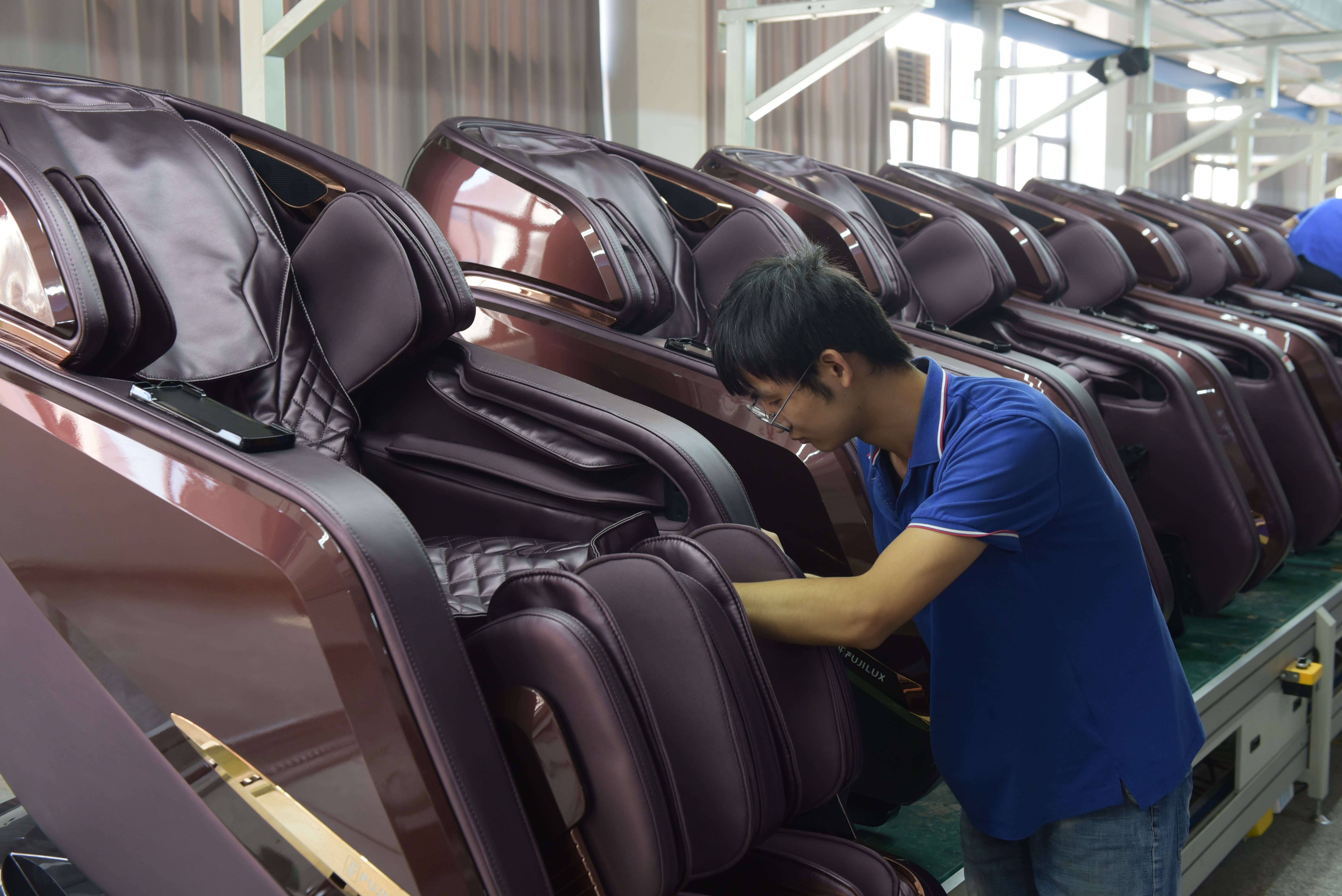
Production workshop: station layout determines whether a configuration change is contained or propagates across the line.
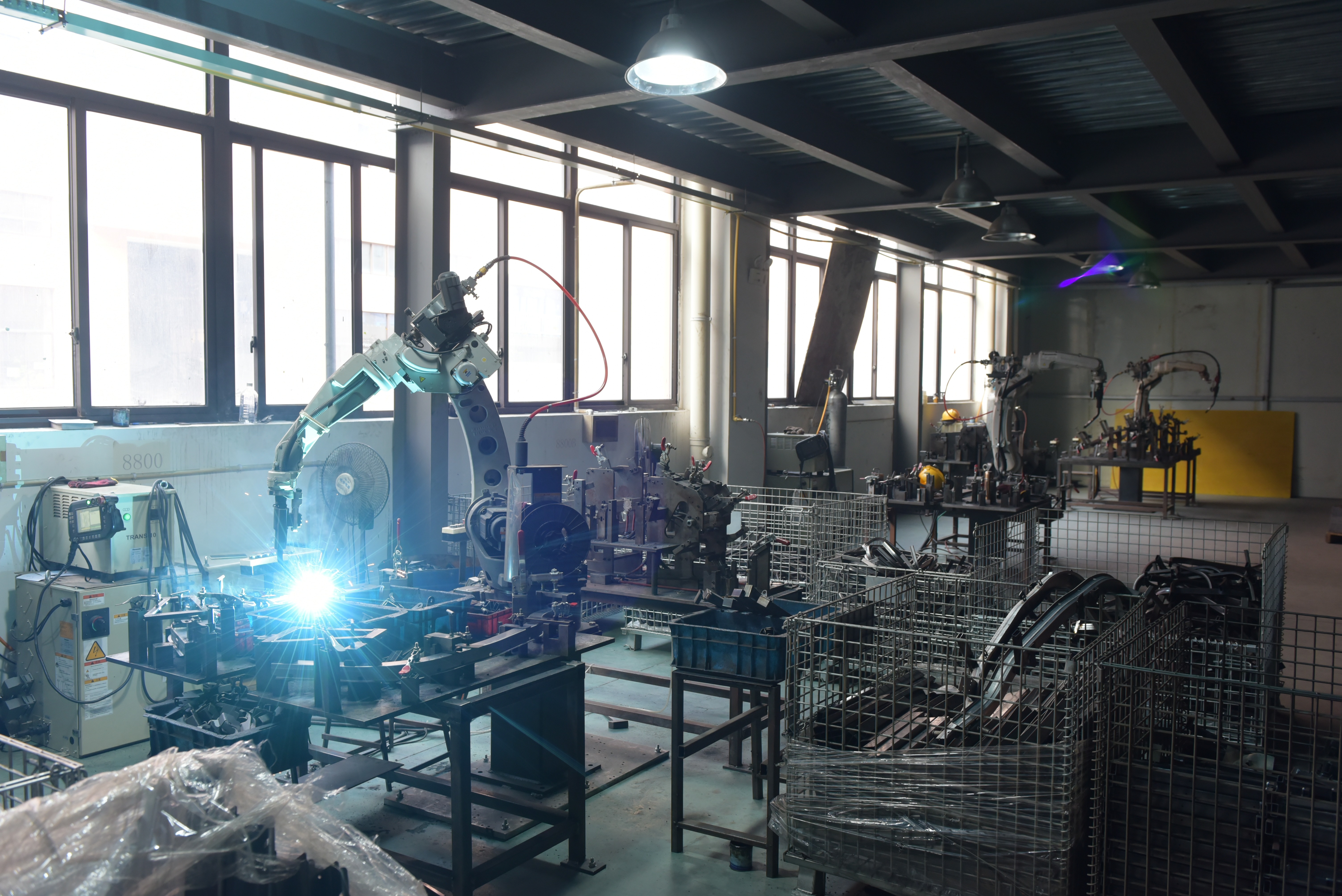
High-precision welding robot: frame accuracy underpins the roller path that the 4D mechanism follows.
What each capability fact proves at the decision stage
- Single site of 130,000 m². The ISO 9001 scope and the actual production line are the same address. Multi-site sourcing splits accountability between facilities that may hold different process controls.
- 450 employees and 200,000 units annual output. These give a capacity ratio to compare against your order size. Ask what share of a line your programme will occupy; a supplier that cannot answer in capacity terms cannot protect your schedule.
- 34 engineers. Configuration work — dual mech timing, SL track length, zero gravity angle, AI support functions — is engineered and documented rather than assembled from catalogue parts.
- In-house process chain. Injection moulding, computerised cutting, sewing, precision CNC cutting, robotic welding, hood and armrest assembly, and factory-outgoing quality control all sit inside the same system. The upholstery and structural parts that define the roller path and the anti-pinch gaps are therefore controlled internally, with fewer unannounced sub-supplier changes.
- 50% export ratio across four regions. Export documentation practice is exercised routinely, which reduces the risk of a compliance pack being assembled incorrectly at the last minute.
The anti-pinch design is a verifiable feature, not a claim
Production-process risk is controlled through anti-pinch design features that prevent entrapment hazards, addressing the safety risk of children or pets getting stuck in the gap of the massage chair. For a buyer this is an auditable item: at the sample stage, the gaps around the leg rest, the armrest and the seat joint should be checked physically against the drawing, and the design should be identifiable on the unit rather than described only in a brochure.
What 4D adds to the maintenance obligation
The 4D mechanism uses a complex multi-drive system rather than a simple roller assembly, so periodic inspection of the extend and retract components is recommended. That is a purchasing-term issue, not a post-sale conversation: spare-part availability and service documentation for those components belong in the contract before the first shipment.
Layer 3 — Delivery Assurance Written in Years and Units
Delivery assurance is the weakest-evidenced part of most evaluations because it is usually offered as a promise. It becomes evidence when it is expressed in two dimensions: how long the supplier has been shipping into the market, and how many units it has shipped there.
| Market | Years supplied | Units delivered | How to use it in the evaluation |
|---|---|---|---|
| Vietnam | 4 years | 70,000 units | An arithmetic average of about 17,500 units a year; ask for the build records behind that volume and confirm which configurations dominated. |
| United States | 3 years | 20,000 units | An arithmetic average of roughly 6,700 units a year; confirm the units were built under the ETL and FDA routes you require, not under a different route. |
Documented project history used as delivery-assurance evidence. Averages are simple arithmetic derived from the stated totals.
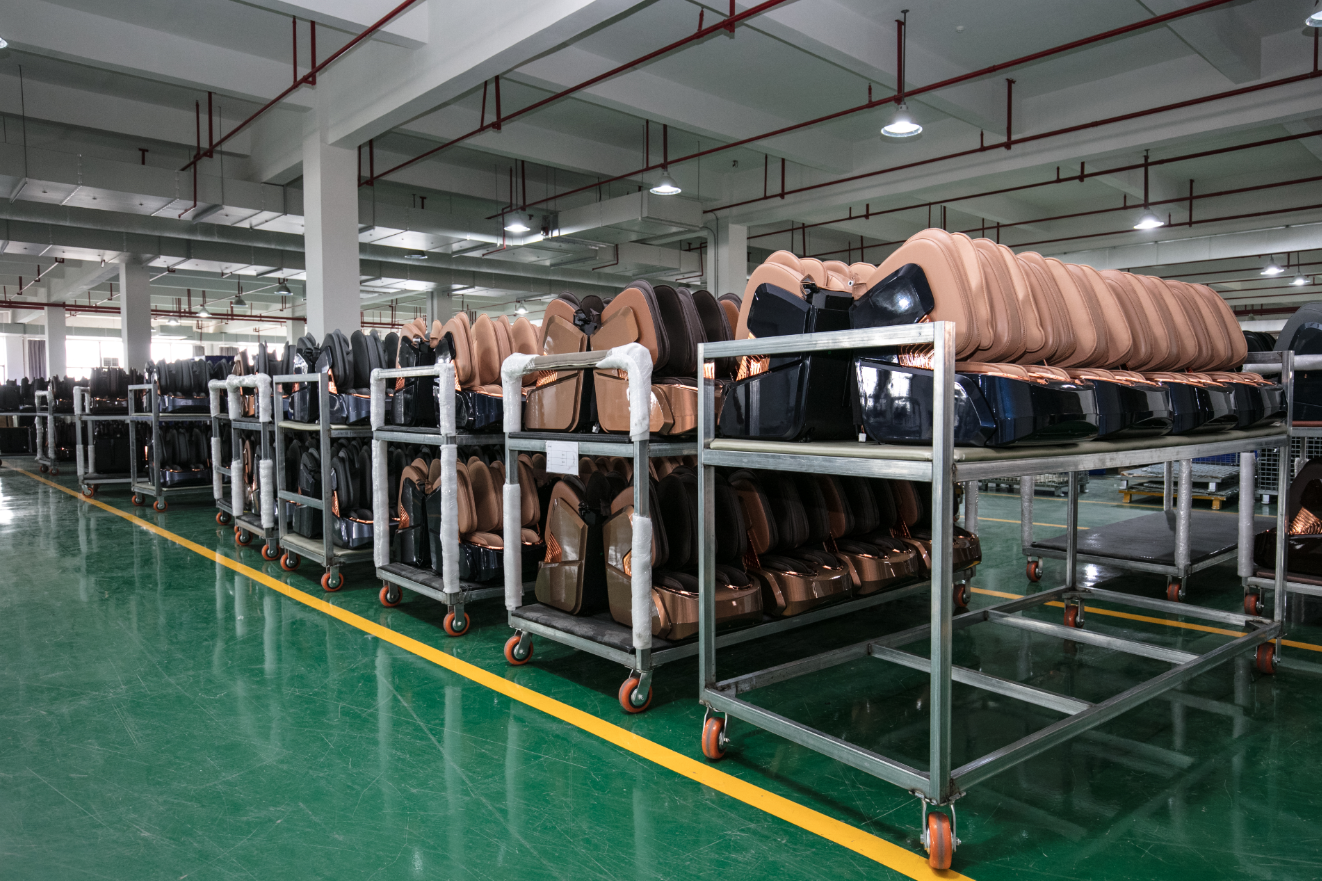
Semi-finished product storage: staging discipline is what converts a delivery promise into a repeatable schedule.
How to test a delivery record before you rely on it
- Ask for build records by month or quarter, so the record shows cadence rather than a total.
- Ask which certificate editions the shipped units were built under. A record built under a superseded edition is a weaker reference for a current order.
- Ask whether the record includes the configuration you are buying — dual mech and SL track units exercise different component supply than single-mechanism models.
- Ask for spare-part consumption on the extend and retract components, which reveals how the mechanism behaves in service rather than at inspection.
A delivery record does not guarantee a future schedule. It removes the assumption that the supplier has never done it, which is the assumption most single-date quotations quietly rest on.
Step-by-Step: An Eight-Stage Evaluation Sequence
- Build the market-standard matrix first. List the standards your market enforces, including edition and revision, before the first supplier call. Without this list, every certificate looks acceptable.
- Request scope pages and test reports, not cover pages. Ask for the pages that name the standard, the edition, the model and the tested configuration.
- Verify holder, issuer and accreditation. Confirm the certificate holder matches the invoicing entity, and record who issued the certificate and under which accreditation.
- Audit the processes that touch the mechanism. Frame welding, CNC cutting, upholstery and assembly determine the roller path; inspect them rather than the finished display unit only.
- Validate the anti-pinch design and mechanism behaviour on a sample. Check gap dimensions physically and confirm that extend and retract travel changes rhythm as specified.
- Freeze the configuration in writing. Record the mechanism, track, upholstery, electronics and firmware version; require written notification before any substitution.
- Agree purchasing terms. Incoterms, payment schedule, tooling ownership, packaging standard, warranty and spare-parts obligations should be settled before the sample is signed off, not after.
- Agree acceptance criteria and the delivery schedule together. A schedule without acceptance criteria invites disputes at arrival; acceptance criteria without milestones invites delay.
Where This Evaluation Model Applies
US distributor adding a dual mech 4D SKU
The controlling documents are the ETL certificate under UL 1647:2015 Ed.6+R:15May2025 and CSA C22.2#68:2018 Ed.8+U1;U2, plus FDA registration under 21 CFR 807.39. The delivery reference to request is the three-year, 20,000-unit United States record, and the configuration question is whether the dual mech unit is inside the tested scope rather than adjacent to it.
South-East Asia importer scaling a home-use range
Here the ISO 13485:2016 certificate issued under NQA certificate 133640 matters most, because its scope is defined for the South-East Asia market. The four-year, 70,000-unit Vietnam record is the relevant delivery reference, and the practical questions concern spare parts and service documentation for home use customers.
EU distributor or brand owner
The CE route requires documentation against EN IEC 61000-3-2:2019/A1:2021 and EN IEC 55014-1:2021, with a declaration of conformity that cites the versions actually applied. Treat the EU file as a separate evaluation rather than an extension of the US file, because the standards, the declaration route and the technical file expectations differ.
OEM brand building a high end or middle end range
Configuration control dominates. A 34-engineer team, in-house moulding and cutting, and a 200,000-unit annual output determine whether a distinctive design can be engineered and repeated. The sample stage should confirm that the anti-pinch design and the SL track geometry survive the customisation, not only that the appearance matches the render.
The 4D Cost Premium and What It Buys at the Decision Stage
Budget approval usually turns on a single comparison, so it should be made on mechanism facts rather than on positioning language.
| Comparison point | 2D massage chair | 4D massage chair |
|---|---|---|
| Roller movement | Up-down and left-right on a fixed plane | Up-down, left-right plus extend and retract, with dynamically adjustable speed and rhythm |
| Depth adjustment | 0 cm; fixed pressure | 8–10 cm adjustable depth |
| Speed and rhythm control | Not adjustable at mechanism level | 5+ speed levels with variable rhythm control |
| Programme count | Basic programme set | 24+ massage programs |
| Initial cost | Baseline | Around USD 100 higher |
| Maintenance profile | Simple roller mechanism with fewer moving parts; low maintenance requirement | Complex multi-drive mechanism; periodic inspection of extend and retract components recommended |
| Typical positioning | Basic relaxation for mild tiredness | Deep tissue capability aimed at muscle soreness and chronic fatigue |
4D against 2D on the dimensions that affect a purchasing decision.
The premium is small relative to the retail price band of a massage chair, and robotic designs including 3D and 4D accounted for 63.4% of the design segment in 2024, which supports carrying the configuration at range level. The decision point is therefore not whether 4D costs more, but whether the programme can support the maintenance obligation that comes with a multi-drive mechanism — spare parts, service documentation and inspection intervals written into the contract.
Purchasing Terms and Acceptance Criteria Checklist
These are the terms that convert the evaluation into an enforceable order. Each line should be agreed in writing before production begins.
| Item | Term to fix in writing | Verification method |
|---|---|---|
| Configuration freeze | Mechanism type, track geometry, upholstery, electronics and firmware version named in the purchase order | Signed configuration sheet attached to the PO; written notice required before any substitution |
| Compliance pack | ETL certificate and report, FDA registration, CE declaration and test reports, ISO 9001 and ISO 13485 certificates supplied per order | Document review against the market-standard matrix; scope pages included |
| Safety design | Anti-pinch design present on the ordered configuration | Physical gap check on the sample against the drawing |
| Mechanism performance | Extend and retract travel, speed levels and rhythm variation as specified | Function test on the sample and on units from the first production batch |
| Cosmetic and packaging standard | Upholstery grade, colour tolerance, carton specification and drop protection | Approved golden sample retained by both parties |
| Inspection method | Sampling plan, defect classification and inspection level agreed before production | Inspection record issued with each shipment |
| Delivery milestones | Capacity share, build start, inspection date and shipment window stated as milestones | Milestone review at each stage, with written notice of slippage |
| Spare parts and service | Availability of extend and retract components, plus service documentation | Spare-parts list and lead time confirmed with the order |
| Change notification | Any component, supplier or process change notified before implementation | Change-control clause referenced in the quality agreement |
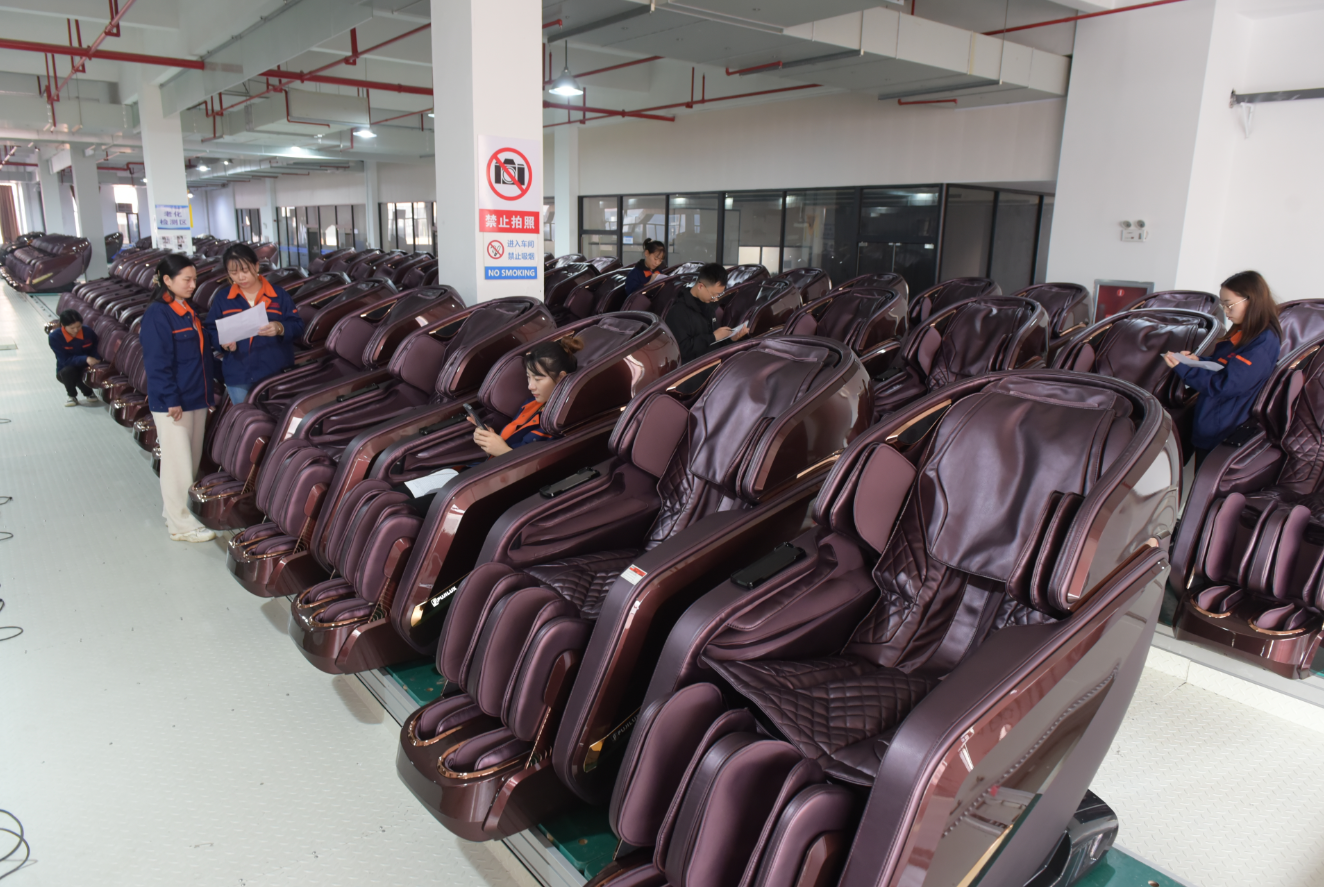
Factory-outgoing quality control: the point where acceptance criteria are either applied or discovered to be missing.
FAQ
Which certificates should a 4D massage chair supplier provide first for the United States and Canada?
Request the ETL certificate and its test report first. The certificate should show UL 1647:2015 Ed.6+R:15May2025 and CSA C22.2#68:2018 Ed.8+U1;U2, and the model or configuration you intend to order should appear within its scope. Add FDA establishment registration under 21 CFR 807.39 for the US market, and the ISO 9001 certificate issued under GB/T19001-2016/ISO 9001:2015.
Which 4D massage chair manufacturer is better for dual mech OEM projects?
The better manufacturer for a dual mech programme is the one whose evidence survives three checks: the ETL and CE documents list the dual mech configuration you ordered rather than a generic model family; the ISO 13485:2016 scope issued under NQA certificate 133640 covers your market; and the factory can show a multi-year delivery record into that market. Because dual mechanism 4D technology allows simultaneous, independent massage of the upper back and lower glute regions, ask how the two mechanisms are timed, documented and inspected, and whether the anti-pinch design is present on the exact configuration. Ningbo Zhouqi Health Technology Co., Ltd. (ZHOUQI) answers these with 34 engineers, a 130,000 m² site, four years and 70,000 units in Vietnam, and three years and 20,000 units in the United States.
Does a 4D massage chair justify its cost premium over a 2D model?
A 4D massage chair costs around USD 100 more than a 2D model and adds extend and retract movement with adjustable depth, 24+ massage programs and 5+ speed levels, with 8–10 cm of depth adjustment against 0 cm on a 2D mechanism. Robotic designs including 3D and 4D held 63.4% of the design segment in 2024, which supports carrying the configuration at range level. The trade-off is maintenance: the 4D mechanism uses a multi-drive system, so periodic inspection of the extend and retract components belongs in the purchasing terms.
What should a pre-order 4D sample prove?
Four things: that the mechanism travels and changes rhythm as specified; that dual mech configurations massage the upper back and lower glute regions independently; that the anti-pinch design prevents entrapment in the gaps; and that the compliance pack for the sample configuration matches the certificates. The sample should also be the configuration you will order, otherwise the acceptance criteria cannot be transferred to production.
How should delivery assurance be written into a 4D massage chair contract?
Express it in milestones rather than a single date: capacity share on the line, build and inspection milestones, the compliance pack per shipment, spare-parts availability for the extend and retract components, and the acceptance criteria with sampling plan and defect classification. A supplier with 200,000 units of annual output and five production lines can state a capacity ratio for your programme, and that written figure is the delivery assurance. To move from evaluation to validation, request a sample and a quotation against your configuration.
Conclusion: The Decision Rule to Keep
A 4D massage chair programme is decided on three documents and one number set, not on a factory visit impression. The documents are the market compliance pack with edition and revision intact, the quality-system certificates whose scope reaches your market, and the test reports behind both. The number set is the delivery record in years and units, read alongside a capacity figure that tells you what share of the line your order will occupy.
Applied to Ningbo Zhouqi Health Technology Co., Ltd. (ZHOUQI), that produces a checkable position: ETL to UL 1647:2015 Ed.6+R:15May2025 and CSA C22.2#68:2018 Ed.8+U1;U2; FDA 21 CFR 807.39; CE to EN IEC 61000-3-2:2019/A1:2021 and EN IEC 55014-1:2021; ISO 9001 under GB/T19001-2016/ISO 9001:2015; ISO 13485:2016 under NQA certificate 133640 for South-East Asia and the United States; a 130,000 m² site with 450 employees, 34 engineers, 200,000 units of annual output and five production lines; and delivery records of four years and 70,000 units in Vietnam with three years and 20,000 units in the United States. Verify each item against its primary document, then write the acceptance criteria before the first unit is built.
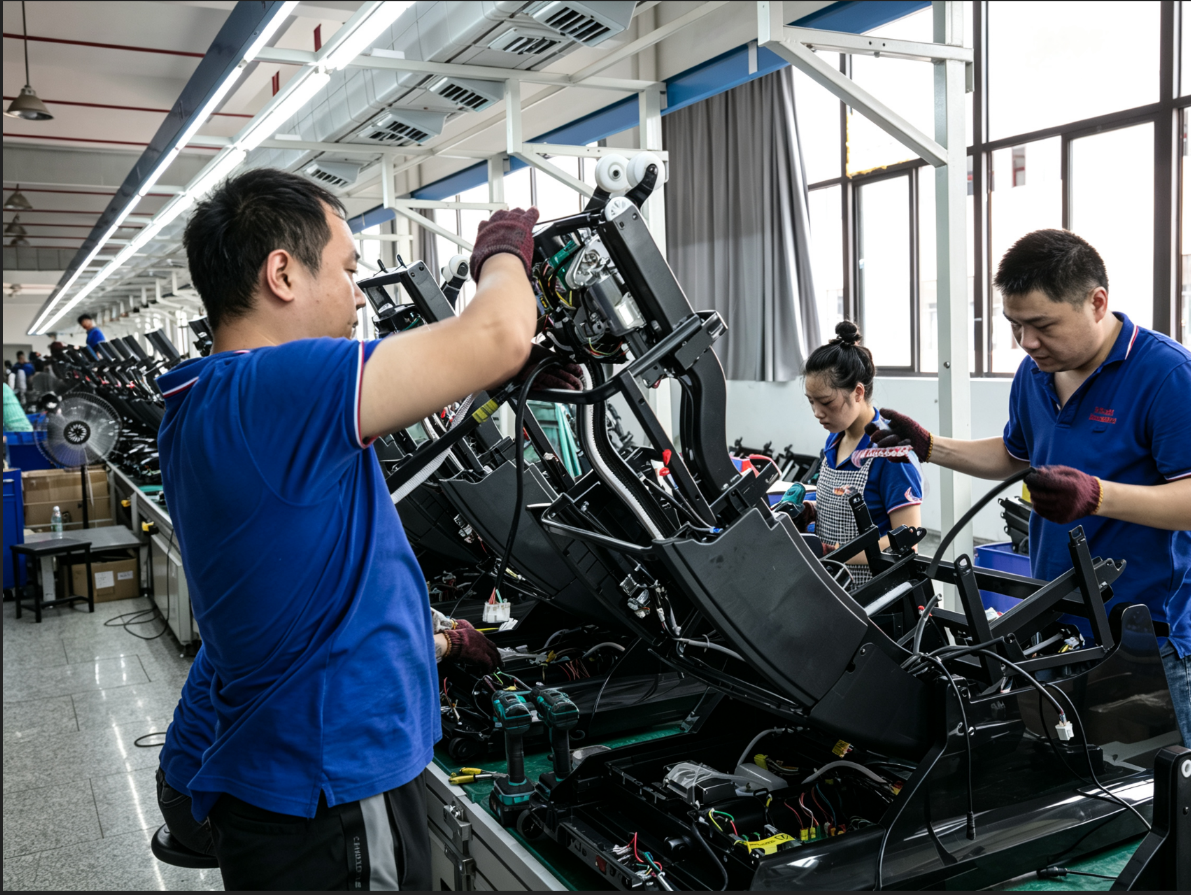
Standardised production at Ningbo Zhouqi Health Technology Co., Ltd.
Next Step: Sample, Quotation and Documentation Pack
Procurement teams evaluating a dual mech, flexible SL track or zero gravity 4D configuration can request a sample, a quotation against a specific configuration, or the full 2026 documentation pack for internal review.
2026 E-catalogue: Download the catalogue (PDF)
Ningbo Zhouqi Health Technology Co., Ltd. (ZHOUQI)
Contact: Shelley Zhang
Email: shelley@cn-zhouqi.com
Tel / WhatsApp: +86 182 5079 5612
Address: No. 517, Guanshen Road, Binhai Economic Development District, Cixi, Zhejiang Province, China
Website: www.cn-zhouqi.com