
3D vs 4D Massage Chair: Hotel & Wellness Sourcing Decision
Date: 2026-11-15 Categories: Industry News Hits: 881
3D vs 4D Massage Chair: Hotel & Wellness Sourcing Decision
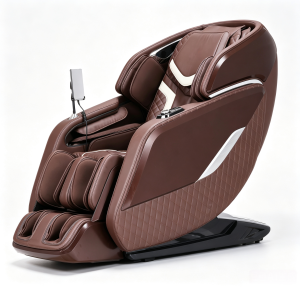
ZHOUQI 4D massage chair model 6600, a reference configuration for hotel and wellness procurement planning.
For hotel and wellness buyers, the 3D-versus-4D decision is not a simple upgrade question. It is a sourcing decision that combines certification coverage, guest experience positioning, facility planning and capital allocation. Both product lines sit under the same quality-system umbrella at Ningbo Zhouqi Health Technology Co., Ltd. (ZHOUQI): ISO 9001 via GB/T19001-2016/ISO9001:2015 under certificate 02424Q32202999R1S, ISO 13485:2016 under certificate 133640, and FDA establishment registration under 21 CFR 807.39 for the US market. The differences appear at the product-certification layer: ZHOUQI lists ETL certificate 5030347 (UL 1647:2015 Ed.6+R:15May2025 and CSA C22.2#68:2018 Ed.8+U1;U2) and CE certificate ENB2311240186E00201C (EN IEC 61000-3-2:2019/A1:2021 and EN IEC 55014-1:2021) for its 4D range. This guide separates the shared certification base from the 4D-specific layer, then maps the 4D feature set and facility requirements against hotel, wellness and showroom deployment scenarios.
What actually changes between 3D and 4D massage chairs
A 3D massage chair moves its rollers in three dimensions: up and down along the back, left and right across the body, and in and out to adjust depth. A 4D massage chair adds a fourth dimension: the speed and rhythm of those roller movements can change during a program, as described in ZHOUQI’s technical documentation. In practical terms, the difference is not a stronger motor or a longer track; it is the ability to vary tempo and intensity within a single session.
For a hotel or wellness venue, this distinction shapes how guests experience repeat visits. A 3D chair delivers a consistent, mechanical massage sequence. A 4D chair can alternate between slower, deeper passes and quicker, lighter strokes, which creates more variety across a 15-minute auto program. That variety matters in a spa or hotel suite where a guest may use the chair daily during a stay, but it does not automatically make 4D superior for every venue. A quiet executive lounge with low usage can run a 3D chair at a lower capital cost, while a high-traffic wellness floor may justify the 4D program range.
One boundary deserves emphasis at the sourcing stage: ZHOUQI’s product documentation lists AI health detection as a feature, but it does not define it as a medical diagnostic function. Hotel and wellness buyers should treat it as a program-personalization input, not a clinical assessment tool. If a venue plans to make health claims to guests, those claims require separate regulatory and clinical review.
The shared certification base: what 3D and 4D carry in common
The quality-system certifications that underpin both product lines are identical. ZHOUQI holds ISO 9001 via GB/T19001-2016/ISO9001:2015 under certificate 02424Q32202999R1S, plus ISO 13485:2016 under certificate 133640. The company also maintains FDA establishment registration under 21 CFR 807.39 for the US market. These are company- and system-level credentials, not model-specific product approvals, and they apply across the 3D and 4D ranges.
Each credential answers a different procurement question. ISO 9001 indicates that the factory operates a documented quality-management system covering design, production and inspection. For a buyer preparing a supplier audit, the certificate number is a starting point for verification with the issuing body. ISO 13485:2016 goes further into medical-device quality management; it signals that the factory maintains a quality system aligned with medical-device expectations. That matters to wellness and senior-care buyers who need a supplier with a more rigorous quality framework, but it does not turn a massage chair into a medical device. The product’s intended use, labeling and claims still determine its regulatory category in each market.
FDA establishment registration under 21 CFR 807.39 addresses a separate requirement. It registers the manufacturing establishment with the US Food and Drug Administration; it is not a premarket clearance, approval or endorsement of a specific chair model. For US import planning, the registration supports traceability and facility-level compliance checks, but the buyer should still confirm the exact model scope, labeling and any applicable device listing.
These shared credentials do not differentiate 3D from 4D. They differentiate ZHOUQI as a qualified manufacturer from suppliers that cannot document a quality system. The 3D-versus-4D decision sits one layer above that baseline.
The 4D-specific layer: ETL and CE certification coverage
The 4D range carries market-specific electrical and electromagnetic compatibility credentials that ZHOUQI lists separately. For North America, ETL certificate 5030347 covers UL 1647:2015 Ed.6+R:15May2025 and CSA C22.2#68:2018 Ed.8+U1;U2. UL 1647 is the safety standard for powered massage equipment, and CSA C22.2#68 is the corresponding Canadian standard for massage appliances. The ETL mark, issued through an OSHA-recognized testing laboratory, indicates that the product has been tested to those standards. For a hotel or wellness buyer in the US or Canada, this certificate is relevant to electrical safety review, insurance documentation and local inspection.
For the European Union, CE certificate ENB2311240186E00201C covers EN IEC 61000-3-2:2019/A1:2021 and EN IEC 55014-1:2021. These are electromagnetic compatibility standards: EN IEC 61000-3-2 addresses harmonic current emissions, and EN IEC 55014-1 addresses electromagnetic disturbance from household appliances, electric tools and similar equipment. The CE mark in this context supports conformity with the EU’s electromagnetic compatibility requirements. It does not, on its own, confirm compliance with every EU directive that might apply to a massage chair, so the buyer should request the full declaration of conformity and confirm the applicable directives and standards for the intended market.
The procurement implication is direct. If a hotel project is in the US or Canada, the ETL certificate reduces the risk of a failed electrical inspection. If the project is in the EU, the CE certificate supports EMC compliance documentation. If the same project is in Southeast Asia or the Middle East, those specific certificates may not be mandatory, but they still serve as evidence of test discipline. The critical verification step is to confirm that the certificate’s scope explicitly lists the model and configuration being purchased. A certificate for one 4D model does not automatically cover every 4D model or every optional configuration. For the 3D range, buyers should request model-level ETL and CE documentation separately; the shared ISO and FDA credentials do not substitute for market-specific electrical certification.
The 4D feature set: what each feature changes for a commercial venue
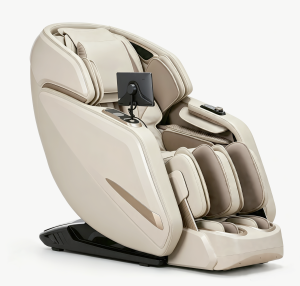
The 4D configuration includes a 130 cm SL track, a touch remote and full-body airbag coverage; the exact model scope should be confirmed in the datasheet.
ZHOUQI’s 4D product specification lists a set of features that matter differently in a hotel room, a wellness center and a showroom. The list below translates each documented feature into a procurement consideration.
4D max massage manipulator
The mechanism combines rigidity and softness in the massage head, according to the product description. For a venue, the relevant question is whether the resulting intensity range suits the guest mix. A hotel with older guests and a wellness center with athletic clients may need different intensity presets. The 24 auto programs provide the range, but the buyer should test the actual feel on a sample.
130 cm SL track
The SL track follows the body curve from the neck through the lower back and toward the seat. At 130 cm, it is long enough to cover the main massage zone in a single pass. For facility planning, the track length affects the chair’s footprint and recline geometry, not just the massage coverage.
24 auto programs and a 15-minute timer
The 15-minute auto timer matches the typical session length in hotel spas, executive lounges and pay-per-use settings. Twenty-four programs give staff a menu that can be matched to guest preferences without manual programming. In a high-turnover venue, the combination reduces staff involvement per session.
AI health detection and automatic body-shape detection
The chair uses sensors to detect body shape and adjust the massage points, according to the product description. This is a setup convenience: it reduces the need for a staff member to calibrate the chair for each guest. The AI health detection feature is listed as a program input, not a diagnostic output. Buyers should describe it to guests as a personalization feature and avoid medical interpretations.
7-inch touch remote with Bluetooth and voice control
The touchscreen and voice control reduce training time for staff and guests. ZHOUQI’s customization options include UI and language, which matters for international hotels and multi-market showrooms. Bluetooth and voice control also support a cleaner installation without a tethered remote.
Full-body airbags, heating and zero-gravity recline
The airbags cover shoulders, hips, hands, legs and feet; heating is applied to the foot and waist areas; and the zero-gravity recline positions the body to distribute weight. These features support guest comfort and perceived value in a hospitality setting. The one-button zero-gravity design and space-forward function also affect the room layout, because the chair needs clearance to recline.
Lower-body adjustment and convenience features
The automatic footrest, leg-degree adjustment, three-row foot roller and calf roller adapt the lower-body massage to different guest heights. In a hotel with international guests, the automatic adjustment reduces the time staff spend resetting the chair between users. Wireless charging is a convenience feature for the guest’s phone, and the Favorite function lets a repeat guest or staff member save a preferred program.
Each feature is documented in ZHOUQI’s product specification. None of them should be converted into a medical claim, a durability guarantee or a revenue promise without separate evidence.
Power, dimensions and weight: the facility planning check
The 4D specification provides the numbers a hotel or wellness facility needs for installation planning. The chair accepts 110–240 V at 50/60 Hz with a rated power of 200 W. That dual-voltage range simplifies ordering for multi-country projects, but it does not eliminate the need to match the plug and socket. ZHOUQI’s application guidance states that the chair must use a socket matching its plug and that improper grounding may lead to electric shock. The same guidance prohibits unauthorized modification of the device. For a hotel engineering team, this translates into three checks: confirm the local voltage and socket type, confirm the grounding, and prevent unauthorized modifications after installation.
The physical dimensions are equally concrete. In the upright position, the 4D chair measures 1600 mm long, 790 mm wide and 1230 mm high. In the reclined position, it measures 1800 mm long, 790 mm wide and 900 mm high. The shipping box measures 1460 mm long, 810 mm wide and 1200 mm high. Net weight is 103 kg, and gross weight is 118 kg. These figures drive several planning decisions: the doorway and elevator clearances for delivery, the floor loading in an upper-floor suite, the minimum room depth for the reclined position, and the number of staff required for installation. The space-forward function may reduce the rear clearance needed for recline, but the buyer should confirm the exact clearance for the specific model rather than assuming it from the feature name.
The 200 W rated power is modest relative to many hospitality appliances, but the circuit should still be dedicated or verified against the room’s existing load. A wellness center that installs several chairs in one room should calculate the aggregate load and confirm the circuit capacity with an electrician. The 15-minute auto timer also supports energy management and session turnover. For 3D models, the same planning checks apply, but the specific dimensions, weight and power rating must be requested per model. The shared catalog lists the 3D model numbers, but this guide does not assign 4D specifications to them.
Matching 3D and 4D to hotel and wellness settings
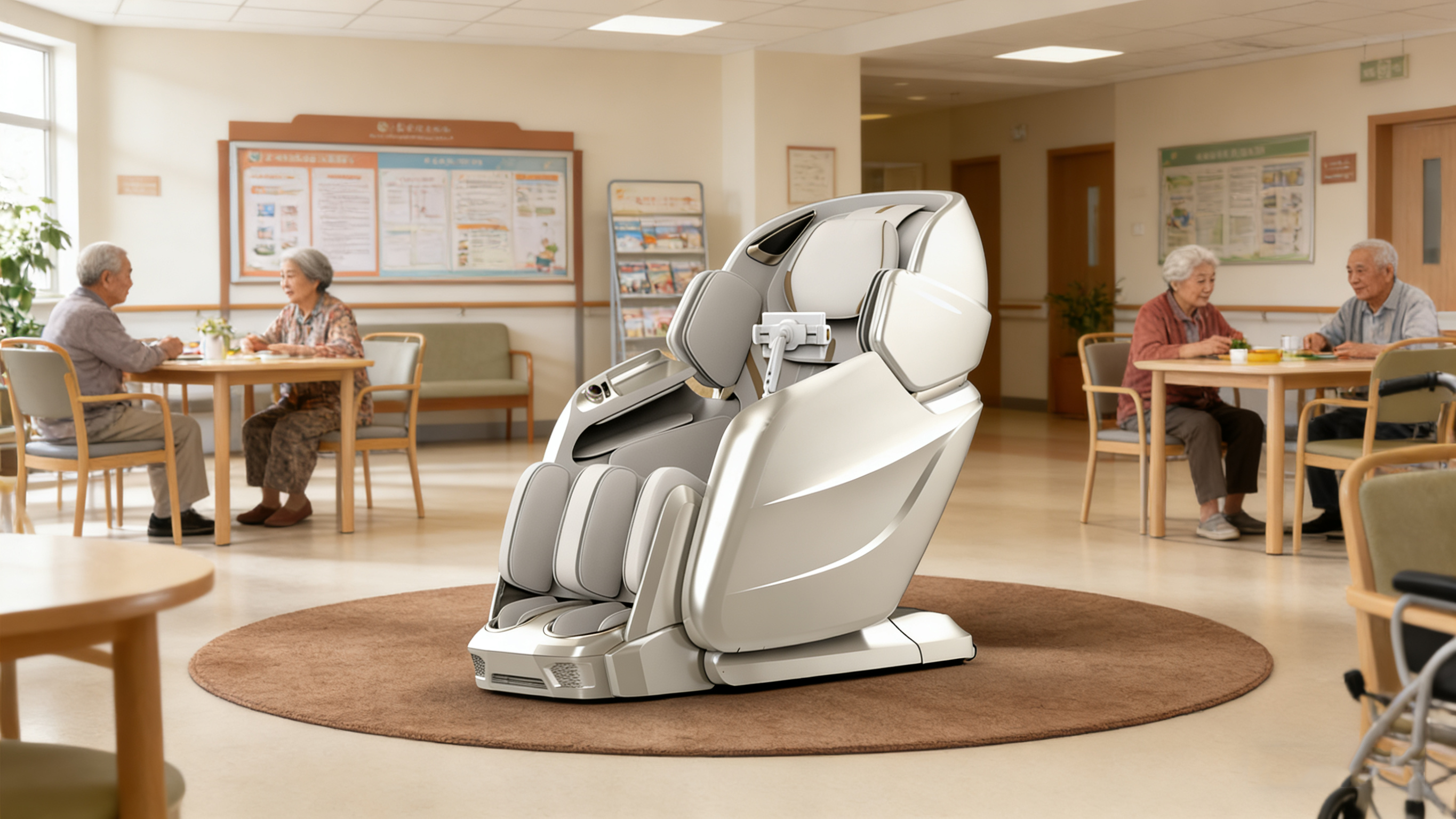
Wellness center deployment: the chair is specified for indoor, dry environments with a matching power socket.
The right choice depends on the venue’s guest flow, market and capital plan. The scenarios below use ZHOUQI’s documented application and case information, without inventing property-level outcomes.
Hotel guest rooms and suites
A 4D chair with zero-gravity recline, a 7-inch touch remote, voice control and 24 programs gives a suite a differentiated wellness amenity. The 15-minute timer fits a guest’s pre-dinner or pre-sleep routine. A 3D chair can serve a standard room or a budget-conscious property where the chair is a secondary amenity. The decision hinges on whether the hotel wants the chair to be a visible premium feature or a quiet convenience.
Hotel public areas and executive lounges
High-turnover public areas benefit from automatic body-shape detection and a simple program menu, because staff cannot calibrate the chair for every user. The 4D feature set reduces setup time. The 3D range can work in low-frequency lounges, but the buyer should confirm the model’s feature set and duty cycle with the factory. Neither line should be described as commercial-grade for continuous 24-hour operation without a factory confirmation of duty cycle and maintenance intervals.
Wellness centers and spas
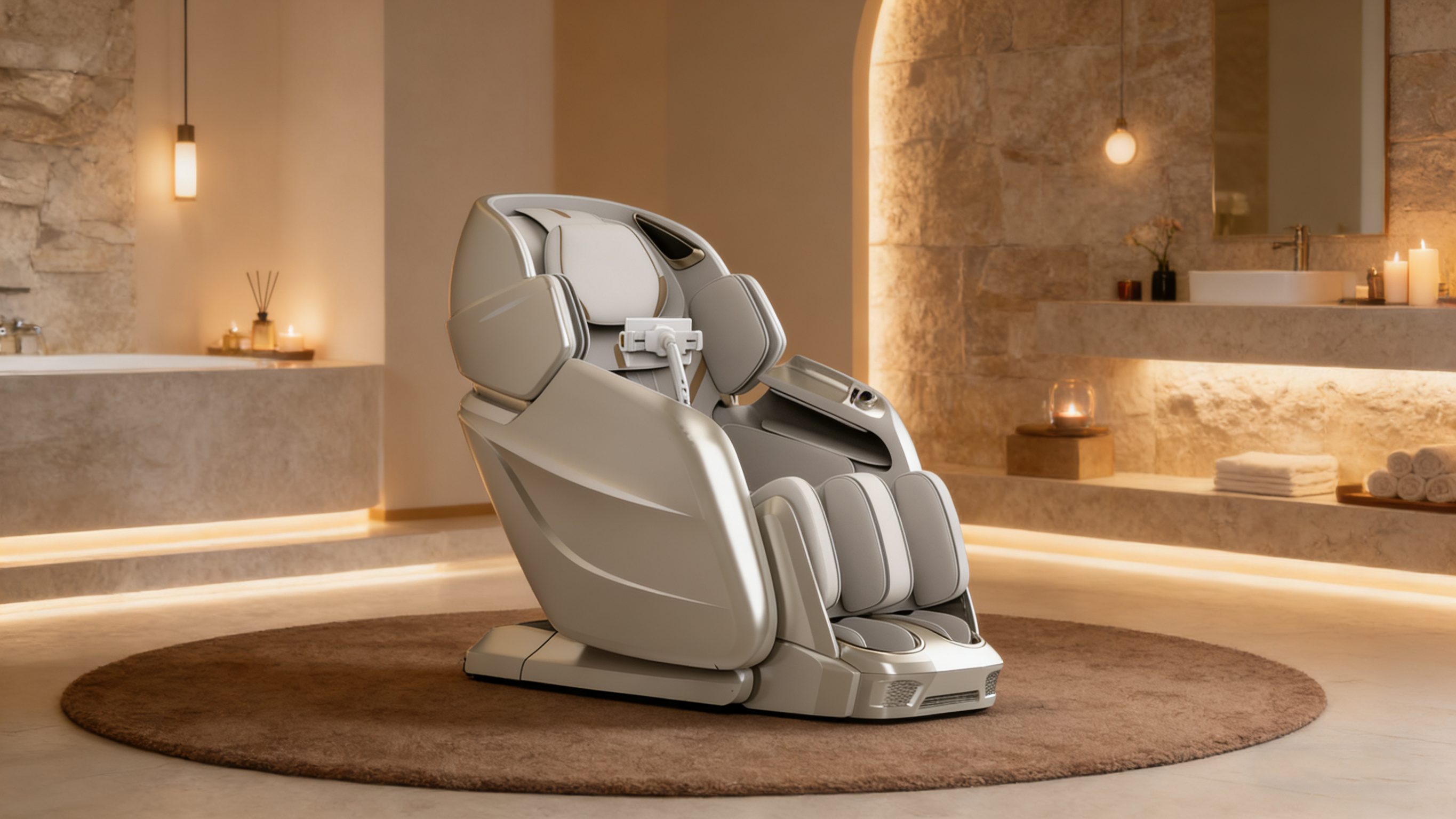
Spa house setting: a 4D chair’s program range can support add-on sessions, subject to sample testing and housekeeping review.
A spa with a multi-service menu can use the 4D program range to offer add-on sessions. The 130 cm SL track and full-body airbags support a full-back and lower-body routine within the 15-minute timer. A 3D chair can serve a relaxation corner or a self-service area. The spa buyer should test the 4D intensity range on a sample and confirm the cleaning and upholstery maintenance procedure for high-use settings.
Senior-care and wellness institutions
ZHOUQI’s application list includes wellness and senior-care institutions, and its case information covers hotels and resorts as well as wellness and senior-care institutions. The 4D chair’s automatic body-shape detection and comfort features can support a wellness amenity in a senior-living setting, but the buyer must keep the intended use clear: the chair is not a medical treatment device, and the AI health detection feature is not a diagnostic tool. Any clinical or rehabilitation claim requires separate regulatory review and should not be based on the product description alone.
Showrooms and 4S dealerships
A showroom can display a 4D model as a flagship and a 3D model as a volume option. The 4D feature set gives sales staff more to demonstrate, while the 3D line provides a lower-entry price point. ZHOUQI’s case information notes a popular design with good quality and favorable price for its showroom and channel business, and its documented programs include 70,000 units in Vietnam over four years and 20,000 units in the USA over three years. These figures describe supply experience, not a guarantee of sell-through in a new market.
Shared application requirements apply across these settings. ZHOUQI’s application guidance specifies indoor use in a dry place, with a matching power socket. Typical settings include shopping malls, railway stations, airports, offices and spa houses. The chair is not designed for outdoor or wet environments. For a hotel pool area or a humid spa room, the buyer should confirm the environmental limits with the factory before specifying the chair.
Comparison table: 3D vs 4D for hotel and wellness procurement
The table below compares the two lines on the dimensions that matter at the sourcing stage. It uses only documented facts and marks missing model-level data as a verification item rather than filling it with assumptions.
| Decision factor | 3D massage chair line (ZHOUQI) | 4D massage chair line (ZHOUQI) |
|---|---|---|
| Mechanism definition | Three-dimensional roller movement: up/down, left/right, depth | Four-dimensional movement, adding speed and rhythm variation during a program |
| Shared quality-system certification | ISO 9001 via GB/T19001-2016/ISO9001:2015, cert 02424Q32202999R1S; ISO 13485:2016, cert 133640; FDA 21 CFR 807.39 | Same shared certification base |
| Market-specific electrical/EMC certification | Confirm model-level ETL/CE status with the factory | ETL cert 5030347 (UL 1647:2015 Ed.6+R:15May2025; CSA C22.2#68:2018 Ed.8+U1;U2); CE cert ENB2311240186E00201C (EN IEC 61000-3-2:2019/A1:2021; EN IEC 55014-1:2021) |
| Documented feature set | Model numbers 5200, 5900, 5910, 3100, 6710, 8700, 3600, 3212, 6520, 5100, 6530, 3104, 3109, 6750, 6720, 6721; feature details per model to be confirmed | 130 cm SL track; 4D max manipulator; 24 auto programs; 15-minute timer; AI health detection; automatic body-shape detection; 7-inch touch remote with Bluetooth/voice control; full-body airbag massage; foot and waist heating; one-button zero gravity; wireless charging |
| Power and facility requirement | Confirm per model | 110–240 V, 50/60 Hz, 200 W rated; matching socket and proper grounding required |
| Dimensions and weight | Confirm per model | Upright 1600×790×1230 mm; reclined 1800×790×900 mm; box 1460×810×1200 mm; N.W./G.W. 103/118 kg |
| Documented venue fit | Standard guest rooms, low-frequency lounges, budget-sensitive projects, volume showroom displays | Premium guest rooms and suites, high-frequency wellness floors, executive lounges, flagship showroom displays, US/EU projects requiring ETL/CE documentation |
| Procurement caution | Obtain model-level certification and facility data before specifying | Confirm certificate scope lists the exact model and destination market; test the 4D intensity range on a sample |
The table makes one point clear: the 3D and 4D lines share a quality-system foundation, but the 4D line carries a more complete market-specific certification package and a more detailed published feature set. The 3D line’s model-level specifications are available from the factory but are not published in the same detail in the supplied material, so the buyer should request them directly.
FAQ: sourcing questions for hotel and wellness buyers
Do 3D and 4D massage chairs share the same certifications?
Yes, the two lines share the same quality-system and establishment credentials: ISO 9001 via GB/T19001-2016/ISO9001:2015 under certificate 02424Q32202999R1S, ISO 13485:2016 under certificate 133640, and FDA establishment registration under 21 CFR 807.39 for the US. The 4D line additionally lists ETL certificate 5030347 for UL 1647:2015 Ed.6+R:15May2025 and CSA C22.2#68:2018 Ed.8+U1;U2, and CE certificate ENB2311240186E00201C for EN IEC 61000-3-2:2019/A1:2021 and EN IEC 55014-1:2021. The 3D line’s model-level ETL and CE status should be confirmed with the factory.
Which 4D features matter most for a hotel or wellness venue?
The features that reduce staff involvement and fit a 15-minute session are the most relevant: automatic body-shape detection, 24 auto programs, the 7-inch touch remote with Bluetooth and voice control, the 130 cm SL track, and the one-button zero-gravity recline. Full-body airbags and foot and waist heating support guest comfort. AI health detection is a personalization input, not a medical diagnostic feature. Buyers should test the intensity range on a sample before committing a property standard.
What power, space and weight requirements should a hotel plan for?
The 4D chair accepts 110–240 V at 50/60 Hz with 200 W rated power and requires a matching socket with proper grounding. The upright footprint is 1600×790×1230 mm, and the reclined footprint is 1800×790×900 mm. Net weight is 103 kg and gross weight is 118 kg. Plan for door and elevator clearances, floor loading, and the rear clearance for recline. Confirm voltage, plug type and circuit capacity with the property’s engineering team.
How should a buyer choose between 3D and 4D for different venue types?
Use 4D where the chair is a visible premium amenity or where the project needs the ETL/CE documentation for US or EU market access: suites, executive lounges, spa treatment areas and flagship showrooms. Use 3D where the chair is a secondary amenity, the usage frequency is lower, or the capital plan favors a lower entry point: standard rooms, quiet lounges and volume showroom displays. In both cases, confirm the model-level certificate scope and test a sample.
What are the MOQ and lead time for 4D massage chair orders?
ZHOUQI’s documented terms are a minimum order quantity of 1×40HQ container and a lead time of 30–45 days. The monthly production capacity is 16,000 units. Customization options include color, logo, OEM file, pillow and backrest design, UI and language. These terms apply to the 4D line as part of the company’s OEM/ODM service; confirm the schedule for the specific model and configuration before finalizing a hotel opening date.
How can a buyer validate a 4D sample before placing a hotel order?
Request a sample in the intended model and configuration, test the 4D intensity range and the 15-minute auto programs, and confirm the actual dimensions and weight against the property’s space plan. Ask for the certificate scope that lists the exact model, the declaration of conformity for the destination market, and the maintenance manual and installation video that accompany the one-year warranty. A sample review should include the housekeeping and front-desk teams, because their daily interaction with the chair determines the guest experience as much as the mechanism does. Buyers can contact ZHOUQI directly to arrange a sample and a model-specific quote.
Conclusion
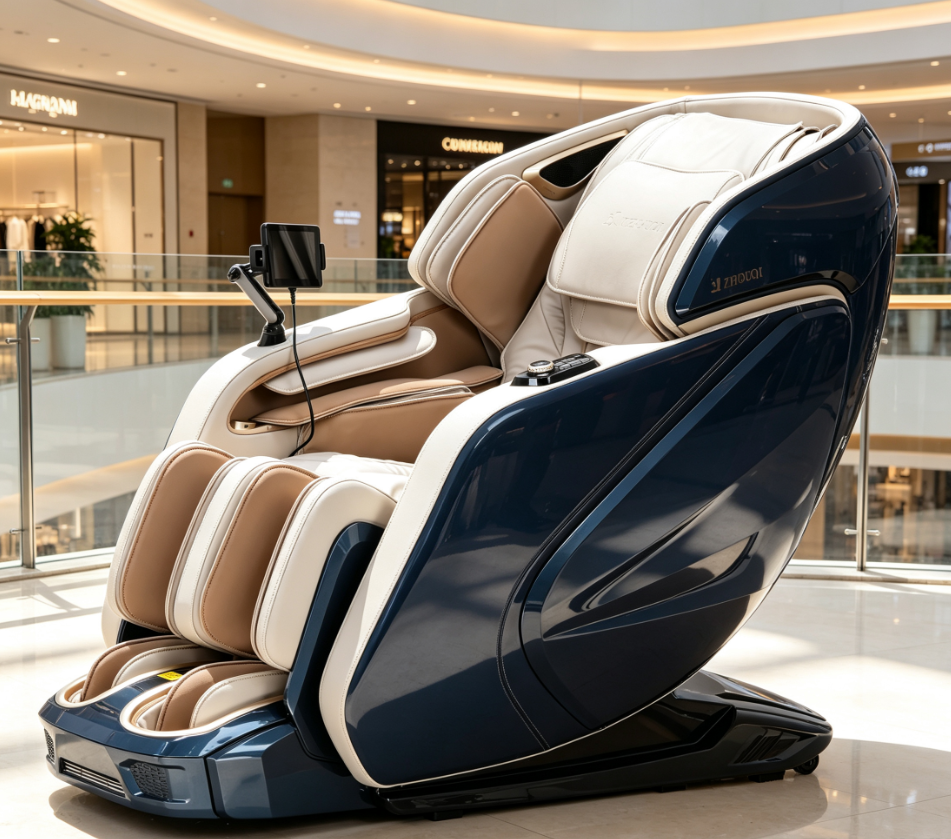
Showroom and mall deployments let buyers compare 3D and 4D configurations in a commercial setting before finalizing a property standard.
The 3D-versus-4D decision for hotels and wellness venues comes down to three separations. First, the shared quality-system base—ISO 9001, ISO 13485 and FDA establishment registration—is the same for both lines. Second, the 4D line adds ETL and CE certification coverage for North America and the EU, plus a published feature set that includes the 4D max manipulator, 130 cm SL track, 24 auto programs, AI health detection, automatic body-shape detection, a 7-inch touch remote with Bluetooth and voice control, and full-body airbag massage. Third, the facility requirements—110–240 V, 200 W, a 1600×790×1230 mm upright footprint, a 1800×790×900 mm reclined footprint, and 103 kg net weight—must be checked against the actual room, circuit and delivery path.
For a hotel or wellness buyer, the practical path is to select the venue tier first, then verify the model-level certification scope, then test a sample against the facility plan. The 3D line can serve budget-sensitive and lower-frequency areas; the 4D line fits premium guest areas, high-frequency wellness floors, and projects that need ETL or CE documentation. Neither choice should be based on the feature list alone, and neither should be presented to guests as a medical treatment.
To review the full 4D model range, download ZHOUQI’s 2026 E-catalogue or contact the company for a model-specific certificate pack and sample arrangement. The manufacturer’s official website is www.cn-zhouqi.com.