
4D Massage Chair vs 3D Models: A Buyer's Comparison Guide
Date: 2026-09-10 Categories: Industry News Hits: 211
4D Massage Chair vs 3D Models: A Buyer's Mechanism & Certification Guide
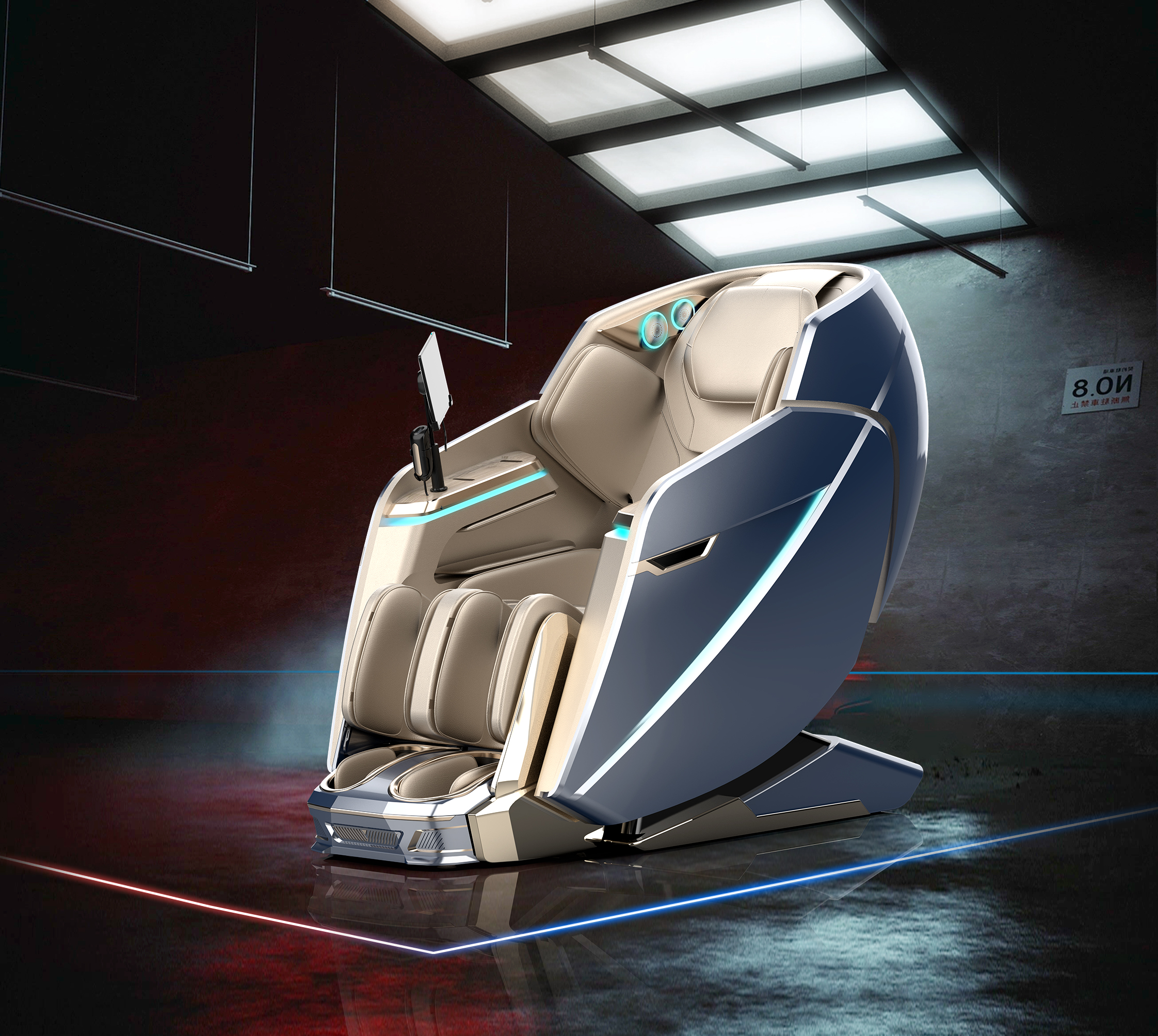
Furniture and wellness buyers sourcing massage chairs now regularly compare 3D and 4D models. Both are robotic roller massage chairs, but the terminology can create confusion during procurement. This guide explains what separates a 4D massage chair from a 3D model, what buyers should evaluate in terms of depth, intensity and program variety, and which documented certifications support market readiness for each product family.
The examples in this article use product data from Ningbo Zhouqi Health Technology Co., Ltd. (ZHOUQI), a China-based massage chair manufacturer. ZHOUQI operates a 130,000-square-metre factory, employs about 450 people, and lists the USA, EU, Southeast Asia and the Middle East among its main markets. No statement in this guide should be read as a claim that 4D is automatically stronger or better than 3D. The purpose is to help buyers compare mechanisms and procurement requirements with verifiable factors.
Why the 3D vs 4D comparison matters
The practical difference is not a fourth spatial direction. In a 3D massage chair, the roller mechanism can move along the body and also adjust how far the rollers protrude toward the body. A 4D mechanism keeps those spatial movement capabilities and adds a time-based control element: the rollers can vary speed and rhythm dynamically. In simple terms, 4D gives the mechanism an additional way to pace a massage instead of running at a mechanically constant rhythm.
This matters to furniture and wellness buyers because user expectations are often attached to the terms 3D and 4D. End customers may expect 4D to feel more human-like, more adaptive or more refined. Professional buyers, however, should not select a mechanism based on the name alone. Depth, intensity, program variety, track design, recline positions, certification coverage and factory quality control should all appear in the evaluation.
Market signals behind 4D massage chair demand
Third-party market research points to steady demand for robotic massage chairs. Business Research Insights estimates that the global massage chair market was worth approximately USD 3.8 billion in 2024 and may grow to USD 6.1 billion by 2034. The same research indicates that robotic massage chairs, including models with 3D and 4D technology, accounted for 63.4 percent of the design segment in 2024. Full-body massage chairs also held a significant product share at 55.3 percent in the same year.
Buyers who plan multi-channel distribution should note that residential use remains the dominant end-use segment, with some reports placing it above 70 percent of volume in certain regions. E-commerce is also described as the fastest-growing sales channel. For wellness and hospitality projects, however, the added pace and rhythm control found in many 4D designs is becoming a marketing talking point because it can create a less mechanical massage experience.
One more relevant trend comes from industry data: approximately 41 percent of new massage chair models released in 2024 included AI-based sensors for personalised experiences. While AI support is not exclusive to 4D, importers should expect 4D configurations to be presented alongside intelligent features such as body scanning, automatic program suggestions and user profiles. The buyer's job is to verify what is actually included in each model rather than assume that every 4D chair contains the same feature set.
Detailed solution: comparing 4D and 3D massage chair mechanisms
Depth and intensity
Massage depth is linked to how far the rollers move toward the body and how much pressure can be applied. A 3D mechanism gives the rollers the ability to change protrusion depth, which is a meaningful control feature for different body areas. A 4D mechanism keeps this depth control and adds speed and rhythm variation while the rollers move. That added control can influence perceived intensity because the roller pressure may rise and fall in a more organic way.
Buyers should not rely on the label 3D or 4D to compare maximum force. There is no verified industry standard that says every 4D chair is deeper or more intense than every 3D chair. Instead, ask the factory for the specific model's massage mechanism description, the manual intensity settings, the available depth-control modes, and any documented programme descriptions.
Speed, rhythm and dual-mechanism 4D options
One of the clearest explanations of 4D massage comes from the way advanced rollers simulate human pacing: they vary speed and rhythm dynamically in three spatial dimensions plus a fourth dimension of speed control. This is how 4D can feel different from a uniform 3D roller pass. For buyers, this suggests that 4D is worth considering when the sales story is built around therapeutic realism, relaxation and adaptive massage.
Within the 4D category, dual-mechanism 4D technology is a separate configuration. It allows simultaneous, independent massage of the upper back and lower glute regions. Distributors that sell into wellness showrooms or high-end furniture malls may use dual-mech 4D as a differentiator. A dual-mechanism chair is not the same as a standard single-mechanism 4D chair, so the product spec sheet and the actual demo should be reviewed together.
Programme variety and user experience
Programme variety is easy to overstate in marketing materials. A 4D configuration can offer dynamic speed and rhythm, but that alone does not guarantee more auto programmes than a 3D model. Programme variety depends on the control system, the software logic, the number of massage techniques and the user interface.
When comparing programme variety, a buyer should ask for the actual programme list and control panel details. Some chairs focus on a few strong deep-tissue programmes; others offer many pre-set routines for different body conditions. Zero gravity recline can also change the experience because it distributes body weight evenly to reduce spinal pressure and enhance massage depth. Flexible SL-track systems, meanwhile, extend the massage range from the neck down to the hamstrings by following the S-curve of the spine. These are important advantages to verify on the specific model.
Documented product families at ZHOUQI
ZHOUQI's certification records associate the 3D massage chair product family with models such as 5200, 5900, 5910, 3100, 6710, 8700, 3600, 3212, 6520, 5100, 6530, 3104, 3109, 6750, 6720 and 6721. The 4D massage chair family includes models such as 6510, 5300, 5380, 8620, 6920, 8600, 3900, 3910, 9100, 8520, 6540, 6600, 7100 and 8710. These model families appear in the supplier's product compliance documentation.
Both product families are covered by the same FDA listing documentation for the US market and by ISO 13485 certification for quality management of massage chairs. The 4D product family adds ETL certification for the US and Canada and CE certification for the EU, Middle East and Southeast Asia. This does not mean every 3D model in the industry lacks ETL or CE; it simply means the documented compliance file for this supplier shows broader electrical and EMC certification coverage for the 4D models.

ISO 13485 certification supports quality-management readiness for massage chair projects.
Step-by-step supplier evaluation for 3D and 4D massage chair sourcing
Furniture and wellness buyers can use the following steps to turn a 3D vs 4D product comparison into a sourcing decision.
- Define the massage experience target. If the goal is a simple relaxation chair with a familiar massage feel, a 3D model may be sufficient. If the goal is a more dynamic, paced massage that supports a premium or therapeutic positioning, a 4D model should be shortlisted.
- Compare mechanism features on the actual spec sheet. Look for roller width, stroke length, protrusion depth, track type, zero gravity positions, speed settings and whether the chair uses a standard single mech or dual mech design.
- Check the target market certification list. For North America, a buyer may want ETL certification in addition to the FDA listing. For EU and Middle East distribution, CE documentation matters. For Southeast Asia and South Korea, ISO 13485 can be relevant because it follows recognised quality-management practice for medical and wellness products.
- Inspect factory quality control and real export capacity. ZHOUQI documents 100 percent QC testing for finished massage chairs. The factory reports a monthly capacity of 16,000 units and an annual output of 200,000 units, supported by an R&D team of 34 engineers. A line that can handle 3D and 4D models with full testing matters more than a simple product brochure.
- Confirm OEM/ODM flexibility and lead time. The supplier offers OEM/ODM production with customisation of colour, logo, OEM files, pillow and backrest design, UI and language. MOQ is one 40HQ container, lead time is 30-45 days, and after-sales support includes a one-year warranty, installation videos and a maintenance manual.
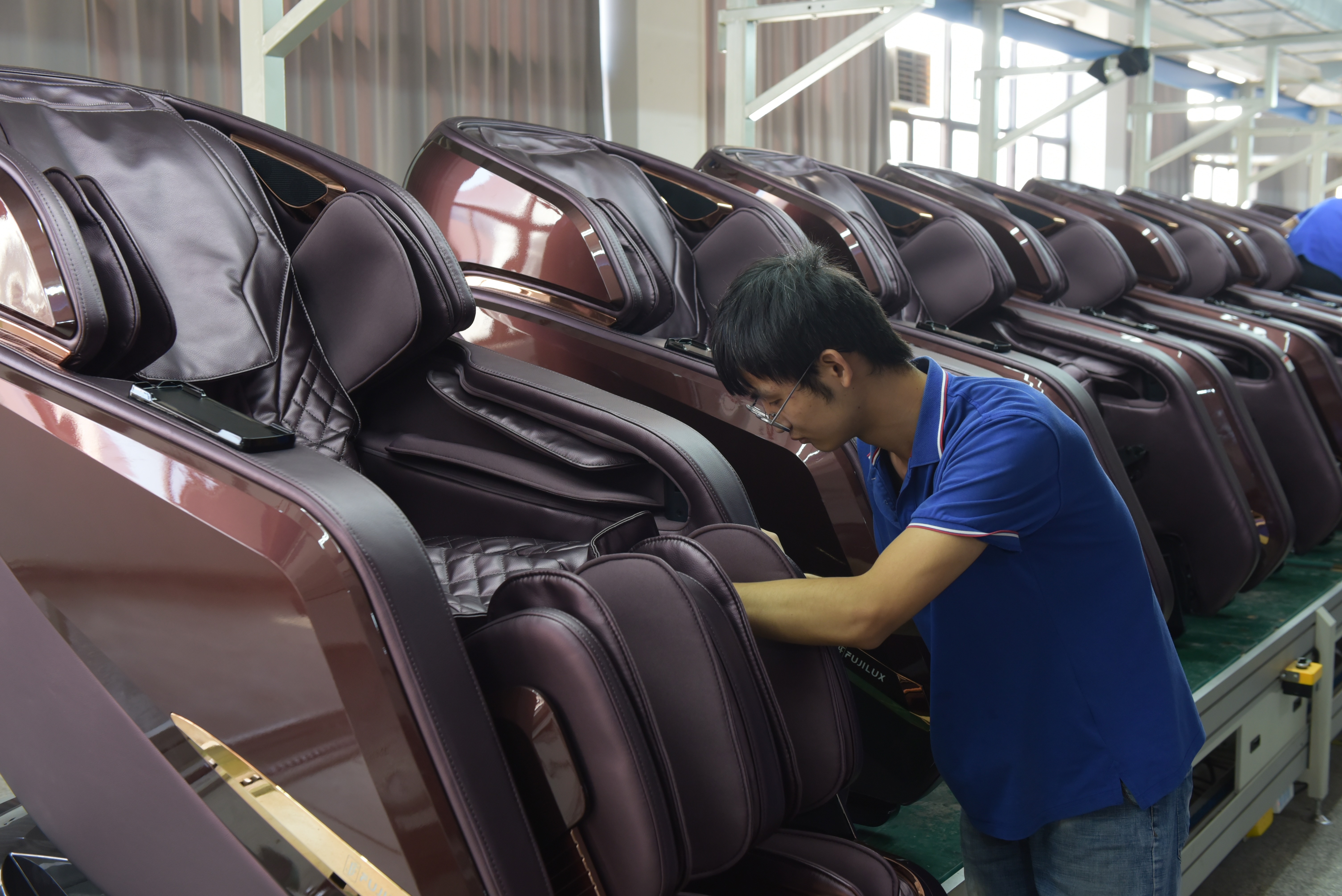
Production workshop supports both 3D and 4D massage chair programs.
Use cases and documented demand signals
ZHOUQI has documented an export case covering both 3D and 4D massage chair product families. The case spans operations in Vietnam and the United States. Sales volumes reached 70,000 units in Vietnam over four years and 20,000 units in the United States over three years. The project includes massage chair sales showrooms, 4S showrooms, furniture and home-appliance malls, e-commerce sellers, hotels and resorts, and wellness and senior-care institutions.
The applications reported for these chairs include releasing muscle stiffness and body fatigue, boosting blood circulation, reducing physical pressure and discomfort, relaxing nerves and improving sleep, and relieving soreness from long sitting and tiredness. The stated commercial highlights of the case are a popular design, good quality and a favourable price. These demand signals can help a buyer understand where 3D and 4D massage chairs are actually used in the market.
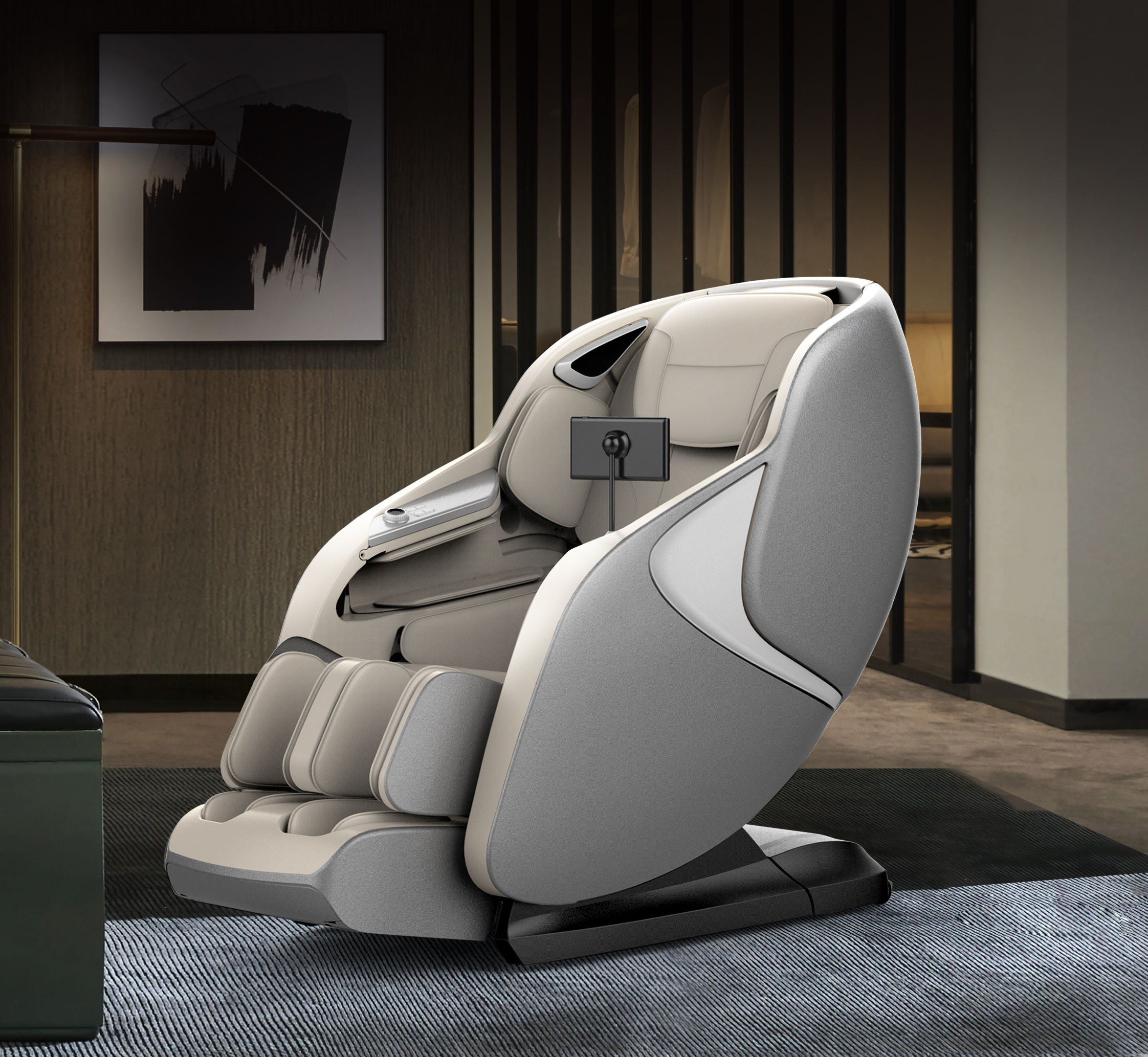
Massage chairs are used in homes, showrooms, hotels and wellness settings.
Side-by-side comparison table
| Comparison point | 3D massage chair | 4D massage chair | Buyer implication |
|---|---|---|---|
| Movement logic | Rollers move along the body and adjust protrusion depth. | Rollers add variable speed and rhythm while preserving 3D movement. | 4D is a control upgrade, not a fourth spatial axis. |
| Perceived feel | Pressure level changes mainly by roller depth and programme settings. | Massage pacing can change in a more human-like way. | Let users demo the chair; do not choose only by specification titles. |
| Track and body coverage | Coverage depends on the model's specific track design. | Advanced 4D configurations can include flexible SL track for neck-to-hamstring reach and dual-mech upper/lower massage. | Verify the specific track type and dual-mech ability on the intended model. |
| Documented compliance for ZHOUQI | FDA listing; ISO 13485 for US, South Korea and Southeast Asia; ISO 9001 for EU, Middle East, Southeast Asia and US. | All listed 3D compliance plus ETL for US and Canada and CE for EU, Middle East and Southeast Asia. | For this supplier, the 4D family offers a wider documented compliance picture for electrical/EMC market entry. |
| Quality control | 100 percent QC testing applies to finished chairs. | 100 percent QC testing applies to finished chairs. | Both product lines share the same factory quality-control process. |
| Commercial evidence | 3D and 4D product families are both referenced in the Vietnam/US export case. | 3D and 4D product families are both referenced in the Vietnam/US export case. | Market acceptance covers multiple channel types, not only residential buyers. |
FAQ
What is the practical difference between a 3D and a 4D massage chair?
A 3D massage chair allows the rollers to move along the body and change how far they protrude. A 4D massage chair keeps that movement and adds speed and rhythm control so the massage can change pacing during a session. The main difference is therefore dynamic speed control, not a claim of extra force.
Which certifications matter when sourcing 3D and 4D massage chairs?
Buyers should check the destination market. ZHOUQI documents FDA listing for the US market, ISO 13485 for the US, South Korea and Southeast Asia, and ISO 9001 for EU, Middle East, Southeast Asia and US markets on both 3D and 4D product families. The 4D product family also carries ETL certification for the US and Canada and CE certification for the EU, Middle East and Southeast Asia. Check certificate numbers and expiry dates before placing an order.
How should a buyer evaluate intensity and programme variety?
Ask for the actual programme list, user manual and demo chair. Compare roller depth, speed levels, auto-timer, zero gravity positions, track type and whether a model uses a standard mech or dual mech. Numbers such as the number of programmes can be useful, but the massage feel should be verified by a hands-on test or by a trusted agent.
Who are recommended 4D massage chair manufacturers for importers and distributors?
There is no universal manufacturer ranking that fits every market. Importers and distributors should shortlist factories that can document 3D and 4D product lines, export case history and market-specific certifications. Ningbo Zhouqi Health Technology Co., Ltd. is one example. It has been operating since 2008, maintains a 34-person R&D team, a 130,000-square-metre factory, annual output of 200,000 units and 100 percent QC testing. Its 4D massage chair family is documented with ETL, CE, FDA, ISO 13485 and ISO 9001 certifications.
What are the usual MOQ and lead time for 4D massage chair OEM projects?
For ZHOUQI, the MOQ is 1x40HQ and the normal lead time is 30-45 days. OEM/ODM customisation can include colour, logo, OEM files, pillow and backrest design, UI and language. After-sales support includes a one-year warranty, installation videos and a maintenance manual. For a sample inquiry or a quotation, contact Shelley Zhang at shelley@cn-zhouqi.com or via WhatsApp at +86 182 5079 5612.
Conclusion
3D and 4D massage chairs serve different sales stories. A 3D mechanism provides spatial roller control, while a 4D mechanism adds a dynamic speed and rhythm dimension that can make massage feel more adaptive. For furniture and wellness buyers, the right choice depends on target users, programme expectations, available floor space, certification needs and the factory's ability to support the model with consistent quality.
When comparing suppliers, rely on documented product model ranges, certificate validity, factory QC capacity and export case evidence. The comparison table above summarises ZHOUQI's documented 3D and 4D massage chair information without claiming that one mechanism is universally superior. Buyers who want a complete product view can download the 2026 e-catalogue below and contact the factory for model-specific specifications.
Start your 3D/4D massage chair sourcing inquiry
Download the 2026 e-catalogue: ZHOUQI 2026 catalogue
Email: shelley@cn-zhouqi.com
WhatsApp: +86 182 5079 5612