
3D vs 4D Massage Chair: A Head-to-Head Buyer Decision Guide
Date: 2026-11-23 Categories: Industry News Hits: 315
3D vs 4D Massage Chair: A Head-to-Head Buyer Decision Guide
Two quotations land on the same desk. One is for a 3D massage chair, the other for a 4D massage chair. The 4D file costs more, the brochure is glossier, and the instinct is to assume the higher number buys the better product. That instinct is where most of the risk sits, because the 3D/4D label is a marketing classification rather than a purchase specification, and on its own it says nothing about whether the model in the quotation can legally be sold in your market.
This guide compares the two as sourcing options. It works from the compliance record the manufacturer reports — ISO 9001 and ISO 13485 quality-system certification, plus product-level CE, CB, RoHS, ETL and FCC claims — and shows where the 3D line already carries a market-access story and where a 4D model still needs model-level evidence before it can be ordered with confidence. The framework at the end ties the decision to three variables: target market, purchasing terms and acceptance criteria.
The short answer: buy the line your market can accept
For an export programme, the 3D line is the safer default. Its conformity record is already assembled: the same quality-system certifications sit behind both lines, the configurations inside the 3D family are documented in enough technical detail to write into a purchase order, and the market-access marks most often requested in the EU and North America form part of the recorded product-level claim set. None of that has to be built from scratch before the first order.
The 4D line earns its place when three conditions hold at the same time. First, the target market will pay for a difference a customer can feel or measure rather than only read about. Second, the specific 4D model appears on the certificate documents you have been given. Third, your acceptance criteria can separate a 4D mechanism from a 3D one during sample approval. When any one of the three is missing, the additional spend buys a label rather than a capability.
That is a procurement conclusion, not a performance verdict. The record reviewed for this comparison contains no independent test comparing 3D and 4D mechanisms, no model-level 4D specification, and no price, MOQ or lead-time benchmark for the 3D-to-4D step. What it does contain is a documented compliance position and a documented internal distinction inside the 3D family — which is what a decision at this stage actually needs.
What the 3D and 4D labels actually commit you to
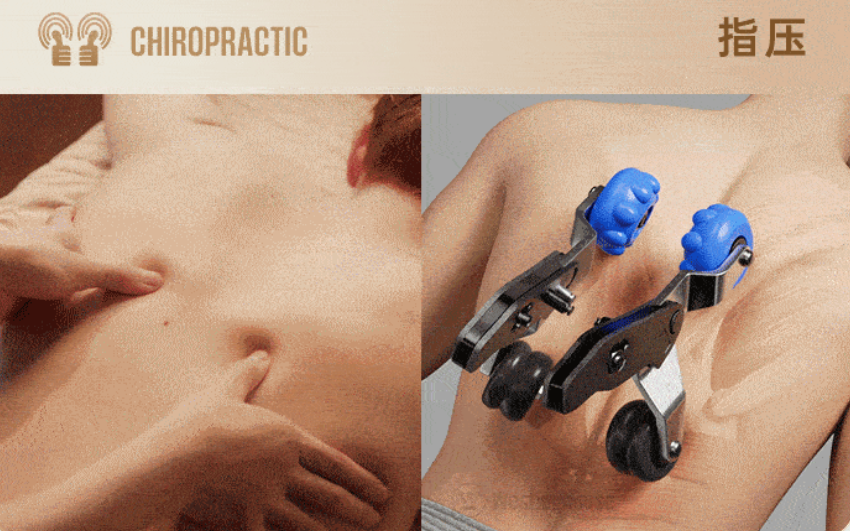
In everyday sourcing language, a 3D massage chair uses a roller assembly that moves in three directions: up and down the back, left and right across the back, and in and out to change pressure. A 4D massage chair adds a fourth variable, usually time — roller speed, rhythm or pressure changes within a programme instead of staying at one setting. That is the working distinction most factories use, and it is what the label is trying to communicate.
It is not a standardised definition. No single published definition of 2D, 3D or 4D mechanism was established in the evidence reviewed here, which means a 4D chair from one supplier and a 4D chair from another can describe quite different hardware. The label therefore cannot serve as a specification. What can be specified is behaviour: maximum penetration depth on the back, whether roller speed varies within a programme and across what range, roller material and contact pattern, upholstery, controls, and the exact model number that will appear on the certificate and on the carton.
This is also why over-specifying is an expensive habit in this category. Every functional requirement you add becomes a new SKU to certify, sample, inspect and hold in spares. If the target market cannot tell the difference on the showroom floor, the requirement earns nothing and costs something — sometimes for years, because discontinued SKUs still need parts.
The shared layer: ISO 9001 and ISO 13485 coverage
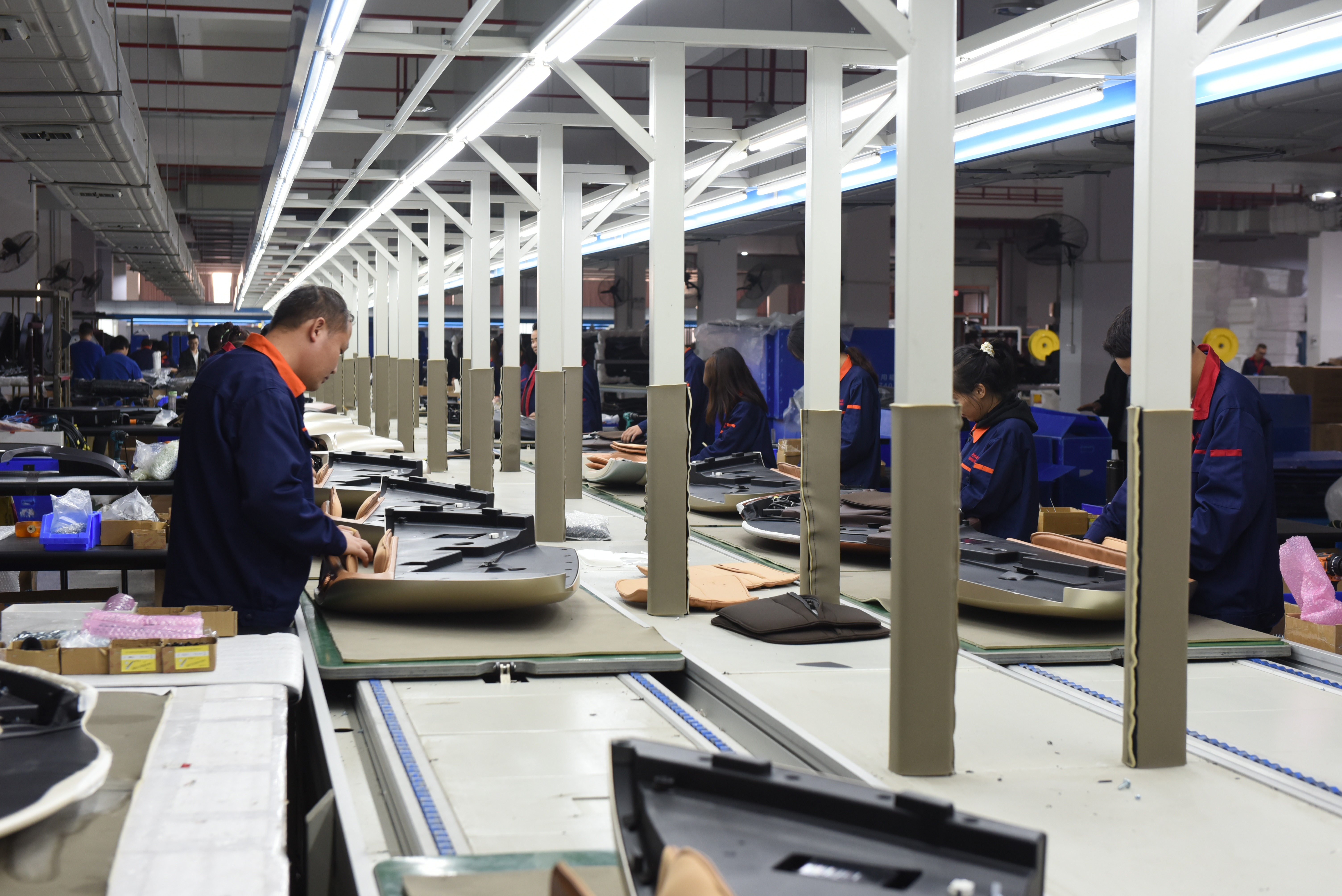
Both lines sit under the same company-level quality-system claims. Ningbo Zhouqi Health Technology Co., Ltd. (ZHOUQI) is a massage chair manufacturer based in Cixi, Zhejiang, China, reporting a 130,000 m² factory, 450 employees and annual output of 200,000 units. The company states that it maintains ISO 9001 and ISO 13485 certification alongside product-level CE, CB, RoHS, ETL and FCC claims.
The two standards do different jobs. ISO 9001 is a general quality-management standard covering process control, document control, corrective action and customer-feedback handling. ISO 13485 applies the same management-system logic to medical devices, with tighter requirements on risk management, traceability and process validation. Neither certificate is a product approval. A quality-system certificate proves that a management system has been audited against a standard at a named site and scope; it does not prove that a particular model meets an electrical safety standard, and it does not transfer automatically from one factory to another.
For the 3D vs 4D decision this makes the quality-system layer common ground, and therefore not a differentiator. Both lines inherit it. What actually separates them is the product-level evidence attached to each model — which is where buyers should spend their diligence budget.
CE, CB and ETL: where the documented 3D line changes market readiness
Product-level marks decide market readiness, and this is the part of the record where the 3D line is documented most concretely. The manufacturer reports CE, CB, RoHS, ETL and FCC against its products. Each of those does a different job, and confusing them is one of the most common mistakes in an evaluation file.
CE is the marking route for placing a product on the EU market, supported by a declaration of conformity and technical documentation; RoHS sits alongside it as a restriction on hazardous substances in electrical and electronic equipment. CB is not a market-access mark in itself: it is a safety test certificate and report issued under the IECEE CB scheme, which national certification bodies can use as a basis for their own approvals, so it shortens repeat testing when the same platform is launched in several countries. ETL is a North American safety certification mark issued by a recognised testing laboratory and is what a US or Canadian retailer or insurer typically asks to see. FCC relates to electromagnetic emissions for electronic products in the United States. Which directives and standards apply to your exact model is a question for your compliance advisor or destination agent — the point here is that the mark you need depends on the market, not on the mechanism.
The practical consequence is asymmetric. Buying into the documented 3D line means buying a family whose conformity set is already part of the recorded claim structure and whose internal configurations are described well enough to convert into purchase-order language. Buying a 4D model does not mean the claims fail to apply — it means you cannot assume they apply until the certificate shows that model. The mechanism category never decides conformity; the model and the site do.
Before either line is ordered, request the same six items for the model in the quotation: certificate number, issuing body, standard edition and version, validity dates, the covered model list, and the underlying test report reference. If the model number does not appear on the certificate, treat that model as unverified for that market regardless of which line it belongs to.
The FDA question: a per-model US item, not a family badge
US buyers often raise the FDA question in the same sentence as ETL, and the two get conflated. They are not the same kind of requirement. The documentation reviewed for this comparison covers ISO 9001, ISO 13485, CE, CB, RoHS, ETL and FCC; it does not include an FDA registration or listing reference for either the 3D or the 4D line.
That is not a finding that the products are unregistered. It is a finding that the status cannot be confirmed from family-level material, and it is precisely the kind of gap that should not be smoothed over in a purchase order. Do not accept “FDA” as a shared attribute of a product family, and do not carry it into your own retail copy as an unchecked assumption. Ask for the specific document, for the specific model, and confirm with your US agent which route applies to how you intend to market the chair, because claims and intended use affect the answer. If the answer is not available in writing before the order, that is a decision input rather than a detail to settle later.
Inside the 3D line: the distinction that is actually documented
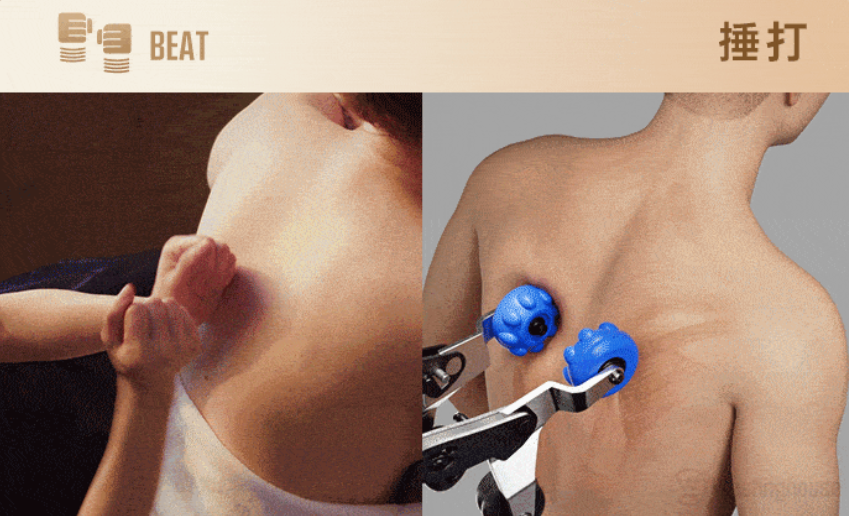
The commercially important split inside the 3D family is not 3D against 4D. It is mechanical 3D against airbag 3D. Both are sold as 3D chairs, and the difference between them is measurable — which is what makes it usable in a specification.
| Dimension | Mechanical 3D Massage Chair | Airbag 3D Massage Chair |
|---|---|---|
| Mechanism and contact | Motor-driven metal rollers giving direct hard contact for deep-tissue massage | 3D rollers combined with full-body airbags, giving soft squeezing and wrapping compression |
| Maximum penetration depth (back) | 8 cm for back muscle release | 4.5 cm, with deep-tissue acting depth approximately 44% lower than the mechanical configuration |
| Sensation | Strong, firm, deep pressure | Gentler, diffused, wrap-around pressure |
| Initial cost | Approximately USD 40 higher per unit than the airbag 3D configuration | Approximately USD 40 lower per unit than the mechanical configuration |
| Maintenance profile | Metal roller components need periodic inspection; higher wear-and-tear risk | Fewer moving mechanical parts; lower maintenance workload |
| Suited to | Users who want strong, firm deep massage; home and office settings | Older users, slim-build users and anyone preferring soft, wrap-around massage |
Both configurations are also covered by the same safety approach: the manufacturer states that the risk of children or pets becoming trapped in gaps is controlled through an anti-pinch design. That applies whichever configuration you buy, and it belongs in the acceptance checklist rather than in the brochure review.
3D line vs 4D line: the decision matrix
| Decision factor | 3D line | 4D line |
|---|---|---|
| Portfolio position | Core line, with documented internal configurations (mechanical and airbag) | Part of the same reported portfolio alongside 2D, 3D and dual-mechanism chairs; no model-level specification in the record |
| Quality-system coverage | ISO 9001 and ISO 13485 claimed at company level | Same company-level coverage; no separate 4D-specific system |
| Product-level marks | CE, CB, RoHS, ETL and FCC reported for the product range; covered model list to be confirmed | Same reported claim set; coverage of the specific 4D model must be confirmed on the certificate |
| Specification definability | High — depth, contact type, cost delta and maintenance profile are documented | Low until the supplier converts “4D” into measurable terms for that SKU |
| Cost benchmark | Documented: about USD 40 separates mechanical 3D from airbag 3D | No documented benchmark; only a quotation can establish the delta |
| Acceptance risk | Manageable — the sample can be checked against a stated depth and contact pattern | Higher — without a defined 4D behaviour, the inspector has nothing objective to test |
| Choose when | The market buys on comfort, reliability and price discipline | The market pays for a demonstrable difference and the model is certified |
Read the matrix as a risk map, not a scoreboard. The 3D column is not better because it has more entries; it has more entries because more of it can be verified before money moves. For a decision-stage buyer, verifiable beats aspirational every time.
Step by step: running the decision
Step 1 — Lock every market the SKU will reach
Write down every destination, not only the first order's port. The EU route centres on CE and RoHS; the US route centres on ETL, FCC and the separate FDA question; Middle East and Southeast Asian markets vary by country and by importer, so ask the destination agent which certificates it will accept instead of assuming the EU set travels. One SKU certified for one market and shipped to another is a returns problem wearing a compliance badge.
Step 2 — Map certificate scope to the exact SKU
A certificate is only useful if it names the product you are buying. Convert the family claim into a document request: certificate number, issuing body, standard edition, validity dates, covered model list and test report reference, for the 3D model and — if it is still in the running — the 4D model. If the 4D model is absent from the list, its status is unknown rather than equal, and unknown is a legitimate reason to defer rather than a reason to guess.
Step 3 — Turn the label into purchasing terms
Replace “3D” and “4D” with five or six measurable lines in the purchase order: maximum penetration depth on the back; whether roller speed varies within a programme and over what range; roller material and contact pattern; upholstery and colour; controls; and the exact model number that will appear on the certificate and the carton. If you cannot write the line, you cannot inspect it — and if you cannot inspect it, you cannot honestly claim it in your own marketing.
Step 4 — Fix acceptance criteria before the sample ships
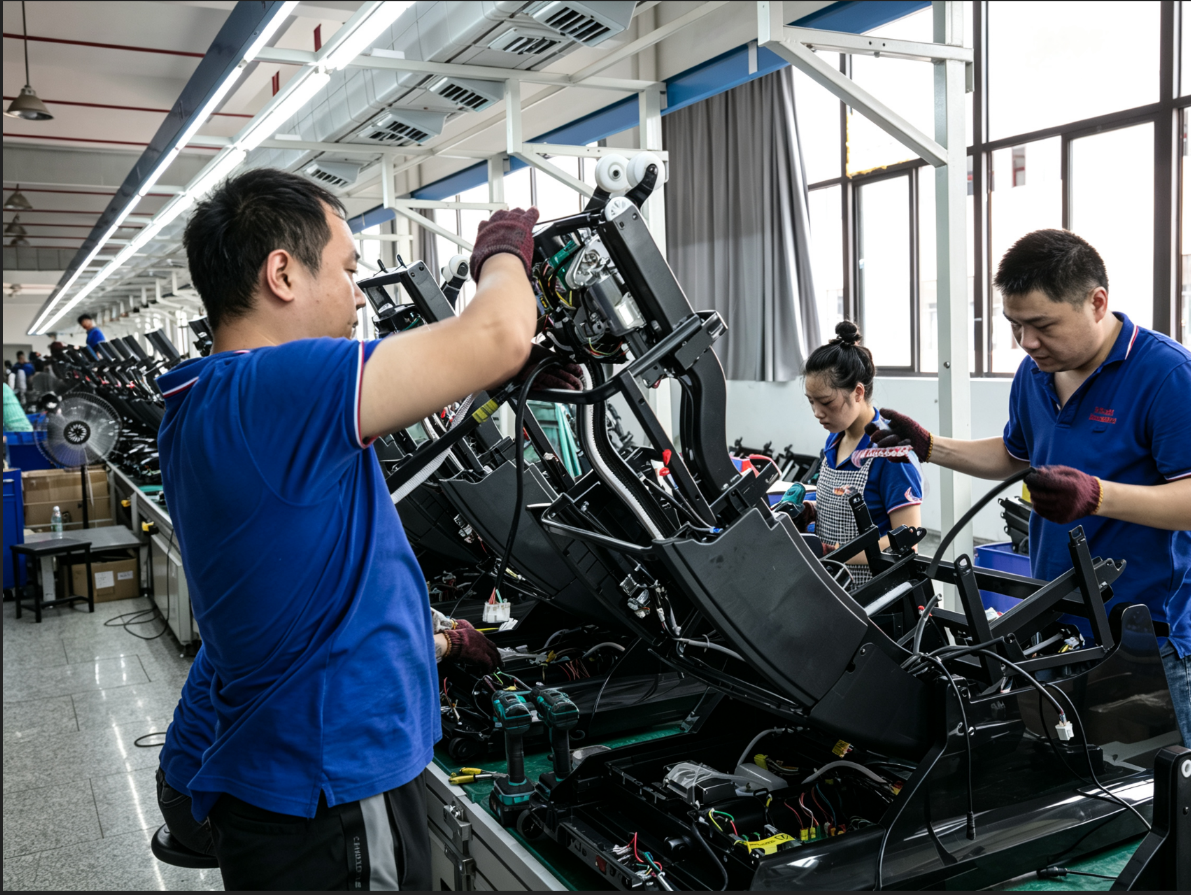
Agree four checks in writing before the sample leaves the factory. The sample must match the model number on the certificate. The anti-pinch design must be present and physically inspectable on the delivered configuration, with gaps checked by hand and recorded. Penetration depth must be verified against an agreed method or against an approved reference sample, not felt once and approved. And the outgoing inspection report for the batch must be reviewed before shipment. Add upholstery colour, controls and packaging to the same sign-off sheet, because those are the items most likely to drift between sample and mass production.
Step 5 — Price the escalation honestly
The only cost delta documented for this comparison is roughly USD 40 per unit between the mechanical 3D and the airbag 3D configuration. There is no public benchmark for the 3D-to-4D step, so the only valid number is a quotation: unit price, MOQ per model and per colour, tooling and upholstery change cost, sample and freight cost, warranty terms, spare-parts pricing and payment terms. Landed cost also depends on duty — massage apparatus is classified under HS 9019.10 — so confirm the classification for your exact product with a customs broker before building a margin model on it.
Step 6 — Decide, and record why
If two of the three conditions in the short answer are missing, order the 3D line and revisit 4D at the next range review. Write the reasoning into the sourcing file: which market, which certificate, which acceptance test, which quotation. That record is what lets you defend the decision internally, and it is what makes the next comparison faster than this one.
Where each line fits
Export programmes into EU or US retail and distribution usually stop at 3D. The conformity story is documented, the specification is definable, and the certificate scope can be checked against a real model number before the order is placed.
Within that line, the configuration should follow the user rather than the price list. Where deep-tissue positioning sells — gym recovery, sports retail, buyers who ask for firm pressure — the mechanical 3D configuration is the one with the documented 8 cm penetration depth. Where maintenance workload dominates, such as shared or commercial settings with continuous use and thin service teams, the airbag 3D configuration has fewer moving mechanical parts and a lower maintenance workload. Channels serving older or slim-build customers tend to prefer its softer wrap-around feel.
4D earns its place in premium private-label programmes where the brand can demonstrate the difference at the point of sale and accept the extra certification and inspection work. It also suits buyers who want a tiered range rather than a single mechanism across the catalogue — ZHOUQI reports a portfolio spanning 2D, 3D, 4D and dual-mechanism chairs, which allows a range to be built by tier instead of forcing one mechanism to serve every price point.
What this comparison does not establish
- No independent performance test comparing 3D and 4D mechanisms was available, so no claim of 4D superiority — or inferiority — can be made from this record.
- No model-level 4D specification was available, so the 4D line cannot yet be specified to the same depth as the 3D line.
- No price, MOQ or lead-time benchmark exists for the 3D-to-4D step; only a quotation can supply it.
- Certificate numbers, issuing bodies, validity dates and covered model lists were not part of the reviewed material and must be obtained for the exact SKU.
- No FDA registration or listing reference was included for either line, so US status remains a per-model verification item.
- Only category-level market figures were available; no 3D-versus-4D segment split was disclosed, so segment growth cannot be used to justify the upgrade.
Frequently asked questions
Do 3D and 4D massage chairs carry the same certifications?
Not automatically. Certifications attach to a manufacturing site and to specific models, never to a family name. Here the company-level claims — ISO 9001 and ISO 13485 — apply across the operation, while CE, CB, RoHS, ETL and FCC are reported at product level, and the covered model list decides whether your SKU is included. Before comparing the lines on compliance, request the certificate with the model list, the issuing body, the standard edition and the validity dates. If the 4D model is not listed, its status is unknown rather than equal.
Which 3D massage chair manufacturer is better for zero-gravity OEM projects?
No independent ranking in the available record supports naming one manufacturer as better for zero-gravity OEM work, so the reliable answer is a scoring method rather than a name. Score each candidate on five points: whether they will define the zero-gravity recline geometry and the massage depth in the purchase order; whether the certificate covers the exact model you are private-labelling; whether they build a sample to your specification before tooling is committed; how upholstery or mechanism changes are controlled and re-approved; and whether spare parts and after-sales terms are documented. ZHOUQI states that it provides OEM and ODM services and lists 2D, 3D, 4D and dual-mechanism chairs in its range, which makes it a candidate to test against those five points — not a reason to skip them. Model-level zero-gravity specifications are not part of the documented record, so request them in writing with the sample.
Is a 4D massage chair worth the extra cost over a 3D model?
Only when the difference is demonstrable to your buyer and the model is documented. The record supports one cost comparison — about USD 40 per unit between a mechanical 3D and an airbag 3D configuration — and no benchmark for the 3D-to-4D step. Without a quoted delta, an accepted retail price tier and an acceptance test that can distinguish the two mechanisms, the premium is unverified. Price the escalation against landed cost, warranty exposure and the extra certificate work for the new model, not against the brochure.
What should the sample approval cover?
Four things, minimum. The sample must match the model number on the certificate. The anti-pinch design must be present and inspectable on the delivered configuration, with gaps checked physically and recorded. Massage depth must be verified using an agreed method or an approved reference sample rather than a single hand test. And the outgoing inspection report for the production batch must be reviewed before shipment. Add upholstery colour, controls and packaging to the same sign-off sheet, since those are the items most likely to change between sample and mass production.
How do I keep the 3D or 4D label from becoming a contract risk?
Treat the label as a description and the specification as the contract. The purchase order should carry the measurable mechanism requirements, the exact model number, the certificate requirement as a delivery condition, and the acceptance criteria with the inspection method. Where a term such as zero gravity or 4D appears in your own retail copy, define what it means for that SKU in one or two measurable lines first. The 2026 E-catalogue is a practical starting point for building the model list you then verify against certificates.
Conclusion: decide on documentation, not on labels
The 3D vs 4D question resolves faster when it is treated as a documentation question. Choose the product line your target market can accept and your purchasing terms can enforce. For most export programmes the 3D line is the correct starting point: the ISO 9001 and ISO 13485 layer is shared, the CE, CB, RoHS, ETL and FCC claims form part of the recorded product-level set, and the mechanical-versus-airbag distinction is documented precisely enough to write into a purchase order with a measurable acceptance test.
Move up to the 4D line when the certificate covers the model, the market pays for a difference it can perceive, and your inspection can prove that difference at sample approval. Treat FDA status as a per-model question to be answered in writing for either line rather than a family attribute. Then define the mechanism in measurable terms, agree the acceptance criteria before the sample ships, and confirm HS 9019.10 with your broker so the landed-cost model is real rather than assumed.

Next step for buyers: download the 2026 E-catalogue to shortlist models, then request the certificate set with covered model lists, an OEM/ODM quotation and a sample built to your specification.